Nepal Is a Perfect Place for Yoga: Why the Himalayas Call You to the Mat
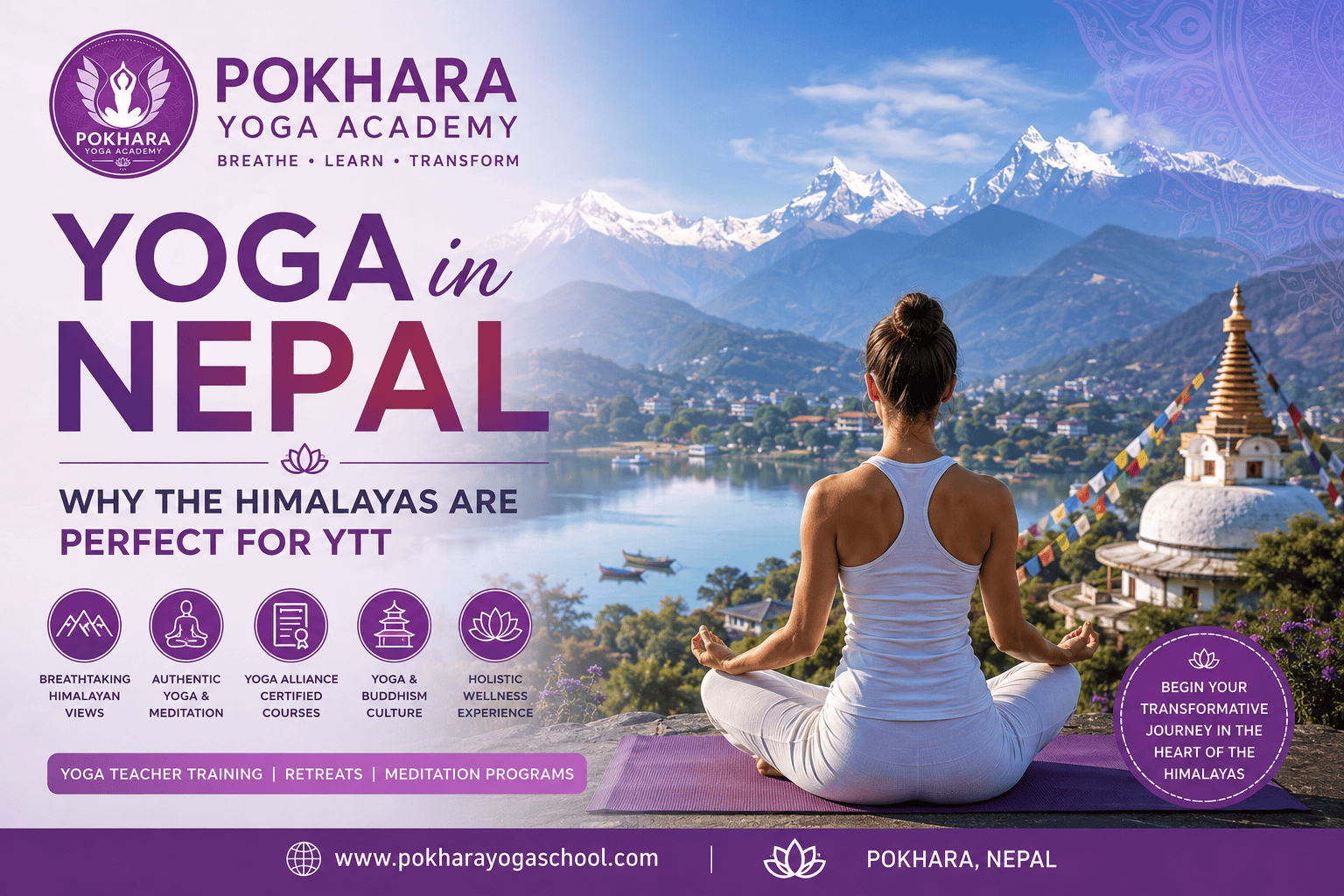
There is a particular kind of silence that settles over Pokhara in the early morning, just before the sun clears the ridgeline and lights up the Annapurna range in gold. The lake is still. The prayer flags haven’t started moving yet. And somewhere on a rooftop shala, a handful of practitioners are already seated, breath syncing with the mountain air. This is not a postcard fantasy — it is an ordinary Tuesday for anyone practicing yoga in Nepal.
Nepal doesn’t need to manufacture spiritual atmosphere. It simply has it, layered into the land over thousands of years by Hindu sages, Buddhist monks, and generations of mountain communities who built their lives around contemplation, altitude, and simplicity. For yoga practitioners and aspiring teachers weighing where to deepen their practice, Nepal deserves to be at the top of the list — not as a quieter alternative to Rishikesh, but as a destination with its own distinct, powerful claim on the tradition.
This guide takes an honest, in-depth look at why Nepal has become one of the most sought-after places on earth to study yoga, what makes its teacher training programs credible and rigorous, and how to choose a school that will actually serve your growth as a practitioner or teacher.
Key Takeaways
- Nepal offers a rare combination of Himalayan geography, living Hindu-Buddhist spiritual culture, and affordable, high-quality yoga education.
- Pokhara has emerged as Nepal’s leading hub for yoga teacher training, alongside Kathmandu, thanks to its lakeside calm and mountain access.
- Yoga Alliance-accredited schools in Nepal offer 100hr, 200hr, 300hr, and 500hr YTT programs that are internationally recognized.
- Nepal’s cost of living and program fees are typically lower than comparable programs in Europe, the US, or even parts of India, without compromising on instructor quality.
- The country’s altitude, clean air, and Buddhist meditation lineages add a dimension to pranayama and dhyana practice that is difficult to replicate elsewhere.
- Choosing the right school means checking accreditation, faculty credentials, curriculum depth, and post-certification support — not just the view from the yoga hall.
Why Yoga and Nepal Belong Together
A Living Spiritual Landscape, Not a Backdrop
Yoga did not arrive in Nepal as an import. The country sits at the confluence of two of the world’s oldest contemplative traditions — Hinduism and Vajrayana Buddhism — both of which treat meditation, breath control, and disciplined living as central practices rather than wellness trends. Pashupatinath Temple in Kathmandu, one of the holiest Shiva shrines in the world, and Lumbini, the birthplace of the Buddha, sit within the same small nation. Few countries on earth can claim both.
This matters for anyone serious about yoga, because the philosophy behind asana — the Yamas and Niyamas, the concept of dharma, the discipline of tapas — is not abstract here. It’s visible in daily life: in the monks debating philosophy in monastery courtyards, in the pilgrims circumambulating stupas, in the simple rhythm of mountain communities that have never needed a wellness app to remind them to breathe.
The Himalayas Change How You Practice
There’s a physiological argument for practicing at altitude, and there’s an experiential one — both matter.
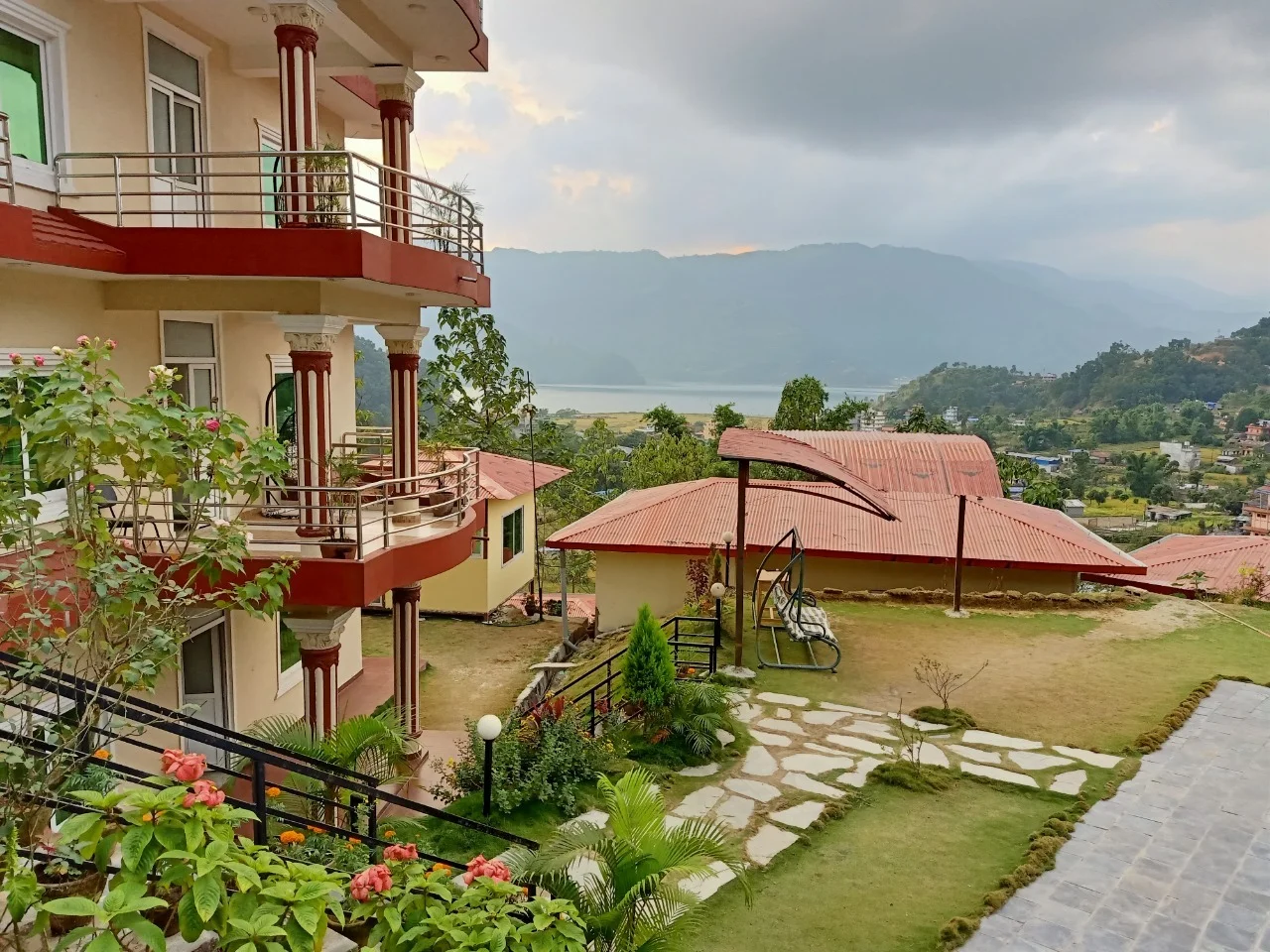
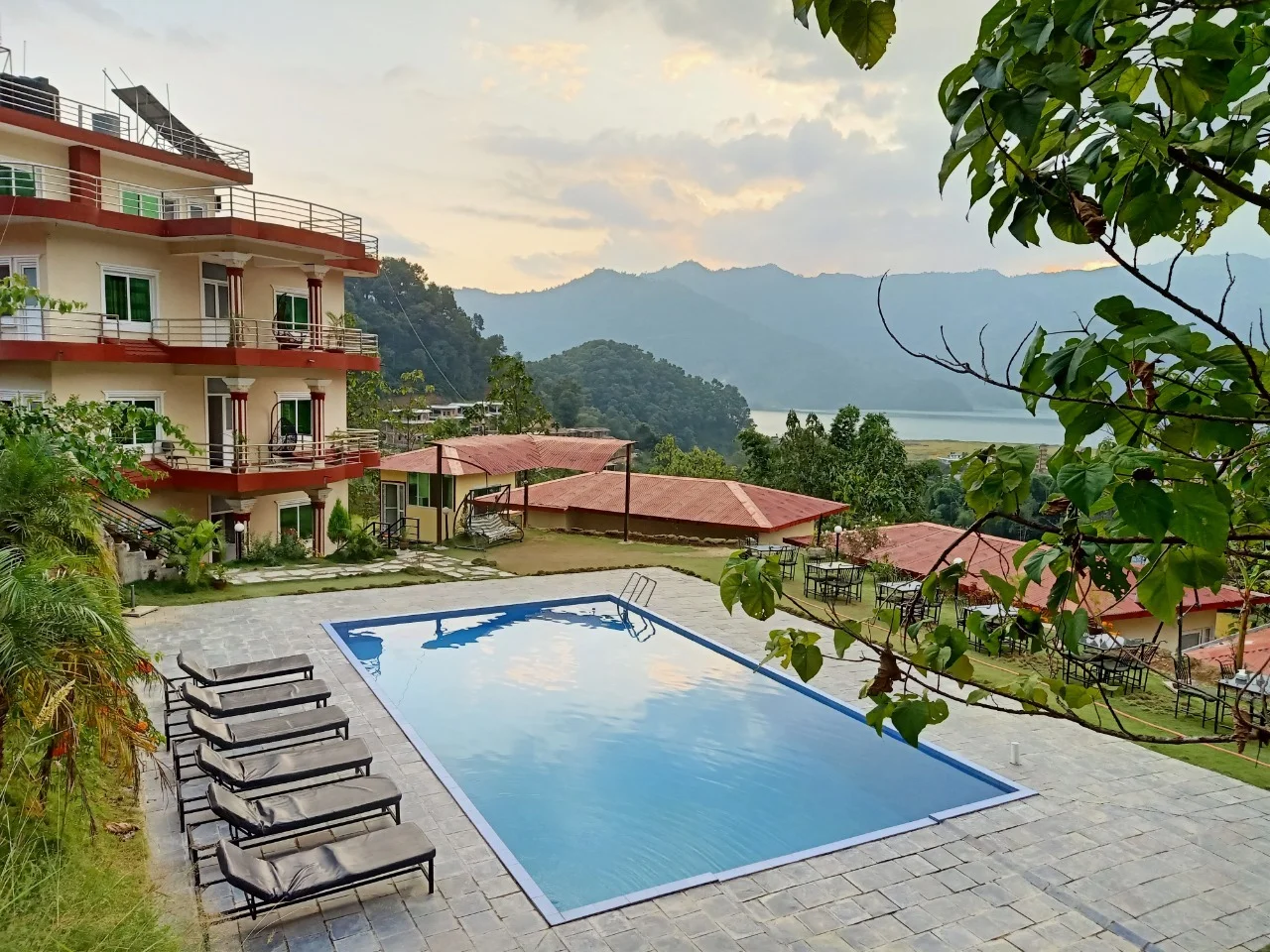
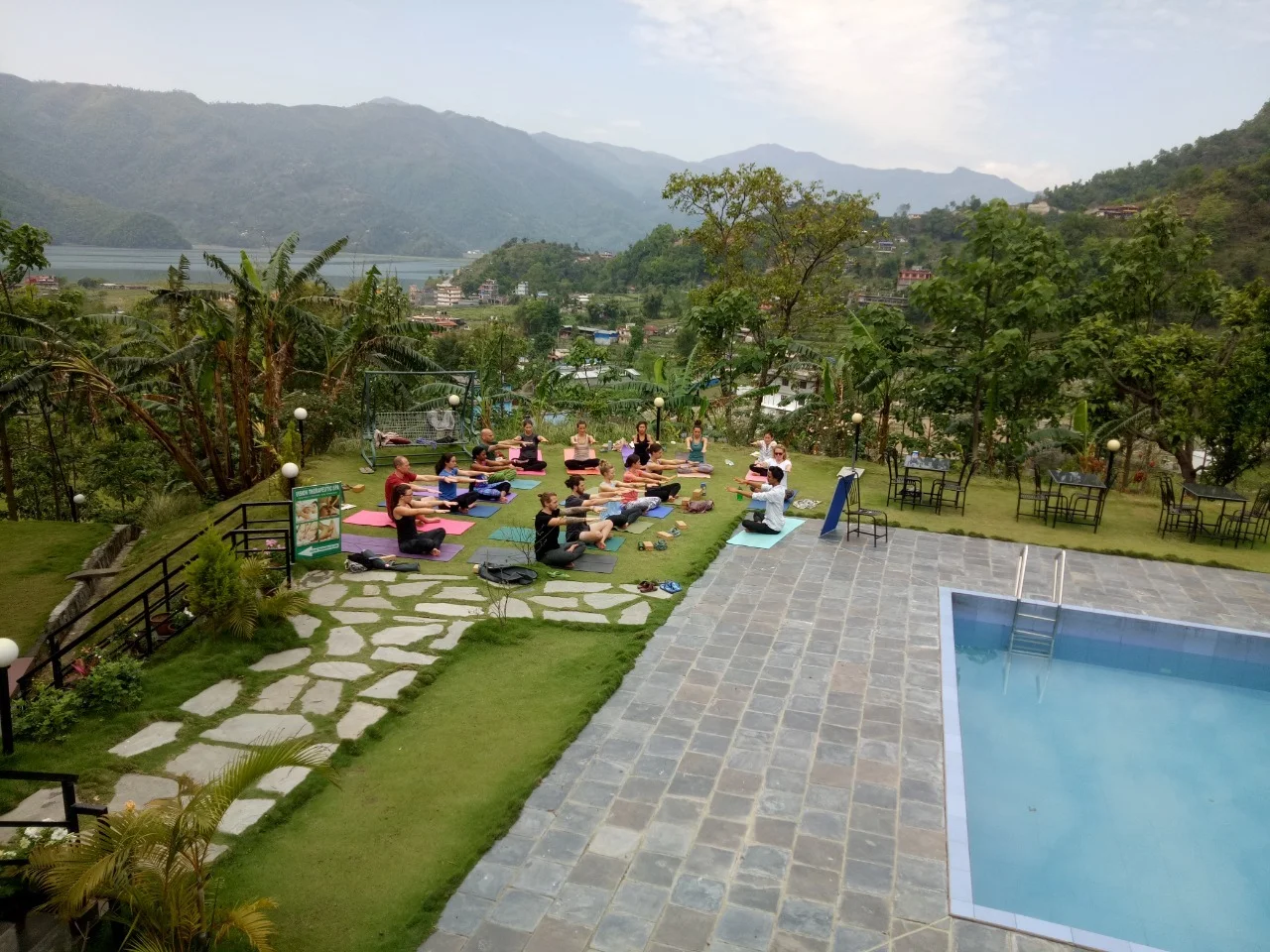
Pokhara sits at roughly 820 meters above sea level, with the Annapurna range rising dramatically just beyond the Phewa Lake. The air is thinner than at sea level but not so thin as to be a strain for most healthy practitioners, which makes it an ideal middle ground: enough altitude to notice a subtle deepening of the breath during pranayama, without the complications of extreme elevation. Ask any teacher who has led both a beach retreat and a mountain one — pranayama simply lands differently when the Himalayas are visible from your mat.
Beyond physiology, there is the psychological effect of scale. Sitting in meditation with an 8,000-meter peak in your field of vision has a way of quietly reorganizing your sense of self-importance. Many students describe their first Himalayan sunrise meditation as the single most memorable moment of their entire training — more than any asana breakthrough.
Affordability Without Compromise
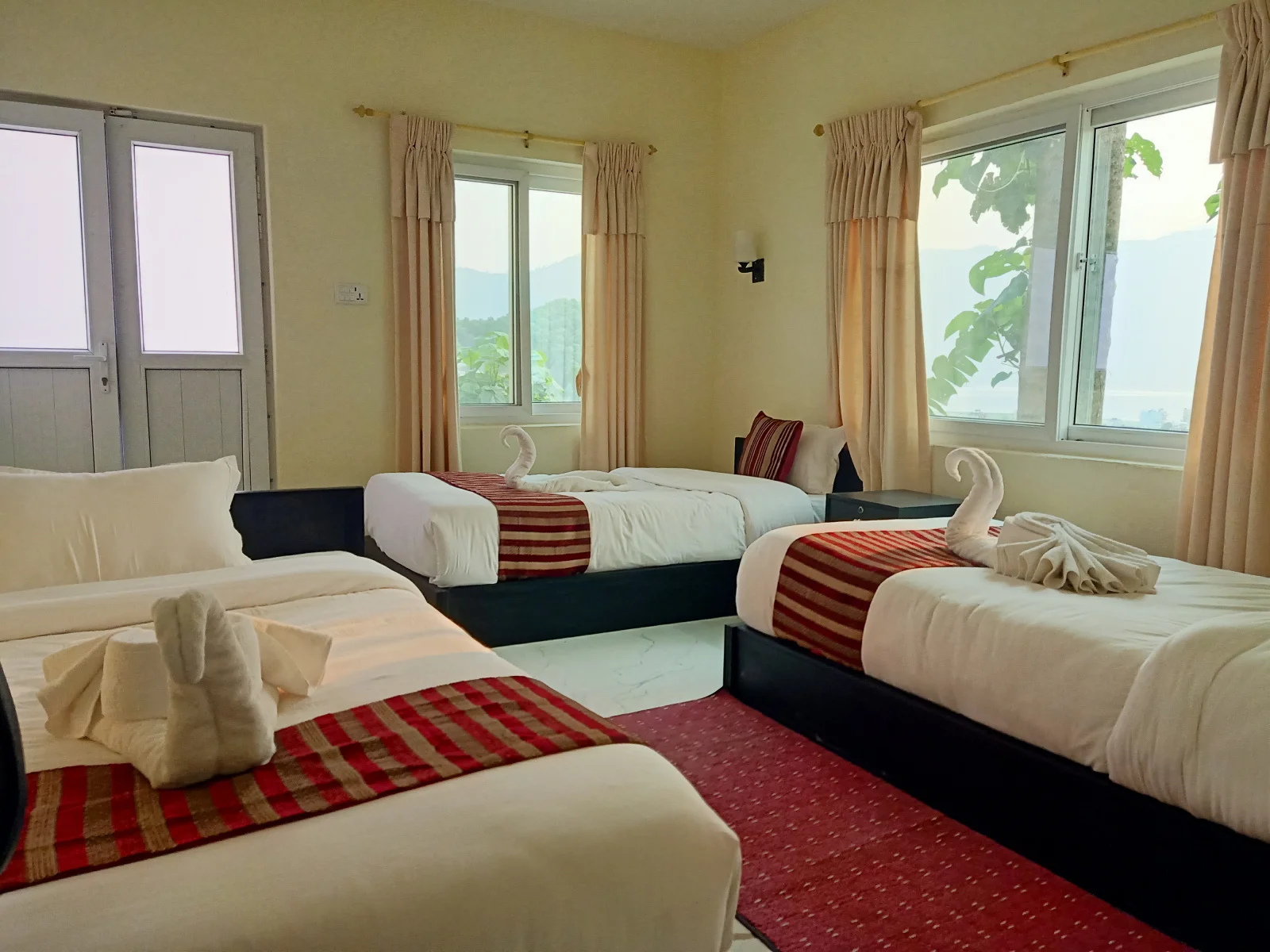
Nepal’s cost of living remains significantly lower than most Western countries and even some Indian cities, which translates directly into program fees, accommodation, and daily expenses for students. A 200-hour YTT in Nepal typically costs a fraction of an equivalent program in the US, UK, or Australia — while still including Yoga Alliance-recognized certification, experienced faculty, and full-board accommodation in many cases.
This affordability isn’t a sign of lower quality. It reflects Nepal’s lower baseline cost of goods and labor, not a shortcut on curriculum hours or teacher qualifications. For international students, particularly those from the US, Europe, and Australia, this means a month-long immersive training becomes financially realistic in a way it often isn’t at home.
Pokhara: Nepal’s Rising Yoga Capital
Why Pokhara, Specifically
While Kathmandu carries the historical and religious weight of Nepal’s capital, Pokhara has quietly become the country’s yoga epicenter — and for good reason. It offers:
- Lakeside serenity. Phewa Lake anchors the city with a calm, reflective energy that’s difficult to find in a busy capital.
- Direct mountain access. The Annapurna Sanctuary and Annapurna Base Camp treks begin here, letting students combine yoga training with world-class trekking.
- A slower pace of life. Compared to Kathmandu’s traffic and density, Pokhara moves gently — ideal for the kind of sustained focus a month-long YTT demands.
- A growing, genuine yoga community. Local and international teachers have built a real ecosystem here, not just a tourist circuit.
What a Day of Yoga Training in Pokhara Looks Like
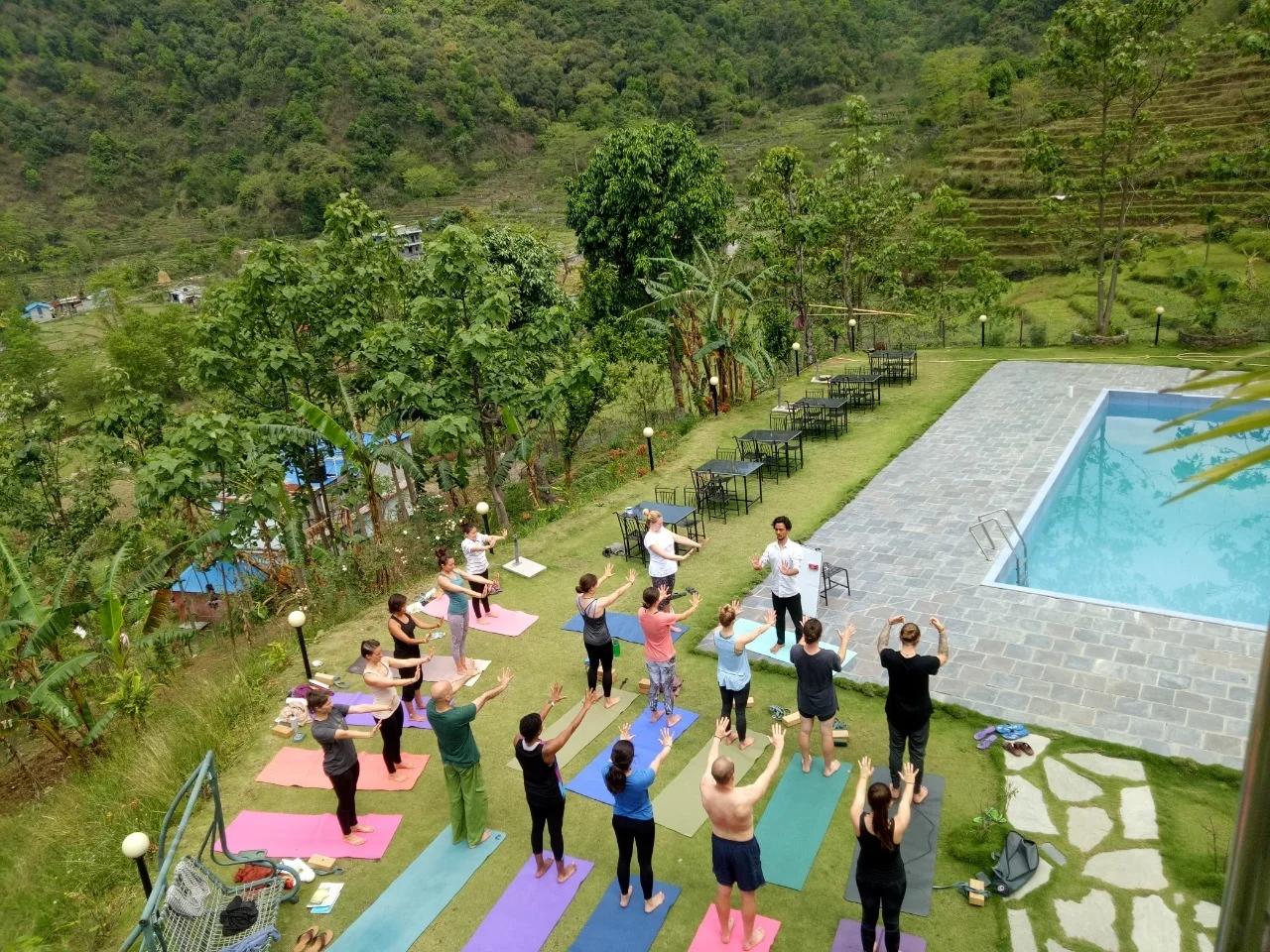
A typical day at a well-run Pokhara yoga school begins before sunrise, often around 5:30 AM, with pranayama and meditation as the mind is at its quietest. This is followed by an asana practice — usually Hatha or Ashtanga-based, depending on the school’s lineage — that runs through mid-morning. After a light, sattvic breakfast, the day shifts into philosophy and anatomy lectures, teaching methodology workshops, and practicum sessions where trainees practice adjusting and cueing each other.
Afternoons often include a second asana session, sometimes yin or restorative, along with karma yoga (selfless service) assignments — simple chores that reinforce humility and community, a practice rooted directly in traditional gurukul-style education. Evenings close with satsang, chanting, or self-study, and lights-out is early, in keeping with the day’s rhythm.
This structure isn’t arbitrary. It mirrors the traditional Indian gurukul model that most authentic YTT programs, whether in Nepal or India, are built around — discipline, service, and study woven into a single daily container.
Types of Yoga Programs Available in Nepal
100-Hour Yoga Teacher Training
Designed for practitioners who want a foundational, immersive introduction to teaching methodology without committing to a full month. It typically covers basic asana alignment, introductory pranayama, and core philosophy, and suits those testing whether teaching is the right path for them.
200-Hour Yoga Teacher Training
The internationally recognized entry point into professional yoga teaching. A legitimate 200hr program in Nepal will include asana practice and alignment, pranayama, meditation, yoga philosophy (often drawing on the Yoga Sutras of Patanjali), anatomy and physiology, teaching methodology, and a practicum component where trainees actually teach. Upon completion, graduates can register as RYT-200 with Yoga Alliance.
300-Hour and 500-Hour Advanced Trainings
For those who already hold a 200hr certification and want to deepen their expertise — in advanced asana, subtler pranayama techniques, therapeutic applications, or specialized areas like prenatal yoga or yoga therapy. Completing both levels allows registration as an RYT-500.
Specialized and Retreat-Style Programs
Beyond standard YTTs, many Nepal-based schools offer meditation-focused trainings, sound healing courses, and shorter retreat formats for practitioners who want restoration rather than certification. These are particularly popular among working professionals seeking a reset rather than a career shift.
What Makes a Yoga School in Nepal Genuinely Credible
The growth of yoga tourism in Nepal has, understandably, attracted schools of wildly varying quality. Choosing well matters — both for your safety as a student and for the legitimacy of any certification you walk away with.
Check for Real Accreditation
Look specifically for Yoga Alliance USA recognition, which is the most widely respected international credentialing body. A school displaying a Yoga Alliance badge should be verifiable directly on the Yoga Alliance website — don’t take the logo at face value. Some schools also hold registration with Nepal’s national bodies, which adds a layer of local legitimacy.
Evaluate the Faculty, Not Just the Marketing
A strong program will list its lead teachers by name, with their training lineage, years of teaching experience, and specific areas of expertise — anatomy, philosophy, pranayama, and so on. Be wary of programs that emphasize the retreat location far more than the qualifications of the people actually teaching you.
Look at Curriculum Depth
Ask for a detailed daily schedule and syllabus before booking. A credible 200hr program should show a genuine balance between physical practice, philosophy, anatomy, and teaching methodology — not a schedule that’s 80% asana and 20% everything else.
Consider Group Size and Personal Attention
Smaller cohorts mean more one-on-one alignment correction and more meaningful mentorship. If a school won’t tell you their typical batch size, that’s worth asking about directly.
Post-Training Support
The best schools don’t disappear after your certificate is printed. Look for programs that offer some form of alumni community, continuing education, or guidance on next steps — whether that’s finding your first teaching opportunity or continuing toward a 300hr certification.
Nepal vs. India for Yoga Training: An Honest Comparison
This is one of the most common questions prospective students ask, and the honest answer is: it depends on what you’re seeking.
Choose Rishikesh, India if you want the deepest historical density of yoga institutions, proximity to the Ganges for ritual and ceremony, and the largest concentration of traditional gurukuls and ashrams anywhere in the world. Rishikesh is often called the “Yoga Capital of the World” for good reason — the sheer volume of teachers, lineages, and philosophical schools is unmatched.
Choose Pokhara or Kathmandu, Nepal if you’re drawn to Himalayan scenery integrated directly into your daily practice, a quieter and less commercialized atmosphere, the option to combine your training with trekking, and a Buddhist-Hindu blend that offers a slightly different philosophical texture than India’s Hindu-centric ashram culture.
Neither is objectively “better” — they represent different flavors of the same lineage. Many serious practitioners eventually train in both, and schools with campuses across both regions can offer that continuity within a single, trusted institutional framework.
Best Time of Year to Practice Yoga in Nepal
Nepal’s climate varies significantly with altitude and season, which affects when a training will feel most comfortable.
Autumn (September to November) is widely considered the ideal window. Skies are clear after the monsoon, temperatures are mild, and mountain visibility is at its peak — this is also peak trekking season, making it easy to combine a YTT with an Annapurna trek afterward.
Spring (March to May) is the second-best window, with rhododendrons blooming across the hills and generally stable weather, though it can be hazier than autumn.
Winter (December to February) brings cold mornings, especially at altitude, but clear days and fewer crowds — a good option for practitioners who prefer solitude and don’t mind bundling up for early pranayama sessions.
Monsoon (June to August) is generally avoided for trekking-combined programs due to heavy rain and landslide risk on mountain routes, though indoor-focused training can still proceed comfortably.
The Cultural Dimension: Learning Beyond the Mat
A genuinely transformative yoga training in Nepal extends beyond asana and pranayama into cultural immersion. Many programs include visits to Buddhist monasteries, opportunities to observe or participate in Hindu temple rituals, and interactions with local communities that live according to rhythms very different from urban life elsewhere in the world.
This matters because yoga, at its philosophical root, is not a fitness routine — it is a complete system for examining the mind and reducing suffering (dukkha). Studying it in a place where that worldview is still actively lived, not just referenced in a textbook, gives students context that’s difficult to absorb from a studio in a Western city.
Who Should Consider Training in Nepal
- Career-changers exploring yoga teaching as a serious profession, who want globally recognized certification without the cost burden of training at home.
- Experienced practitioners looking to deepen their philosophical and technical understanding beyond what a local studio can offer.
- Trekkers and outdoor enthusiasts who want to combine physical training with the Himalayas’ natural landscape.
- Wellness professionals — physiotherapists, massage therapists, fitness trainers — seeking to add a credentialed, holistic skill set to their existing practice.
- Anyone in need of a genuine reset, away from constant connectivity, in an environment built for stillness.
Frequently Asked Questions About Yoga in Nepal
Q: Is Nepal a good place to learn yoga?
Yes. Nepal offers an authentic blend of Hindu and Buddhist spiritual traditions, Himalayan geography that deepens pranayama and meditation practice, and Yoga Alliance-accredited schools with experienced faculty, all at a more affordable cost than many Western training programs.
Q: What is the best city in Nepal for yoga teacher training?
A: Pokhara is widely considered Nepal’s leading yoga hub thanks to its lakeside calm, mountain views, and growing concentration of established schools, while Kathmandu offers deeper access to historical and religious sites like Pashupatinath and Boudhanath.
Q: How much does a 200-hour yoga teacher training in Nepal cost?
A: Costs vary by school and inclusions, but Nepal-based 200hr YTT programs are generally more affordable than equivalent training in the US, UK, or Australia, often including full-board accommodation and meals within the program fee. It’s best to request a detailed cost breakdown directly from any school you’re considering.
Q: Do I need prior yoga experience to join a YTT in Nepal?
A: Most 200hr programs welcome dedicated beginners with a consistent personal practice, not just advanced practitioners. Some schools recommend at least six months of regular practice before enrolling, so it’s worth checking a specific program’s prerequisites.
Q: Is Nepal safe for solo travelers attending a yoga retreat?
A: Nepal is generally considered safe and welcoming for solo travelers, including women traveling alone, particularly in established yoga and tourism hubs like Pokhara and Kathmandu. As with any international travel, standard precautions and choosing a reputable, well-reviewed school add an important layer of security.
Q: What’s the difference between a yoga retreat and a yoga teacher training in Nepal?
A: A retreat is typically shorter, less structured, and focused on relaxation, restoration, or a specific theme like meditation or sound healing, without a certification outcome. A teacher training is a structured, credentialed program — 100, 200, 300, or 500 hours — that follows a Yoga Alliance-aligned curriculum and prepares graduates to teach professionally.
Q: Can I combine a yoga teacher training with trekking in Nepal?
A: Yes, and it’s one of Nepal’s biggest draws. Many students schedule their YTT immediately before or after an Annapurna region trek, taking advantage of Pokhara’s position as the trekking gateway to the Annapurna Sanctuary and Annapurna Base Camp.
Q: Is a yoga certification earned in Nepal recognized internationally?
A: If the school is registered with Yoga Alliance USA (or an equivalent recognized international body), the certification is recognized globally, allowing graduates to register as an RYT and teach internationally, insure their classes, and pursue advanced-level trainings.
Final Thoughts: Why Nepal Deserves Its Place at the Top of Your List
Nepal doesn’t ask you to imagine a spiritual atmosphere — it simply hands you one, built over centuries by the people who have lived at the edge of these mountains and called it ordinary life. For a practitioner or aspiring teacher, that context is not decoration. It’s part of the curriculum.
Whether you’re drawn by the Himalayas at sunrise, the layered Hindu-Buddhist philosophical tradition, or simply the chance to study deeply without a Western price tag attached, Nepal offers something genuinely rare: a place where yoga is still, at its core, a way of life rather than a wellness category.
Pokhara Yoga Academy operates accredited yoga teacher training programs across Rishikesh, Pokhara, and Bali, alongside a fully online school, giving students the flexibility to train in the Himalayan setting, or format, that suits them best.
Comments are closed