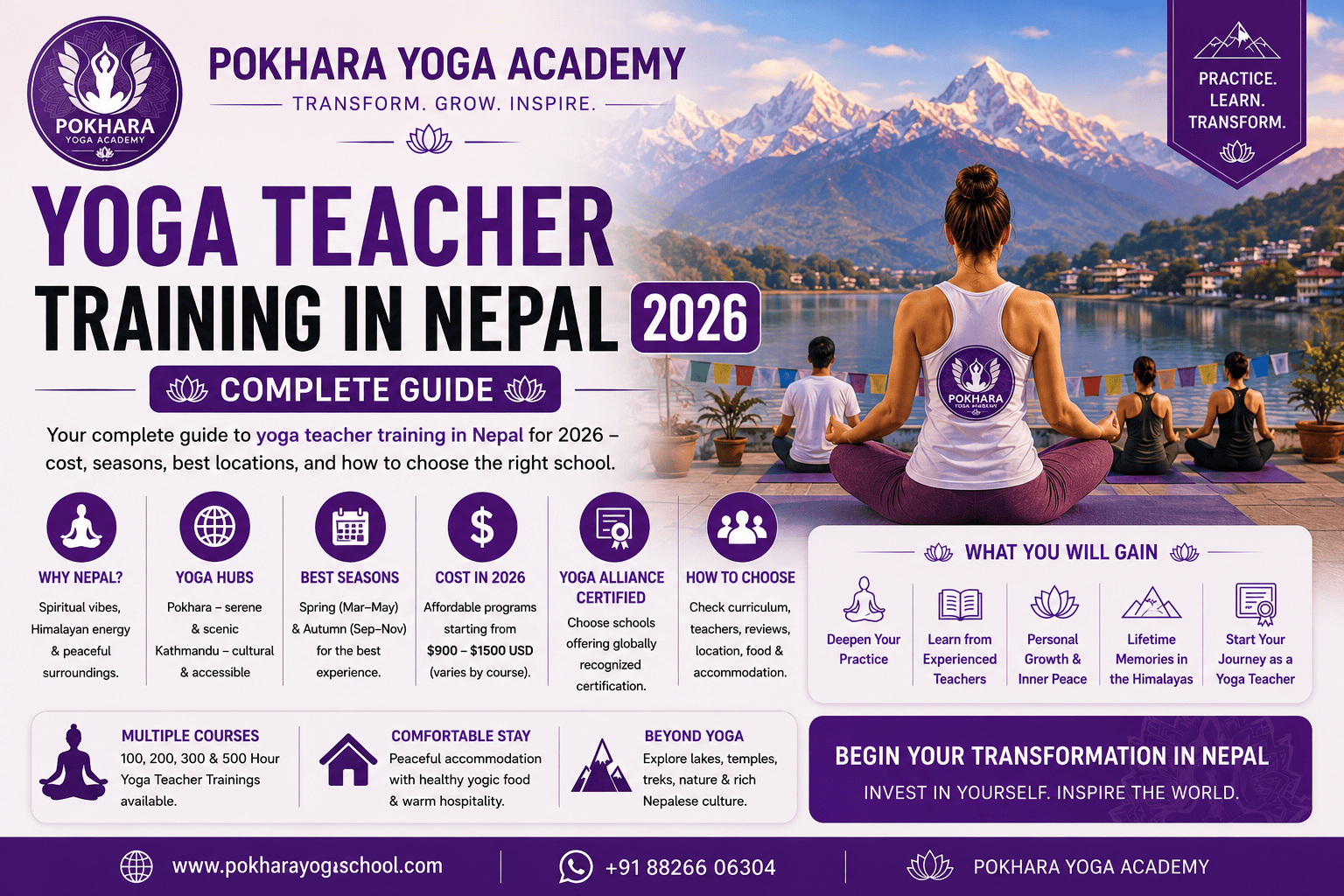
Complete Guide to Yoga Teacher Training in Nepal 2026
Everything you need to plan, budget, and choose the right program for training beneath the Himalayas — updated for the 2026 training season.
Key Takeaways
- Yoga teacher training in Nepal offers a genuinely different setting from India’s more crowded yoga hubs, with the Himalayas, Phewa Lake, and a quieter, slower pace of life shaping the experience.
- Pokhara has become Nepal’s leading yoga training destination, known for its lake, mountain views, and a growing number of Yoga Alliance-registered schools.
- The best training seasons in 2026 fall in spring (March to May) and autumn (late September to November), when skies are clear and temperatures are comfortable.
- Costs in Nepal are generally competitive with, and sometimes lower than, similar programs in India, especially once accommodation and meals are factored in.
- Choosing between Nepal and India often comes down to atmosphere and personal preference rather than one being objectively better than the other.
Introduction: A Quieter Path to the Same Certification
Ask most people where to do yoga teacher training, and India comes up first, almost automatically. Fewer people think of Nepal. That’s starting to change, and for good reason.
Nepal offers the same internationally recognized Yoga Alliance certification pathway as India, but wrapped in a noticeably different setting: fewer crowds, dramatic Himalayan views, and a pace of life that feels, to many students, even more removed from ordinary routine. For 2026, more international students are actively choosing Nepal, and specifically Pokhara, as their training destination.
This guide covers everything you need to plan a 2026 yoga teacher training in Nepal: the best time to go, what training actually looks like, realistic costs, and how it compares to training in India. It’s written to give you a genuinely complete picture, not just a highlight reel.
At Pokhara Yoga Academy, we’ve watched this shift happen firsthand. Our campus sits directly in Pokhara, Nepal’s most established yoga training hub, and this guide draws on what we see, season after season, in the students who choose to train here.
Why Nepal Is Gaining Ground as a Yoga Training Destination
The Himalayan Setting
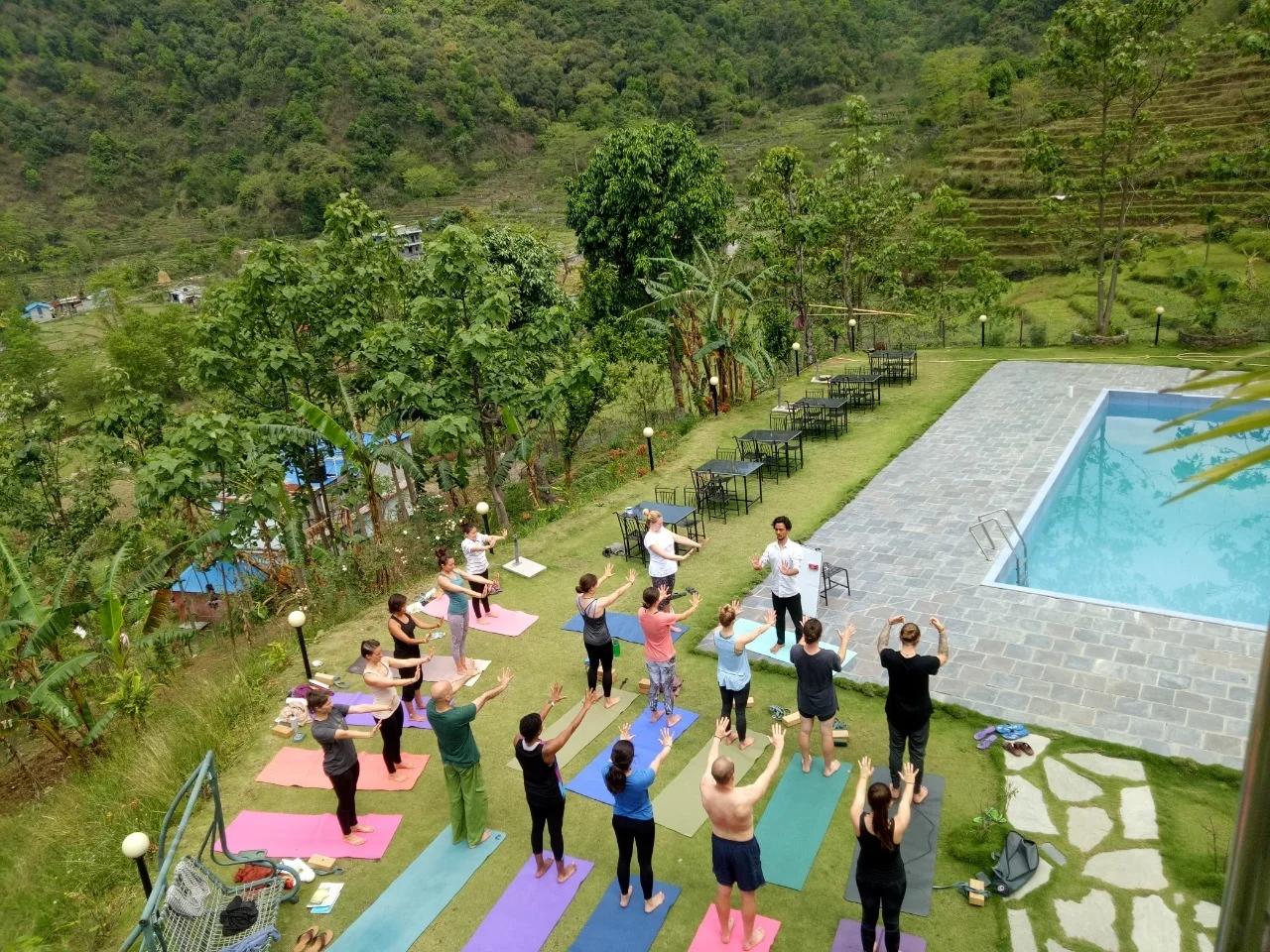
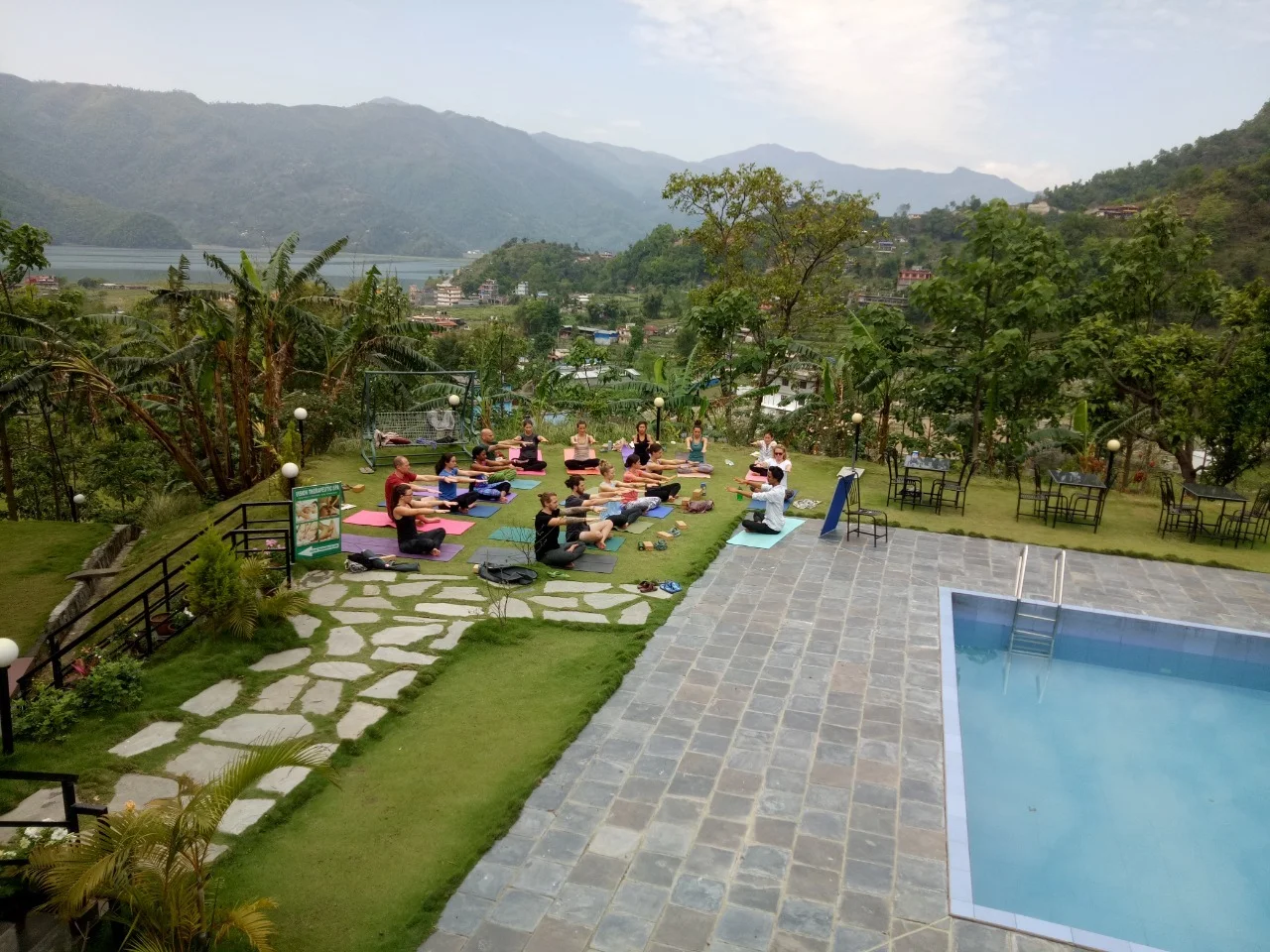
Few training environments in the world can offer daily views of the Annapurna range. In Pokhara specifically, many schools run outdoor sessions with direct mountain views, something that’s genuinely rare among global yoga destinations.
A Slower, Less Crowded Atmosphere
Compared to India’s busiest yoga towns, Nepal’s training hubs tend to feel calmer and less commercially crowded. For students who want deep immersion without a heavily touristic backdrop, this matters.
A Country With Its Own Deep Yogic and Spiritual Roots
Nepal isn’t a secondhand yoga destination borrowing from its neighbor. It has its own long history of Hindu and Buddhist spiritual practice, visible in its temples, monasteries, and daily cultural life, which gives training here genuine philosophical and cultural depth.
Pokhara: Nepal’s Leading Yoga Teacher Training Hub
Why Pokhara, Specifically
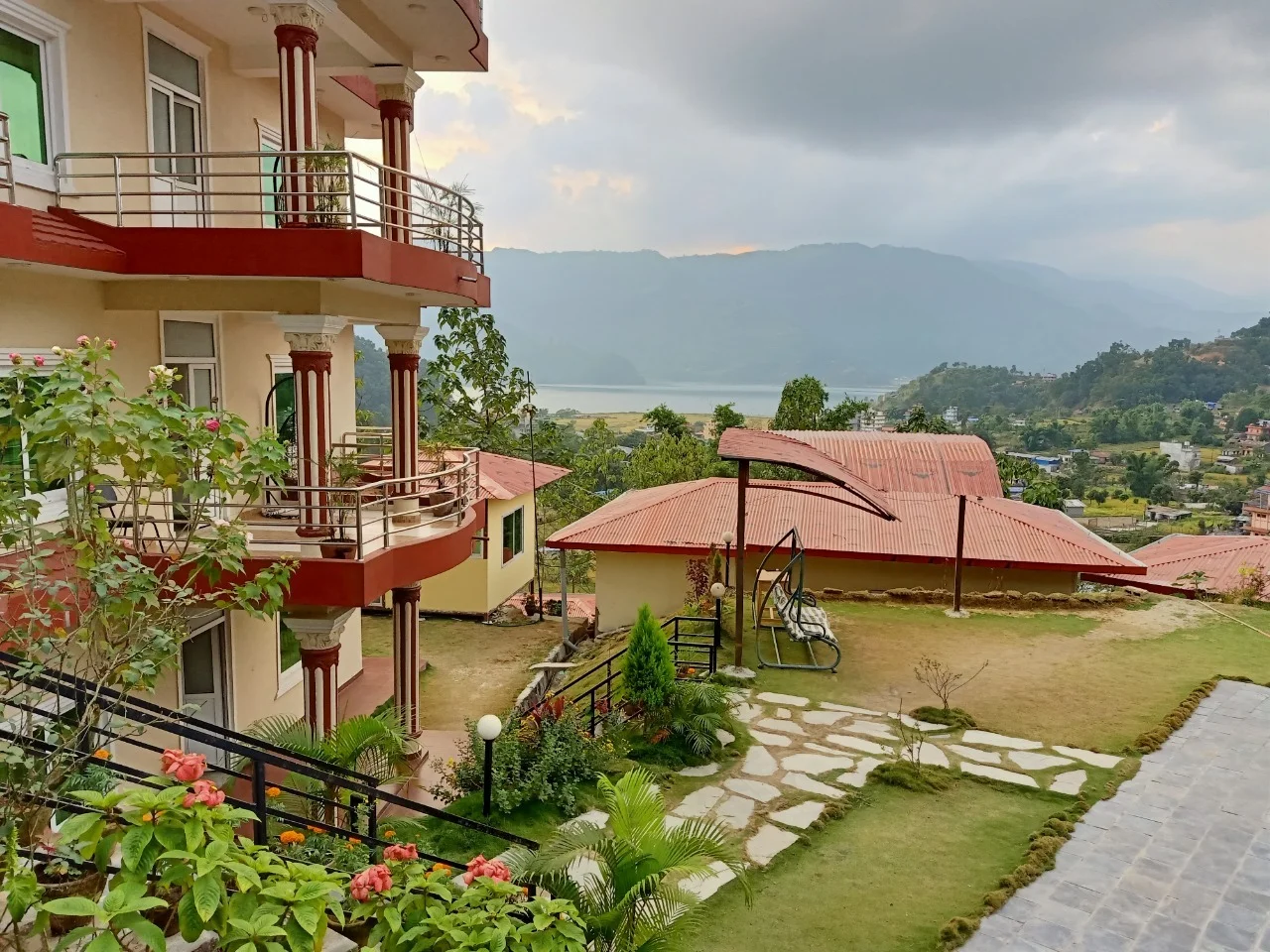
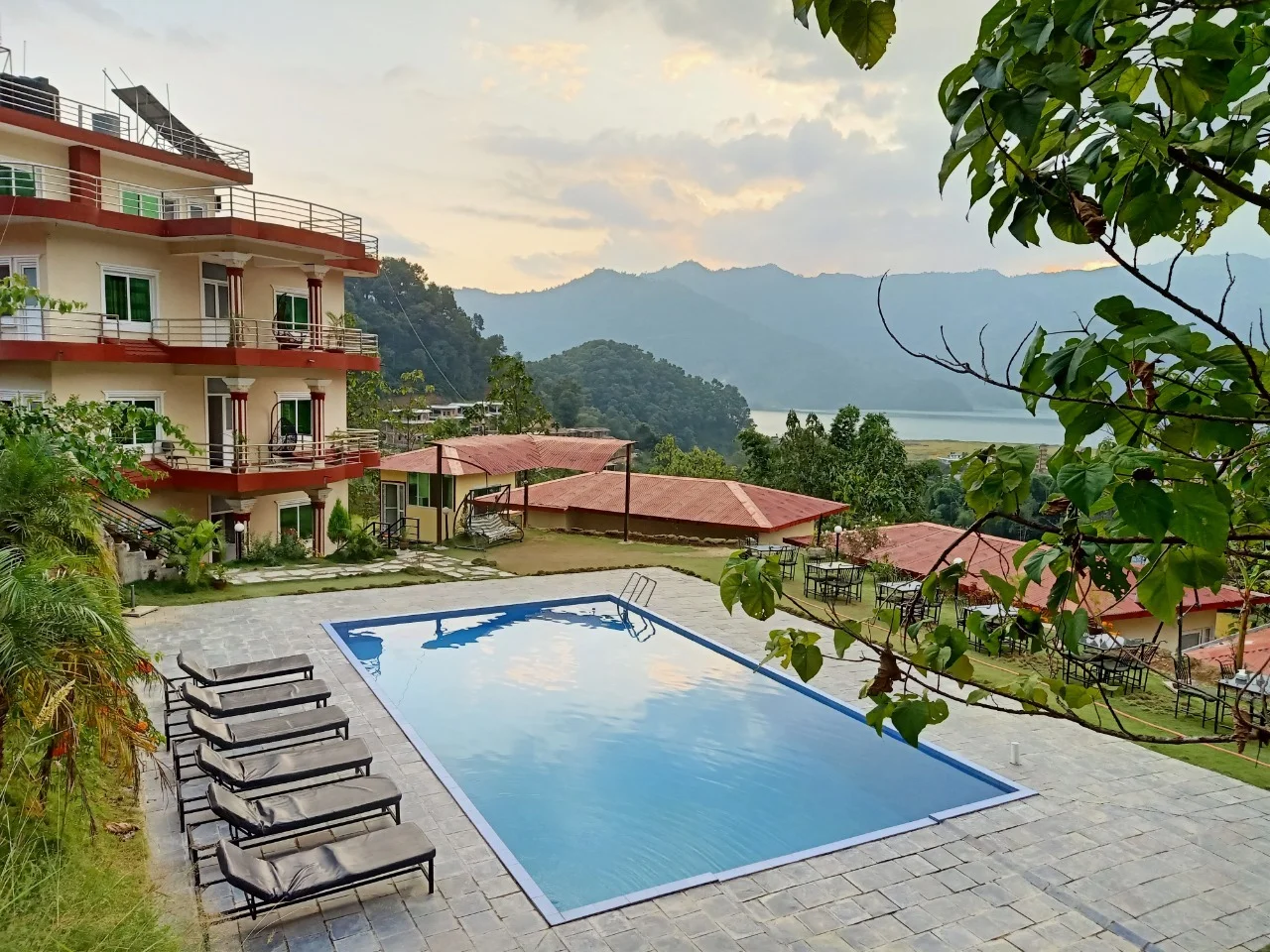
Pokhara has emerged as Nepal’s primary yoga training destination, built around Phewa Lake and framed by the Annapurna Himalayan range. It offers a rare combination: serious training infrastructure, natural beauty, and a manageable size that makes it easy to navigate, even for first-time visitors to Nepal.
What Makes Pokhara Different From Kathmandu
Kathmandu, Nepal’s capital, offers rich cultural and historical depth, but it’s also busier, more polluted, and more chaotic than Pokhara. Most dedicated yoga schools favor Pokhara specifically because its quieter environment better supports the kind of daily discipline a residential YTT requires.
A Lakeside Practice Environment
Many Pokhara-based programs incorporate the lake directly into the experience, with sunrise meditation sessions by the water and, on clear mornings, direct views of the Himalayas reflected on the surface. This isn’t just scenery. A calm, natural setting genuinely supports the kind of sustained focus a teacher training program asks of you.
What a Yoga Teacher Training in Nepal Actually Involves
Standard Program Length and Structure
Most schools in Nepal, including Pokhara-based programs, offer the internationally recognized 200-hour Yoga Alliance curriculum, typically completed over 3 to 4 weeks in a residential format. Advanced 300-hour programs are also increasingly available for graduates continuing their training.
Core Subjects You’ll Study
- Asana practice — usually Hatha and Vinyasa styles, with some schools incorporating Ashtanga
- Pranayama — structured breathing techniques for energy regulation and calm
- Meditation — both seated practices and guided techniques like Yoga Nidra
- Anatomy and physiology — how the body moves, and how to teach it safely
- Yoga philosophy — Patanjali’s Yoga Sutras, the eight limbs, and yogic ethics
- Teaching methodology — sequencing, cueing, and practice teaching sessions
A Sample Daily Schedule in Pokhara
- 5:30–6:00 AM: Wake, herbal tea
- 6:00–7:30 AM: Pranayama and meditation, often lakeside
- 7:30–9:30 AM: Morning asana practice
- 9:30–10:30 AM: Breakfast
- 11:00 AM–1:00 PM: Philosophy or anatomy lecture
- 1:00–3:00 PM: Lunch and rest
- 3:30–5:00 PM: Teaching methodology and practice teaching
- 5:30–7:00 PM: Evening asana or restorative session
- 7:30 PM: Dinner
Best Time for Yoga Teacher Training in Nepal in 2026
Spring Season: March to May
Spring offers clear skies, blooming rhododendrons, and comfortable daytime temperatures, making it one of the two strongest windows for training in 2026. Mountain visibility tends to be excellent during this period.
Autumn Season: Late September to November
Autumn is widely considered Nepal’s best season overall. Skies are typically at their clearest right after monsoon season ends, offering some of the sharpest Himalayan views of the year, alongside stable, comfortable temperatures.
Why Summer and Peak Winter Are Less Popular
Nepal’s monsoon season, roughly June through August, brings heavy rain, especially in lower-elevation areas like Pokhara, which limits outdoor practice. Deep winter months, particularly December and January, bring cold temperatures, especially at higher elevations, though Pokhara’s relatively lower altitude keeps it more moderate than mountain regions further north.
Quick 2026 Seasonal Reference
Season | Months | Suitability for Training |
|---|---|---|
Spring | March–May | Excellent — clear skies, comfortable weather |
Monsoon | June–August | Limited — heavy rain in lower regions |
Autumn | Late Sept–Nov | Best overall — peak clarity and comfort |
Winter | December–February | Cooler, but generally still workable in Pokhara |
Nepal vs. India: How to Choose
This comparison comes up constantly, and it’s a genuinely personal decision rather than one with a single right answer.
Choose Nepal If You Want…
- A quieter, less commercially crowded training environment
- Dramatic, direct Himalayan mountain views as part of daily practice
- A lakeside setting alongside mountain scenery, especially in Pokhara
- A country with its own distinct spiritual and cultural traditions, separate from India’s
Choose India If You Want…
- The largest concentration of long-established, lineage-based yoga schools
- Proximity to the Ganges River and India’s most iconic yoga towns, like Rishikesh
- A wider range of program styles and specializations to choose from
- Direct access to India’s textual and philosophical yoga tradition at its most concentrated
The Certification Is the Same Either Way
It’s worth saying clearly: a Yoga Alliance-registered 200-hour certification carries the same international recognition whether it’s earned in Nepal or India. The choice comes down to environment and experience, not certification value.
Cost of Yoga Teacher Training in Nepal
What Affects the Price
- Accommodation type — shared rooms cost less than private rooms
- School reputation and faculty experience
- Included extras — some programs bundle in excursions, spa treatments, or additional workshops
- Season — peak months like autumn can carry a modest premium over quieter periods
What’s Usually Included
Most residential programs in Nepal include tuition, accommodation, and meals in one package price, similar to standard practice across South Asian training destinations. Always request a full breakdown before booking, since some schools price training and accommodation separately.
How Nepal Compares to India on Cost
Generally speaking, training costs in Nepal are competitive with India, and can sometimes run slightly lower once accommodation and meals are factored in, particularly outside of India’s most internationally famous yoga towns.
Getting to Nepal for Training
Flying Into Kathmandu
Most international travelers arrive through Tribhuvan International Airport in Kathmandu, Nepal’s main international gateway.
Traveling On to Pokhara
From Kathmandu, Pokhara is reachable by a short domestic flight, which is the fastest option, or by road, which takes considerably longer but offers scenic mountain views along the way. Many schools can help arrange this onward connection as part of the booking process.
Visa Requirements
Most nationalities can obtain a Nepal tourist visa on arrival, though requirements can change, so it’s worth checking current visa rules directly with Nepal’s official immigration resources before your 2026 trip.
What to Look for in a Nepal-Based Yoga School
- Yoga Alliance registration. Confirm the school is properly accredited, not just self-described as certified.
- Faculty experience and background. Ask how long teachers have practiced and taught, not just when they were certified.
- Class size. Smaller cohorts generally allow more individual feedback.
- Independent reviews. Look beyond a school’s own website for honest, unfiltered feedback.
- Clear inclusions. Get a full written breakdown of what’s covered in the program price.
- Post-certification support. Ask whether the school offers any continued community, mentorship, or job assistance after graduation.
Common Questions About Training in Nepal, Addressed Honestly
“Is Nepal safe for solo travelers, including women?”
Pokhara is one of Nepal’s most visited destinations by international travelers, including many women traveling solo, and has solid tourism infrastructure to support this. As with any international travel, sensible precautions and choosing a reputable, established school both matter.
“Do I need to be experienced with high altitude?”
Pokhara sits at a relatively moderate elevation compared to Nepal’s high mountain regions, so most visitors don’t experience significant altitude effects here, unlike trekking routes deeper into the Himalayas.
“Will the training be as rigorous as programs in India?”
A properly Yoga Alliance-registered 200-hour program covers the same required curriculum regardless of country. What changes is the surrounding environment and pace, not the depth of the required coursework itself.
Frequently Asked Questions
Q: Is yoga teacher training in Nepal recognized internationally?
A: Yes, provided the school is registered with Yoga Alliance or an equivalent internationally recognized accrediting body. This allows graduates to register as certified teachers and seek work in most countries worldwide.
Q: What is the best time for yoga teacher training in Nepal in 2026?
A: The two strongest windows are spring, from March to May, and autumn, from late September through November, both offering clear skies and comfortable temperatures for daily outdoor practice.
Q: Is Pokhara or Kathmandu better for yoga teacher training?
A: Pokhara is generally preferred for dedicated yoga teacher training, thanks to its quieter atmosphere, lakeside setting, and direct Himalayan views, while Kathmandu offers rich cultural depth but a busier, more chaotic environment.
Q: How does the cost of training in Nepal compare to India?
A: Costs are generally competitive between the two countries, with Nepal sometimes running slightly lower once accommodation and meals are included, particularly outside India’s most internationally recognized yoga towns.
Q: Do I need previous yoga experience to train in Nepal?
A: Most 200-hour programs, including those in Pokhara, are designed to accommodate a range of experience levels, including relative beginners, though a consistent personal practice beforehand is generally recommended.
Q: How long is a typical yoga teacher training program in Nepal?
A: The most common format is the 200-hour foundational training, typically completed over 3 to 4 weeks in a residential setting, with 300-hour advanced programs also available for continuing students.
Q: Is altitude sickness a concern for yoga training in Pokhara?
A: Generally, no. Pokhara sits at a moderate elevation compared to Nepal’s high mountain trekking regions, so most visitors don’t experience significant altitude effects while training there.
A Note From Pokhara Yoga Academy
Training beneath the Himalayas changes something about how the work lands. There’s a particular kind of stillness that comes from practicing pranayama as the sun rises over Phewa Lake, mountains catching the first light in the distance, that’s difficult to describe until you’ve felt it yourself. As a Yoga Alliance-registered school based directly in Pokhara, we built our program around this setting deliberately, not as a scenic backdrop, but as part of what makes the training genuinely transformative. If 2026 is the year you’re finally making this happen, we’d be glad to have you here.
This article reflects general information about yoga teacher training in Nepal for the 2026 season. Program details, visa requirements, and costs vary and can change, so always verify specifics directly with any school you’re considering before booking.
Comments are closed