Yoga in Kathmandu: A Haven for Spiritual and Physical Wellness
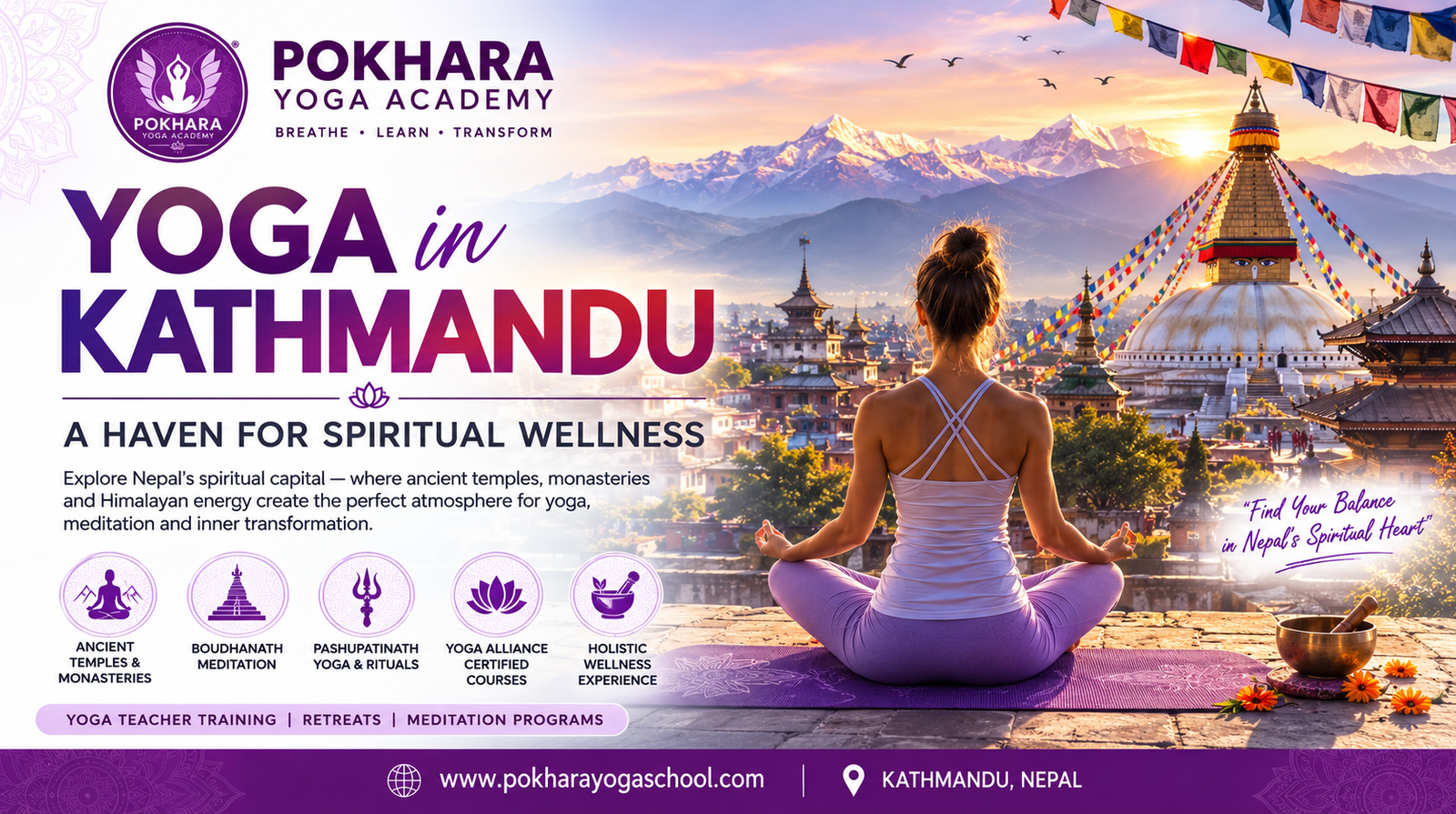
Kathmandu doesn’t announce its spirituality — it simply surrounds you with it. Temple bells ring out over rooftops at dawn. Prayer wheels turn under the hands of pilgrims who have walked the same path every morning for decades. Incense drifts from doorways along streets so old that some of their stone has been worn smooth by centuries of bare feet. In this city, the boundary between ordinary life and sacred practice barely exists — and that makes it one of the most compelling places on earth to deepen a yoga practice.
For practitioners weighing where to study yoga in Kathmandu, the decision often comes down to something less tangible than a class schedule or studio review. It comes down to atmosphere — and Kathmandu has atmosphere in a way few cities do. This guide takes a close, honest look at what makes Nepal’s capital such a powerful place to practice, how to find a credible teacher training program here, and what a genuine immersion in Kathmandu’s yoga culture actually looks like.
Key Takeaways
- Kathmandu blends living Hindu and Buddhist traditions — Pashupatinath, Boudhanath, and Swayambhunath sit within a short distance of one another, giving students direct access to centuries-old spiritual practice.
- The city hosts a growing number of Yoga Alliance-accredited schools offering 100hr, 200hr, 300hr, and 500hr teacher trainings, alongside shorter retreats and meditation-focused courses.
- Kathmandu’s valley setting offers a milder introduction to Himalayan altitude than higher mountain towns, making it accessible for practitioners of varying fitness levels.
- Studying yoga here means learning philosophy in a place where it is still actively lived — not just studied from a textbook.
- Choosing a credible school requires checking real accreditation, faculty transparency, curriculum balance, and post-training support, not just the temple views in the marketing photos.
- Kathmandu pairs naturally with Pokhara for students who want both cultural depth and Himalayan scenery within a single Nepal-based training journey.
Why Kathmandu Holds a Unique Place in the Yoga World
The Valley Where Two Traditions Meet
Kathmandu Valley is one of the only places on earth where Hindu and Buddhist spiritual life have coexisted, intertwined, and influenced one another for over a thousand years. Pashupatinath Temple, one of the holiest Shiva shrines in existence, draws Hindu pilgrims from across the subcontinent. A short drive away, Boudhanath Stupa — one of the largest Buddhist stupas in the world — anchors a community of Tibetan monks, refugees, and practitioners who have kept Vajrayana Buddhist tradition alive here since the mid-20th century. Swayambhunath, the hilltop “Monkey Temple,” blends both traditions into a single sacred site overlooking the entire city.
This isn’t background scenery for a yoga holiday. It’s a living demonstration of the philosophical roots that yoga itself draws from — devotion, non-attachment, the discipline of ritual, the quieting of the mind. Studying asana and pranayama in a city built around these ideas gives students a context that a studio anywhere else simply cannot replicate.
A Gentler Introduction to Himalayan Altitude
Kathmandu sits at approximately 1,400 meters above sea level — higher than Pokhara, but still low enough that most healthy practitioners adjust within a day or two without issue. This makes it an accessible entry point into Himalayan yoga practice for students who want the mountain atmosphere without committing to the higher elevations of a trekking-based retreat. The mild elevation is often just enough to notice a subtle shift in breath capacity during pranayama, adding a physiological dimension to practice that flatland studios can’t offer.
A City Built Around Ritual and Discipline
Daily life in Kathmandu still moves according to ritual rhythms that have faded in much of the modern world. Shopkeepers perform morning puja before opening their doors. Pilgrims complete kora — circumambulation — around Boudhanath at sunrise and sunset. This visible discipline reinforces something every yoga teacher training tries to instill: that practice is not about occasional inspiration, but about consistent, humble repetition.
Kathmandu’s Yoga Landscape: What Students Can Expect
The Structure of a Teacher Training Day
Most reputable Kathmandu-based yoga schools follow a structure rooted in traditional gurukul-style education — the same model followed across serious training programs in India and Nepal alike. A typical day begins before sunrise with meditation and pranayama, followed by an asana session, usually Hatha-based with Ashtanga or Vinyasa elements depending on the school’s lineage.
Mid-mornings are generally reserved for philosophy lectures — often working through the Yoga Sutras of Patanjali or the Hatha Yoga Pradipika — alongside anatomy and physiology instruction. Afternoons bring a second practice session, teaching methodology workshops, and practicum time where trainees teach each other under supervision. Many schools build in visits to Pashupatinath, Boudhanath, or Swayambhunath as part of the cultural curriculum, not as optional sightseeing but as an integrated part of understanding the philosophy being studied.
Types of Programs Available in Kathmandu
100-Hour Yoga Teacher Training
A foundational, shorter-format program suited to practitioners who want structured teaching methodology and deeper philosophical grounding without committing to a full month-long course.
200-Hour Yoga Teacher Training
The internationally recognized standard entry point into professional teaching. A legitimate 200hr program in Kathmandu will cover asana alignment, pranayama, meditation, philosophy, anatomy, teaching methodology, and supervised teaching practice, qualifying graduates to register as RYT-200 with Yoga Alliance.
300-Hour and 500-Hour Advanced Trainings
For certified teachers ready to deepen their expertise in advanced asana, therapeutic yoga, or specialized applications. Completing both 200hr and 300hr levels allows registration as RYT-500.
Meditation and Philosophy-Focused Retreats
Given Kathmandu’s density of monasteries and temples, many schools here offer meditation-specific retreats — sometimes incorporating Tibetan Buddhist meditation techniques alongside classical yogic dhyana practices — for students who want restoration and depth rather than a teaching certificate.
How to Choose a Credible Yoga School in Kathmandu
Kathmandu’s popularity as a wellness destination has, inevitably, attracted schools of uneven quality. A little diligence before booking protects both your investment and your safety.
Verify Real Accreditation
Confirm that a school is registered with Yoga Alliance USA or an equivalent internationally recognized body, and check that registration directly on the Yoga Alliance website rather than trusting a logo on a homepage. Some schools also carry recognition from Nepal’s domestic wellness or tourism boards, which can add a layer of local accountability.
Look Closely at Who Is Actually Teaching
A trustworthy program will name its lead instructors, along with their training lineage, years of experience, and specific specializations — anatomy, philosophy, therapeutic yoga, and so on. Be cautious of listings that emphasize temple views and rooftop photos far more than instructor credentials.
Review the Curriculum in Detail
Request the full daily schedule and syllabus before enrolling. A balanced 200hr program should devote meaningful time to philosophy, anatomy, and teaching methodology — not just repeated asana sessions dressed up as a full curriculum.
Ask About Group Size
Smaller cohorts allow for genuine one-on-one alignment feedback and mentorship. If a school is vague about batch sizes, ask directly before committing.
Consider What Happens After Certification
The strongest schools maintain some form of alumni network, continuing education pathway, or guidance toward first teaching opportunities. A program that treats graduation as the finish line, rather than a beginning, is worth questioning.
Kathmandu’s Neighborhoods: Where Students Actually Stay and Practice
Boudhanath: Immersion in Tibetan Buddhist Life
Many yoga schools and guesthouses cluster around Boudhanath Stupa, where the daily rhythm of kora, butter-lamp offerings, and monastic chanting sets a naturally meditative tone before a single asana is practiced. Students staying here often describe waking to the low hum of chanting drifting across rooftops — an atmosphere that makes early-morning pranayama feel less like a scheduled activity and more like joining something already in motion.
Patan: Living Newari Heritage
Just across the Bagmati River from central Kathmandu, Patan (Lalitpur) offers a quieter, artisan-driven pace, centered around its own Durbar Square and centuries-old Newari temple architecture. Some smaller, boutique-style yoga schools have chosen Patan specifically for this slower rhythm, appealing to students who want cultural richness without the density of central Kathmandu’s tourist areas.
Thamel and Central Kathmandu: Convenience and Community
Thamel remains the city’s most tourist-accessible neighborhood, offering easy access to cafés, bookshops, and a built-in international community of travelers and long-term residents. Some students prefer this base for its convenience and social energy, particularly if they’re combining a training with independent travel before or after the course.
Karma Yoga and Community Service as Part of Practice
A number of Kathmandu-based programs weave karma yoga — selfless service — directly into the training schedule, often through partnerships with local schools, monasteries, or community kitchens. This isn’t an add-on for the sake of a good photo; it reflects a core teaching within the Bhagavad Gita and broader yogic philosophy that action performed without attachment to outcome is itself a spiritual practice. Students frequently describe these service components as some of the most grounding parts of their entire training, second only to their first sunrise meditation session.
Kathmandu vs. Pokhara: Choosing the Right Nepal Base
Both cities offer legitimate, high-quality yoga education, but they serve slightly different priorities.
Kathmandu suits students prioritizing cultural and religious depth — direct access to Pashupatinath, Boudhanath, and Swayambhunath, a denser concentration of monasteries, temples, and living ritual, and a valley setting that eases newcomers into Himalayan altitude gradually.
Pokhara suits students prioritizing natural scenery and outdoor integration — lakeside calm, direct access to the Annapurna Sanctuary for trekking, and a quieter, less urban pace of daily life.
Many students choose to experience both — beginning philosophical and cultural grounding in Kathmandu before moving to Pokhara for a nature-integrated training, or vice versa. Schools with campuses in both locations, or strong partnerships between them, make that continuity far easier to arrange.
Best Time of Year to Practice Yoga in Kathmandu
Autumn (September to November) is the most popular season, bringing clear skies after the monsoon, comfortable daytime temperatures, and some of the year’s most significant festivals, including Dashain and Tihar, which offer a rare window into Nepal’s living religious calendar.
Spring (March to May) offers similarly pleasant weather, with warmer days and blooming rhododendrons across the valley’s edges, though air quality can occasionally dip during this period.
Winter (December to February) brings cold mornings but generally clear days, appealing to practitioners who prefer a quieter city with fewer tourists.
Monsoon (June to August) brings heavy rain and higher humidity, making it a less popular window for training, though indoor-focused courses can still run comfortably.
The Cultural Curriculum: What You Learn Beyond the Mat
A genuinely transformative training in Kathmandu extends well past physical practice. Many programs incorporate guided visits to Pashupatinath to observe cremation rituals and understand Hindu perspectives on impermanence, time at Boudhanath to witness the daily kora and interact with the Tibetan Buddhist community, and visits to smaller neighborhood temples where puja is performed exactly as it has been for generations.
This cultural immersion reinforces yoga’s philosophical foundation directly. Concepts like aparigraha (non-attachment), studied in a philosophy lecture, take on new weight after watching a cremation ceremony at Pashupatinath. Ahimsa (non-violence) reads differently after time spent with Buddhist monks whose entire practice is built around compassion. This is the dimension of yoga education that a studio in a Western city, however well-intentioned, simply cannot offer.
Who Should Consider Training in Kathmandu
- Practitioners drawn to philosophy and ritual, who want their yoga education grounded in a place where Hindu and Buddhist traditions are still actively practiced.
- Career-changers exploring yoga teaching seriously, seeking internationally recognized certification at a more accessible cost than training in the West.
- Meditation-focused students interested in exposure to both classical yogic dhyana and Tibetan Buddhist meditation techniques within a single location.
- First-time Himalayan travelers who want a gentler introduction to altitude before considering a higher-elevation trekking-based retreat.
- Anyone seeking a genuine reset from constant digital connectivity, in a city where ritual and stillness are simply part of daily life.
Practical Considerations Before You Book
Visa and Travel Logistics
Most international students can obtain a Nepal tourist visa on arrival at Tribhuvan International Airport in Kathmandu, which also serves as the primary international gateway for the entire country. It’s worth confirming current visa fees and required documentation with Nepal’s official immigration authority before departure, since requirements can change.
Packing for Altitude and Practice
Kathmandu’s valley climate is generally mild, but mornings can be noticeably cool year-round, particularly during pranayama and meditation sessions before sunrise. Layered clothing, a good shawl or light jacket for early sessions, and comfortable, breathable practice wear for the warmer midday hours cover most of what a student needs. Many schools provide yoga mats and props, but it’s worth confirming this directly rather than assuming.
Connectivity and Digital Detox
Wi-Fi is widely available across Kathmandu’s guesthouses and schools, but many programs actively encourage limited phone use during training hours as part of the discipline the course is built around. Students who arrive expecting to stay fully connected often find the biggest adjustment isn’t the physical practice — it’s the quiet.
Frequently Asked Questions About Yoga in Kathmandu
Q: Is Kathmandu a good place to learn yoga?
A: Yes. Kathmandu offers direct access to some of the world’s most significant Hindu and Buddhist spiritual sites, a valley setting that gently introduces Himalayan altitude, and a growing number of Yoga Alliance-accredited schools with experienced faculty, making it a strong choice for both beginners and advanced practitioners.
Q: What makes Kathmandu different from Pokhara for yoga training?
A: Kathmandu offers deeper access to religious and cultural sites like Pashupatinath, Boudhanath, and Swayambhunath, while Pokhara offers lakeside calm and direct access to Himalayan trekking routes. Both are legitimate training bases, and the right choice depends on whether cultural depth or natural scenery matters more to a student’s goals.
Q: How much does a yoga teacher training in Kathmandu cost?
A: Costs vary by school, program length, and inclusions, but Kathmandu-based trainings are generally more affordable than equivalent programs in the US, UK, or Australia, often including accommodation and meals within the total fee. It’s best to request a detailed cost breakdown directly from any school under consideration.
Q: Do I need prior yoga experience to join a teacher training in Kathmandu?
A: Most 200hr programs are designed for dedicated beginners with a consistent personal practice, not exclusively advanced students. Some schools recommend a minimum of six months of regular practice before enrolling, so checking a specific program’s prerequisites is worthwhile.
Q: Is Kathmandu safe for solo travelers attending a yoga retreat?
A: Kathmandu is generally considered safe and welcoming for solo travelers, including women traveling alone, particularly around established tourism and wellness areas like Thamel and Boudhanath. As with any international travel, standard precautions and choosing a well-reviewed, reputable school add an important layer of security.
Q: Can I visit Pashupatinath and Boudhanath as part of a yoga training program?
A: Many Kathmandu-based schools integrate visits to Pashupatinath, Boudhanath, and Swayambhunath directly into their curriculum as part of philosophy and cultural study, rather than treating them as separate sightseeing add-ons. It’s worth confirming with a specific school whether these visits are included.
Q: What is the best time of year to do a yoga teacher training in Kathmandu?
A: Autumn (September to November) is generally considered the best season, offering clear skies, comfortable temperatures, and access to major festivals like Dashain and Tihar, though spring (March to May) is also a popular and pleasant alternative.
Q: Is a yoga certification from a Kathmandu-based school recognized internationally?
A: If the school is registered with Yoga Alliance USA or an equivalent recognized international body, the certification is recognized globally, allowing graduates to register as an RYT, teach internationally, and pursue advanced-level training.
Final Thoughts: Kathmandu as a Foundation for Lifelong Practice
Kathmandu doesn’t offer yoga as an activity separate from its surroundings — it offers yoga embedded in a city that has organized itself around devotion, ritual, and contemplation for over a thousand years. For a student serious about understanding yoga’s philosophical roots, not just its physical form, that context is not a bonus. It’s the point.
Whether drawn by the bells of Pashupatinath at dawn, the quiet circumambulation around Boudhanath at dusk, or simply the chance to study within a living spiritual tradition rather than a recreated one, Kathmandu offers something increasingly rare: a place where yoga still means exactly what it always has.
Pokhara Yoga Academy operates accredited yoga teacher training programs across Rishikesh, Pokhara, and Bali, alongside a fully online school, giving students the flexibility to train in the Himalayan or cultural setting that suits them best.
Comments are closed