
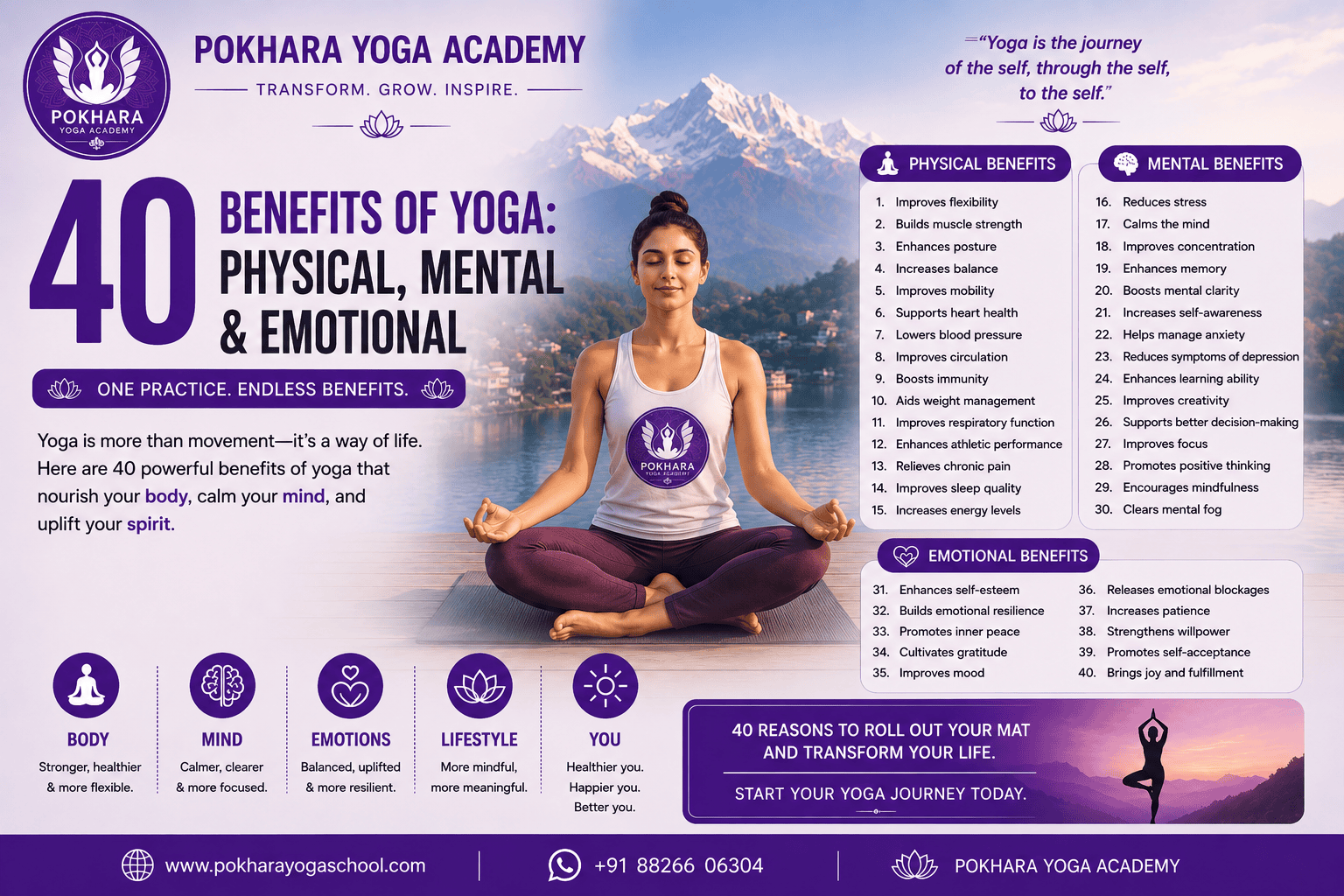
40 Benefits of Yoga: A Complete, Honest Breakdown
Every real benefit yoga can offer, organized clearly across body, mind, and everyday life, without the exaggerated claims that make this topic hard to trust.
Key Takeaways
- Yoga offers genuine, well-documented benefits of yoga across four main areas: physical health, mental wellbeing, emotional balance, and everyday life skills.
- Many benefits, like improved flexibility and strength, appear within weeks. Others, like emotional regulation and stress resilience, build gradually over months of consistent practice.
- Yoga is not a replacement for medical treatment. It works best as a complementary practice alongside proper healthcare, not instead of it.
- You don’t need advanced flexibility or years of experience to access most of these benefits. Many appear from a basic, beginner-friendly practice done consistently.
- Different yoga styles emphasize different benefits, so understanding what you want out of your practice helps you choose the right style and pace.
Introduction: Separating Real Benefits From Hype
Yoga has a marketing problem. Walk into any wellness space, and you’ll hear it described as a cure for nearly everything, from chronic pain to a broken heart. Some of that is true. A lot of it is overstated.
This article takes a more grounded approach. Below are 40 real benefits of yoga, organized clearly by category, explained honestly, without inflating what a regular practice can realistically do for you. Some of these benefits show up quickly. Others take months of consistent practice to notice.
At Pokhara Yoga Academy, we teach yoga as a serious, evidence-informed practice, not a miracle cure. This list reflects that approach: genuine benefits, explained clearly, with realistic expectations built in from the start.
How This List Is Organized
To keep this genuinely useful, the 40 benefits below are grouped into four categories:
- Physical benefits (1–12)
- Mental and cognitive benefits (13–22)
- Emotional benefits (23–30)
- Lifestyle and everyday benefits (31–40)
1: Physical Benefits of Yoga
1. Improved Flexibility
Regular practice gradually lengthens muscles and improves joint range of motion. This is often the very first benefit new students notice, sometimes within just a few weeks.
2. Increased Muscular Strength
Many yoga poses use your own body weight as resistance. Holding poses like Plank or Warrior II builds real functional strength over time, even without any equipment.
3. Better Posture
Yoga builds awareness of alignment and strengthens the muscles that support an upright spine, which can meaningfully reduce the slouched, forward-leaning posture common from long hours at a desk.
4. Improved Balance
Balance poses, like Tree Pose or Eagle Pose, train the small stabilizing muscles around your ankles, knees, and hips. This becomes increasingly valuable as we age, when balance naturally declines.
5. Reduced Joint Pain
Gentle, controlled movement through a full range of motion can help lubricate joints and reduce stiffness, particularly for people managing mild arthritis or general joint discomfort. Always consult a doctor before using yoga to manage a diagnosed joint condition.
6. Better Cardiovascular Health
More dynamic styles, like Vinyasa or Ashtanga, raise the heart rate enough to offer real cardiovascular benefit, supporting heart health alongside other forms of exercise.
7. Improved Respiratory Function
Pranayama, yogic breathing practices, trains the lungs to work more efficiently, which can improve overall breathing capacity and control over time.
8. Better Digestion
Certain poses, particularly gentle twists, are believed to support digestive function by encouraging movement through the digestive tract, alongside the general stress-reduction benefits that also support healthy digestion.
9. Support for Chronic Pain Management
Yoga is increasingly used as a complementary approach to managing chronic pain conditions, including lower back pain, by building strength, flexibility, and body awareness. It should be used alongside, not instead of, appropriate medical care.
10. Improved Sleep Quality
Restorative and gentle evening practices help calm the nervous system, which supports easier, more restful sleep, especially when practiced consistently before bedtime.
11. Better Bone Health
Weight-bearing poses, where you support your own body weight through your arms, legs, or spine, may help support bone density, particularly relevant for long-term bone health as we age.
12. Increased Energy Levels
Many practitioners report feeling more physically energized after a consistent practice, likely linked to improved circulation, better sleep, and reduced overall physical tension.
2: Mental and Cognitive Benefits of Yoga
13. Reduced Stress
Yoga activates the parasympathetic nervous system, the body’s natural relaxation response, which helps counteract the chronic “fight or flight” activation common in modern daily life.
14. Improved Focus and Concentration
The combination of breath awareness and physical attention required during practice trains your ability to concentrate, a skill that tends to carry over into work and daily tasks.
15. Better Memory
Some research links regular meditation and mindfulness practices, both closely tied to yoga, with improved memory function, likely connected to reduced stress and improved focus.
16. Reduced Symptoms of Anxiety
Breathing techniques and mindful movement can help calm the nervous system’s anxiety response. Yoga should complement, not replace, professional treatment for diagnosed anxiety disorders.
17. Improved Mental Clarity
Regular practitioners often describe a clearer, less cluttered mental state after practice, likely linked to the combination of physical movement, breath regulation, and present-moment focus.
18. Better Decision-Making Under Pressure
The nervous system regulation skills built through yoga and pranayama can translate into calmer, clearer thinking during stressful, high-pressure moments in daily life.
19. Increased Self-Awareness
Yoga asks you to pay close attention to your body’s signals, an awareness that tends to extend beyond the mat into better recognition of stress, fatigue, and emotional states in everyday life.
20. Support for Symptoms of Depression
Regular movement and breathwork are associated with improved mood in some practitioners, likely linked to increased circulation and stress reduction. Yoga should be treated as a complementary support alongside, never a replacement for, professional mental health care.
21. Improved Cognitive Flexibility
Learning new poses and sequences challenges the brain to adapt and problem-solve in real time, a form of cognitive exercise that some research links to broader mental flexibility.
22. Better Emotional Regulation
The mind-body connection built through consistent practice can improve your ability to notice and manage strong emotions before they escalate, rather than reacting to them automatically.
3: Emotional Benefits of Yoga
23. Greater Sense of Calm
The combination of slow movement, controlled breath, and focused attention consistently produces a calming effect, both during and after practice.
24. Increased Patience
Yoga is, by nature, a slow practice. Poses take time to develop, and progress isn’t always linear, which naturally builds patience with both the practice and, often, with life more broadly.
25. Improved Self-Compassion
Yoga teaches you to meet your body where it is on any given day, rather than forcing a fixed standard. This mindset often extends into greater self-compassion off the mat as well.
26. Reduced Emotional Reactivity
Regular practitioners often notice they feel less quickly triggered by small daily frustrations, likely connected to the nervous system regulation and mindfulness skills built through consistent practice.
27. Greater Sense of Gratitude
Many yoga traditions incorporate reflection and gratitude practices, which, alongside the general mood benefits of movement, can support a more consistently grateful outlook over time.
28. Improved Relationship With Your Own Body
Unlike many fitness practices focused purely on appearance, yoga tends to shift focus toward what your body can do and how it feels, which often improves overall body image and self-acceptance.
29. Greater Emotional Resilience
The combination of physical challenge, breath control, and mindfulness built through regular practice can improve your capacity to recover from emotional setbacks more quickly.
30. A Healthier Relationship With Stress Itself
Rather than eliminating stress entirely, consistent yoga practice often changes your relationship with it, building genuine tools to respond to stress rather than simply being overwhelmed by it.
4: Lifestyle and Everyday Benefits of Yoga
31. Better Work-Life Balance
The discipline of showing up for a regular practice often encourages practitioners to set clearer boundaries around work and rest more broadly.
32. Improved Productivity
Better focus, lower stress, and improved sleep, all benefits already covered above, combine to support genuinely improved productivity in work and daily tasks.
33. Stronger Sense of Community
Group classes and teacher training programs naturally build community and connection, something increasingly valuable in a world where genuine in-person connection can be hard to find.
34. A Structured Framework for Self-Care
Yoga offers a built-in, structured framework for regular self-care, removing the guesswork of “what should I actually do to take care of myself” that many people struggle with.
35. Improved Body Awareness in Daily Movement
The body awareness built on the mat often carries into daily life, improving posture and movement patterns during ordinary activities like sitting, walking, or lifting.
36. Better Habits Around Rest
Practices like Yoga Nidra and Savasana teach your body what real, deep rest actually feels like, a skill many people have genuinely never learned, given how rarely modern life makes space for true rest.
37. Increased Discipline and Consistency
Building any regular practice, yoga included, strengthens the general skill of consistency, which tends to transfer into other areas of life, from work habits to personal goals.
38. A Deeper Connection to Philosophy and Meaning
Beyond the physical practice, yoga philosophy offers practical guidance for living, through concepts like non-attachment, truthfulness, and contentment, which many practitioners find genuinely meaningful.
39. Potential Career Opportunities
For some practitioners, a deep yoga practice eventually leads to teacher training and new career paths, whether full-time teaching or simply bringing yoga-informed skills into an existing profession.
40. A Genuine, Lasting Sense of Wellbeing
Taken together, the physical, mental, emotional, and lifestyle benefits above combine into something larger than any single benefit alone: a more grounded, resilient, and genuinely well sense of overall wellbeing.
How Quickly Will You Notice These Benefits?
Benefits You’ll Likely Notice Within Weeks
Improved flexibility, reduced stress after each session, and better sleep quality tend to appear relatively quickly, often within the first few weeks of consistent practice.
Benefits That Build Over Months
Deeper emotional regulation, sustained stress resilience, and meaningful strength gains typically take longer, often several months of regular practice, to become clearly noticeable.
Consistency Matters More Than Intensity
A shorter, more consistent practice, done several times a week, tends to produce better long-term results than occasional, intense sessions done less regularly. This mirrors what’s true of most physical and mental training.
Choosing a Yoga Style Based on the Benefits You Want
- Want strength and cardiovascular benefit? Consider Vinyasa or Ashtanga.
- Want deep flexibility and joint mobility? Consider Yin or Hatha yoga.
- Want stress relief and better sleep? Consider Restorative yoga or Yoga Nidra.
- Want mental clarity and focus? Consider a practice that includes dedicated pranayama and meditation.
- Want a full-spectrum practice covering most benefits above? A well-rounded Hatha or general 200-hour style foundation typically covers the widest range.
Is Yoga Safe for Everyone?
Yoga is generally safe for most people when practiced mindfully and with proper instruction. That said, certain conditions, including some pregnancies, recent surgeries, or specific joint injuries, require modified practice or medical clearance beforehand.
Always inform your teacher of any injuries or health conditions before class, and consult a doctor before starting a new practice if you have any significant health concerns.
Frequently Asked Questions
Q: What are the main benefits of yoga?
A: Yoga offers benefits across four main areas: physical health, including strength and flexibility; mental wellbeing, including reduced stress and improved focus; emotional balance, including greater calm and resilience; and everyday life benefits, including better sleep and productivity.
Q: How long does it take to see the benefits of yoga?
A: Some benefits, like improved flexibility and immediate stress relief, can appear within the first few weeks of consistent practice. Deeper benefits, like emotional regulation and long-term strength, typically take several months of regular practice to fully develop.
Q: Can yoga help with anxiety and depression?
A: Yoga can support reduced symptoms of anxiety and improved mood through breathwork, movement, and stress reduction, but it should be used as a complementary practice alongside, not a replacement for, professional mental health treatment.
Q: Do I need to be flexible to start practicing yoga?
A: No. Flexibility is a result of consistent practice, not a requirement to begin. Most yoga styles include modifications suitable for complete beginners, regardless of current flexibility level.
Q: How often should I practice yoga to see real benefits?
A: Most practitioners notice meaningful benefits with 3 to 5 sessions per week, though even 2 consistent sessions weekly can produce noticeable improvements over several months.
Q: Is yoga a good replacement for regular exercise?
A: More dynamic yoga styles can offer real cardiovascular and strength benefits, but yoga works best as part of a well-rounded fitness routine rather than a complete replacement for all other forms of exercise, depending on your specific fitness goals.
Q: What type of yoga is best for beginners?
A: Hatha yoga is often recommended for beginners due to its slower pace and clear focus on foundational alignment, though the “best” style ultimately depends on your specific goals and physical starting point.
A Note From Pokhara Yoga Academy
It’s easy to get lost in yoga’s more dramatic promises, the idea that a single practice can fix every part of your life at once. The truth is simpler, and honestly more sustainable: yoga offers real, meaningful benefits across body, mind, and daily life, and those benefits build steadily with consistent, honest practice, not magic. As a Yoga Alliance-registered school based in Pokhara, beneath the Himalayas, we’ve watched this steady, unglamorous consistency change students far more than any single dramatic transformation ever could.
This article reflects general information about the benefits of yoga practice. It is not medical advice, and it should not replace guidance from a qualified healthcare provider for any diagnosed health condition.






Comments are closed