Yoga Certification Courses in Nepal: A Complete Overview
A clear, practical breakdown of every major yoga certification level and specialty course available in Nepal, so you can choose the right path without the guesswork.
Key Takeaways
- Yoga certification courses in Nepal span several levels, from a foundational 100-hour introduction to advanced 500-hour teaching credentials, plus specialty certifications like prenatal yoga and meditation teaching.
- Pokhara has become Nepal’s leading hub for these courses, offering the infrastructure, faculty, and setting to support serious, internationally recognized training.
- Choosing the right course depends on your current experience level, your goals, and whether you want to teach professionally or simply deepen your own practice.
- Look for Yoga Alliance registration as the clearest sign a course meets recognized international standards, regardless of which level or specialty you choose.
- Certification is a starting point, not a finish line. Real teaching skill continues to develop well after the course itself ends.
Introduction: More Than Just “200-Hour Training”
When most people think about getting certified in yoga, one number comes to mind: 200 hours. That’s the most common starting point, and for good reason. But it’s far from the only certification course available, especially in a training hub like Nepal, where schools now offer everything from short introductory courses to advanced, specialized credentials.
This guide walks through the full landscape of yoga certification courses available in Nepal today. That includes the standard hour-based levels, specialty certifications for specific populations and styles, and practical guidance on how to choose the right course for where you actually are in your practice.
At Pokhara Yoga Academy, based in Nepal’s leading yoga training destination, we see students arrive at every stage of this landscape, from total beginners exploring a 100-hour introduction to experienced teachers returning for advanced 500-hour credentials. This guide reflects that full range.
Why Nepal Has Become a Strong Destination for Yoga Certification
A Genuine Himalayan Training Environment
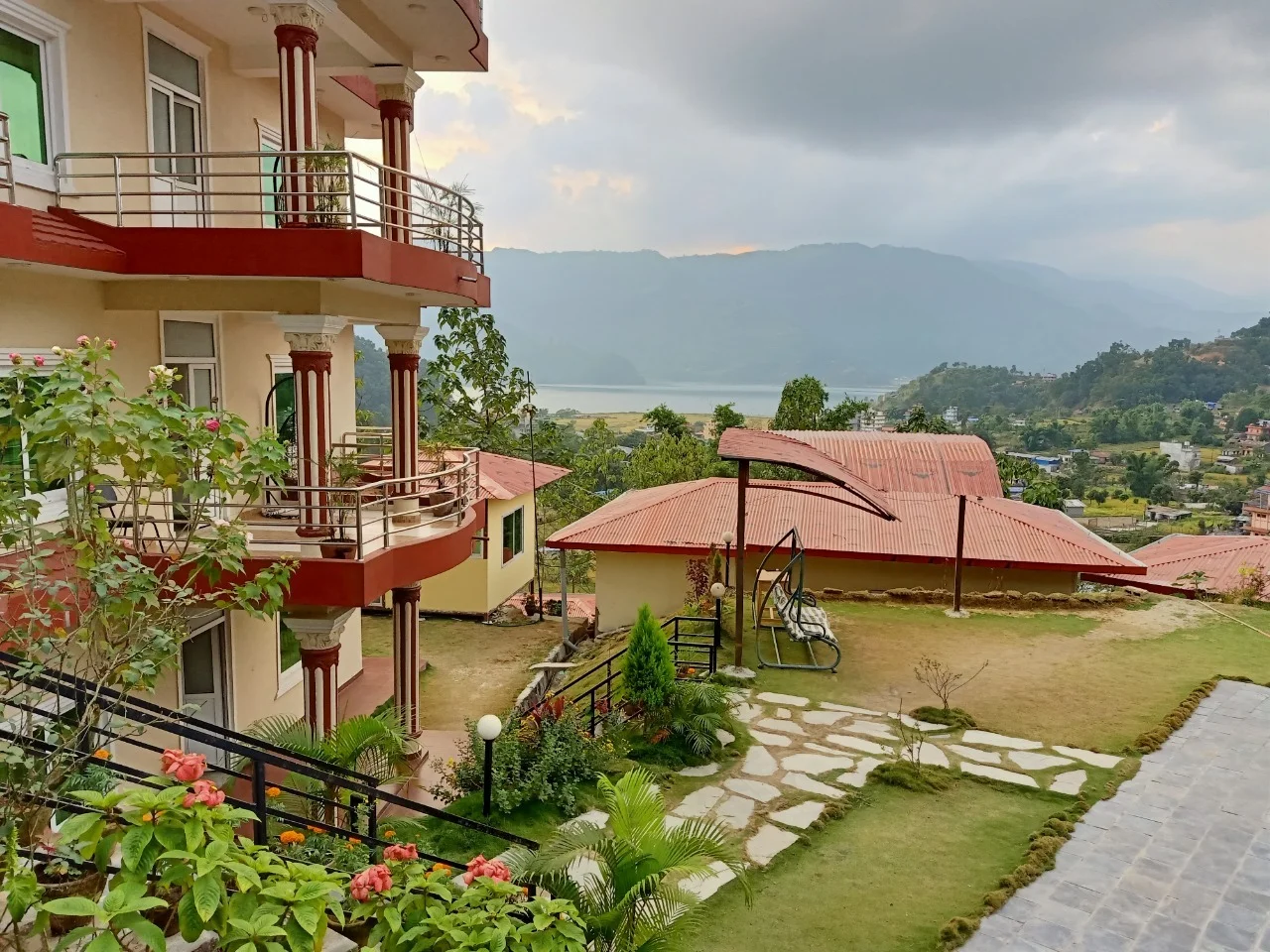
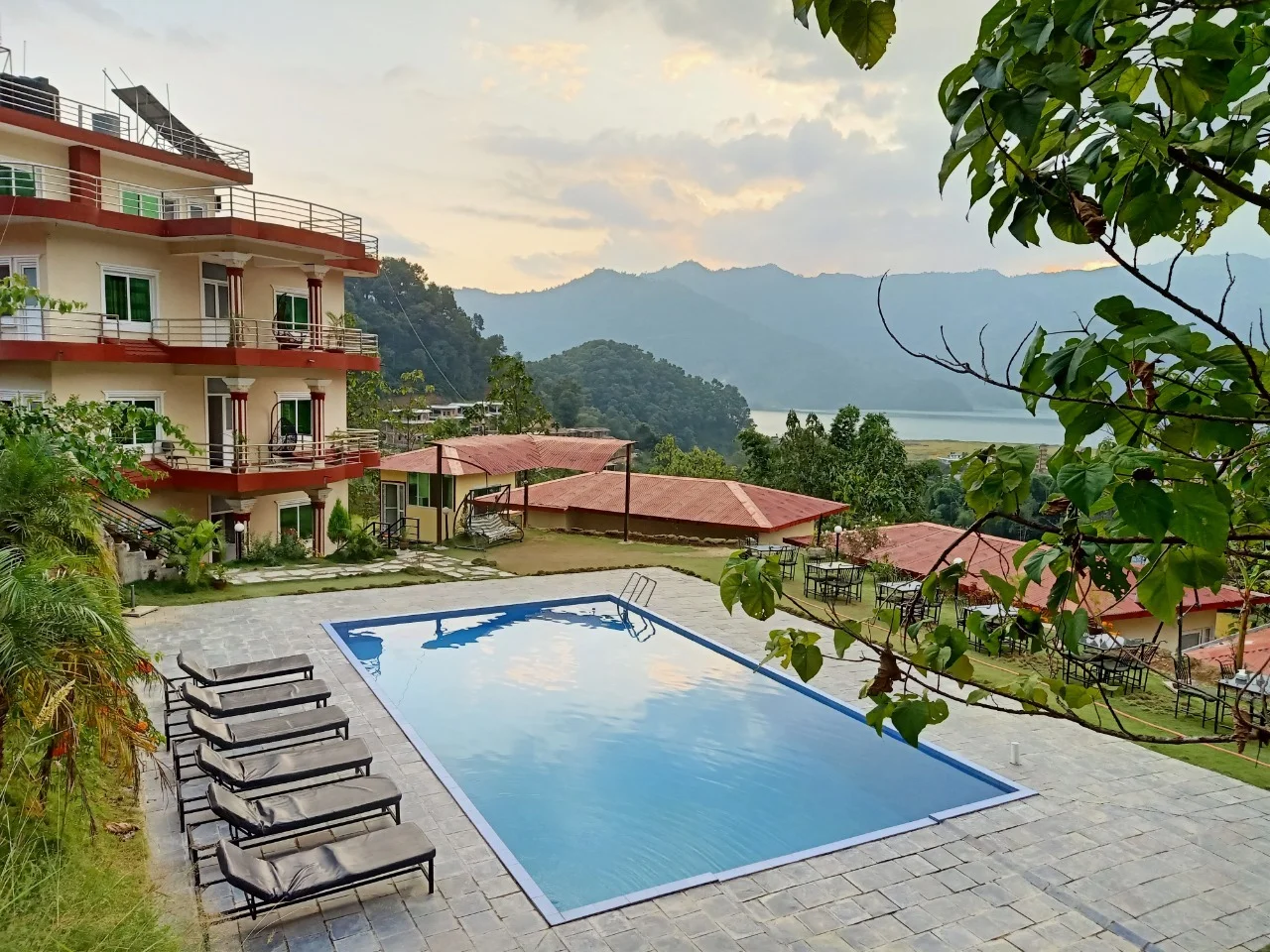
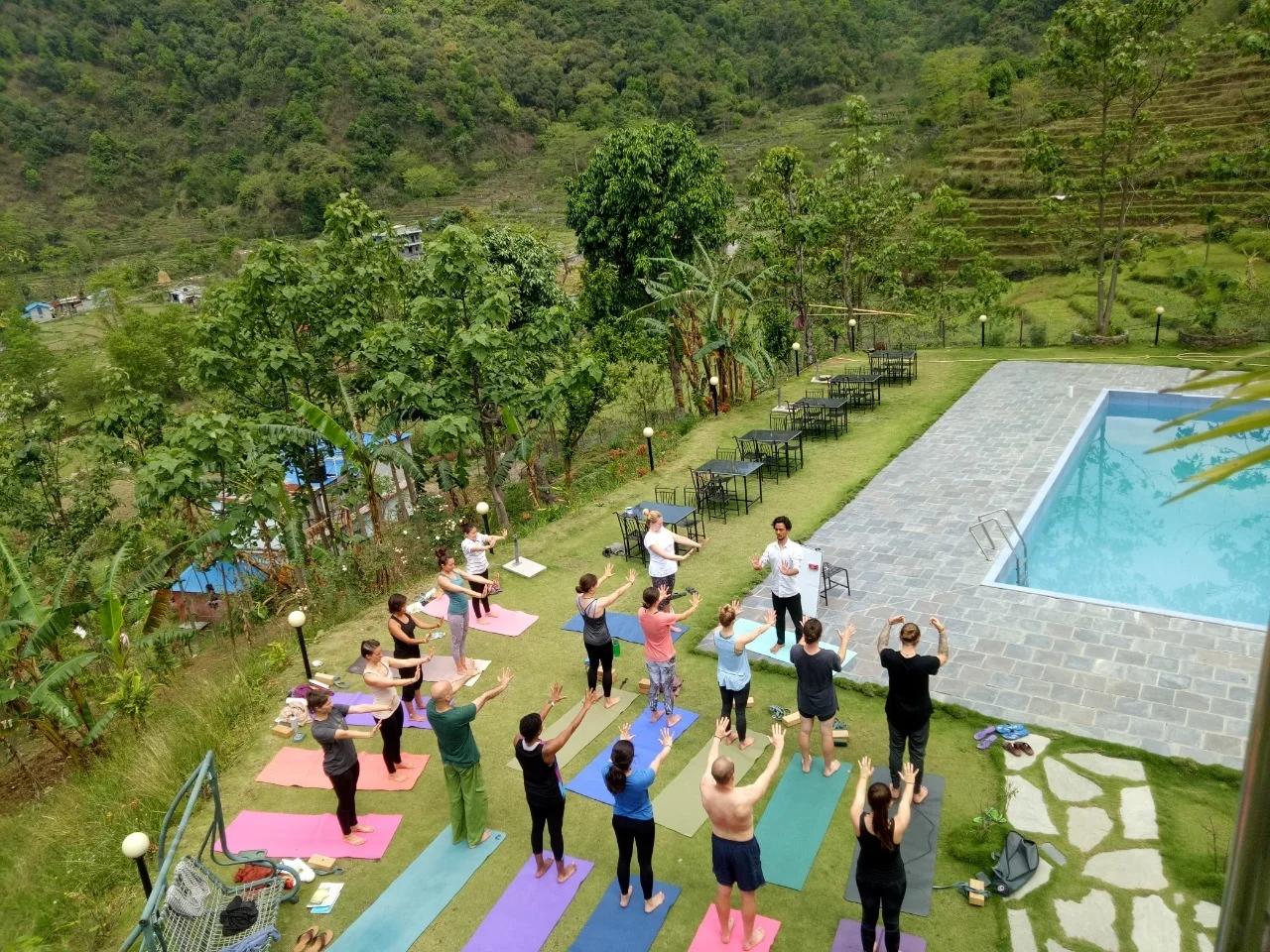
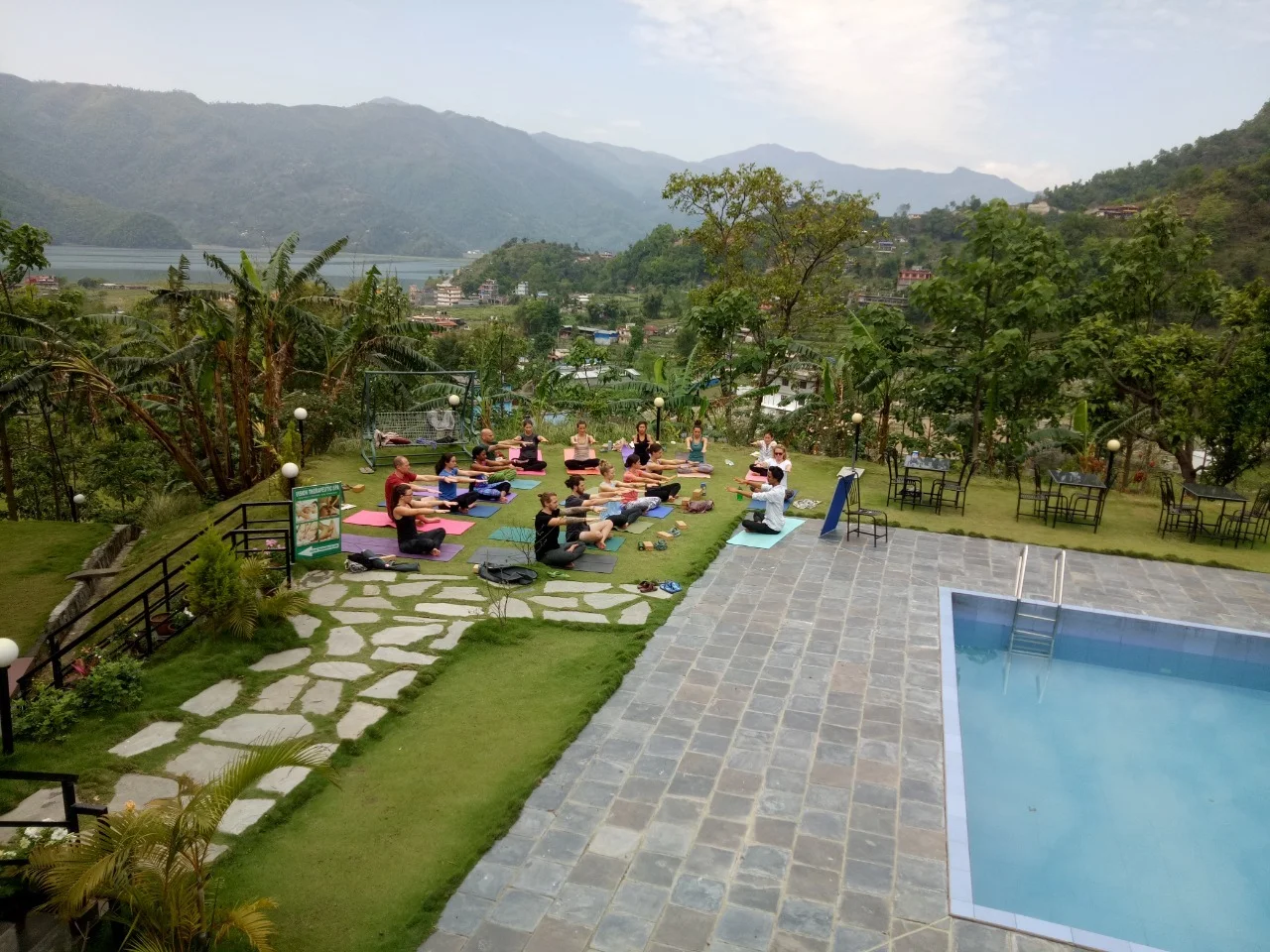
Nepal offers something few other training destinations can: daily practice with direct views of the Annapurna Himalayan range, particularly in Pokhara, where many yoga schools build outdoor sessions directly into the daily schedule.
Internationally Recognized Standards
Reputable schools in Nepal, including those in Pokhara, offer Yoga Alliance-registered courses, meaning certifications earned here carry the same international recognition as those earned anywhere else in the world.
A Quieter Alternative to India’s Busiest Hubs
For students who want serious training without the crowds of India’s most internationally famous yoga towns, Nepal offers a calmer, less commercially saturated alternative, without sacrificing training quality or accreditation standards.
Understanding Yoga Alliance Certification Levels
Before comparing specific course lengths, it helps to understand what the numbers actually mean. Yoga Alliance, the most widely recognized accrediting body in the yoga world, organizes teacher certifications primarily around total training hours.
Registered Yoga Teacher (RYT) Levels
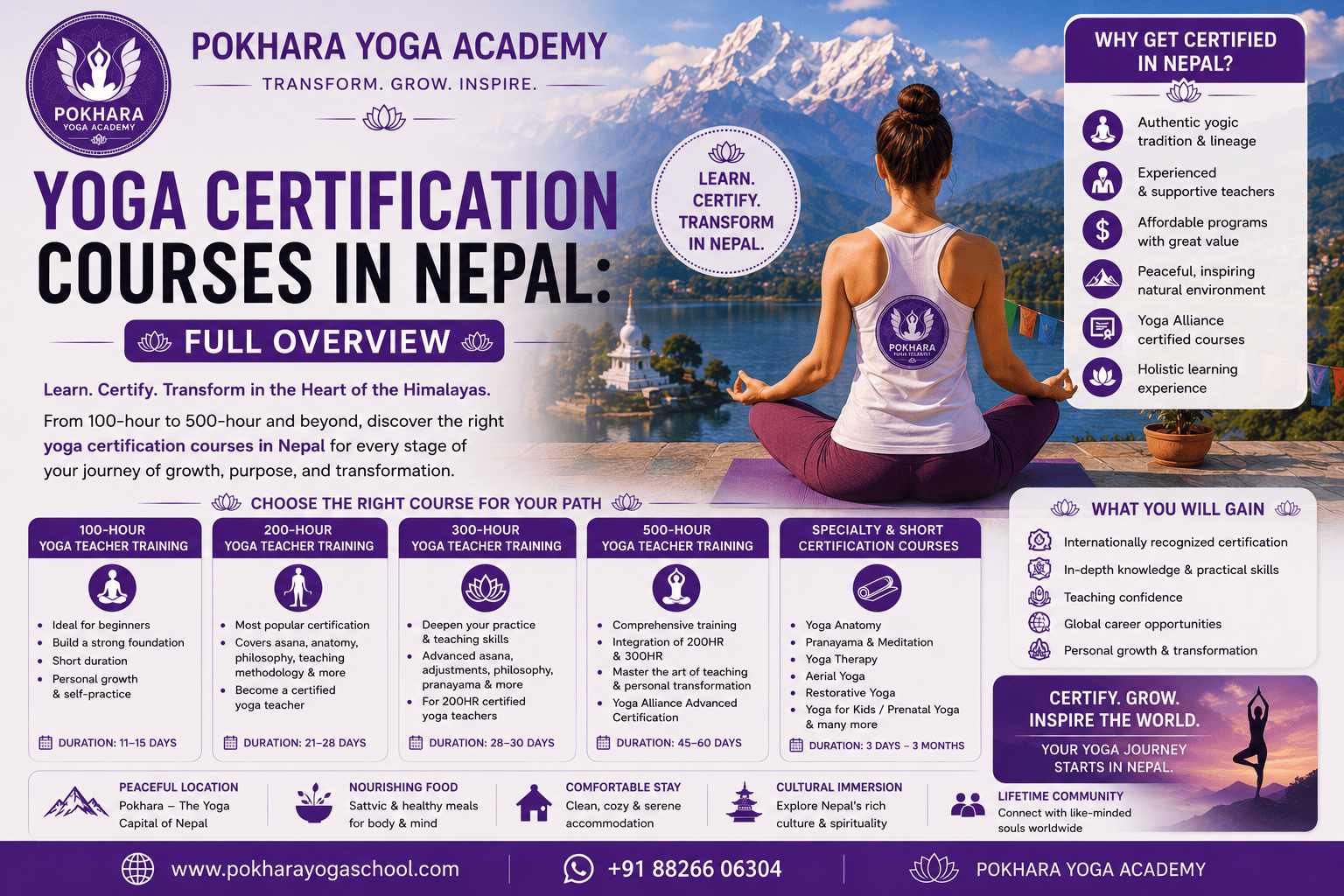
- RYT 200: The foundational teaching certification, requiring 200 hours of training
- RYT 500: An advanced credential, requiring 500 total training hours, usually built by completing a 200-hour course followed by an additional 300-hour course
Why Hours Matter
The hour count isn’t arbitrary. It reflects the depth of required coursework across asana, anatomy, philosophy, and teaching methodology. A shorter course simply cannot cover the same depth as a longer one, which is important to understand before choosing a course based on price or convenience alone.
Breaking Down Each Certification Level
100-Hour Yoga Certification
A 100-hour course is generally an introductory-level program, often used by practitioners who want a deeper understanding of yoga without committing to a full teaching certification. Some schools also offer this as a foundational first module leading into a full 200-hour program.
Best for: Beginners exploring whether deeper yoga study is right for them, or practitioners wanting personal development without an immediate teaching goal.
200-Hour Yoga Teacher Training
This is the standard entry-level teaching certification and the most widely recognized starting point in the yoga industry. It typically covers asana, pranayama, meditation, anatomy, philosophy, and teaching methodology in a structured, comprehensive format.
Best for: Anyone wanting to teach yoga professionally, or serious practitioners wanting the deepest possible understanding of their own practice.
What a 200-Hour Course Typically Includes
- 3 to 4 weeks of residential training, or several months for part-time formats
- Daily asana practice, often twice daily in residential programs
- Anatomy and physiology instruction
- Yoga philosophy, including the Yoga Sutras and the eight limbs
- Practice teaching and assessment
Explore our 200-hour certification course
300-Hour Advanced Yoga Teacher Training
Built specifically for graduates who already hold a 200-hour certification, a 300-hour course goes deeper into specialized topics, refined teaching skills, and often more advanced asana work. Completing both a 200-hour and 300-hour course together earns the RYT 500 credential.
Best for: Certified teachers looking to deepen their expertise, refine their teaching voice, or move toward more advanced or specialized instruction.
Continue with our 300-hour advanced course
500-Hour Yoga Certification
Rather than a single standalone course, the 500-hour credential is usually achieved cumulatively, by completing 200 hours plus an additional 300 hours, sometimes at the same school and sometimes across different programs and even different countries.
Best for: Experienced teachers building a long-term teaching career who want the most comprehensive recognized credential available.
Specialty Yoga Certification Courses Available in Nepal
Beyond the standard hour-based levels, many schools in Nepal, including Pokhara-based programs, offer focused specialty certifications for teachers who want to work with specific populations or styles.
Prenatal and Postnatal Yoga Certification
This specialty course trains teachers to safely guide students through pregnancy, birth preparation, and postpartum recovery, covering trimester-specific sequencing, contraindications, and postnatal rehabilitation basics.
Meditation Teacher Certification
A dedicated meditation certification goes deeper into specific meditation traditions, such as mindfulness, mantra practice, or Yoga Nidra, than a standard 200-hour course typically covers.
Yin Yoga Certification
Yin yoga certification focuses on slow, passive poses held for extended periods, targeting deep connective tissue rather than muscle. This specialty appeals to teachers interested in restorative, therapeutic-style classes.
Ayurveda and Yoga Lifestyle Certifications
Some schools also offer certifications combining yoga with foundational Ayurvedic principles, covering diet, daily routine, and lifestyle practices rooted in this closely related traditional Indian system of medicine.
Online vs. In-Person Certification in Nepal
The Case for In-Person Certification
Hands-on adjustment skills, real-time feedback from faculty, and the immersive daily discipline of residential training are difficult to fully replicate online. For a first certification, especially at the 200-hour level, in-person training generally offers a deeper, more well-rounded foundation.
The Case for Online Certification
Online courses offer genuine flexibility, particularly valuable for working professionals or parents who can’t commit to several consecutive weeks away from home. Theory-heavy content, like anatomy and philosophy, often translates well to an online format.
Hybrid Formats
A growing number of schools now offer hybrid courses, combining online theory modules with a shorter in-person intensive for hands-on practice teaching and adjustment work, often seen as a practical middle ground between the two formats.
How to Choose the Right Certification Course
Step 1: Get Honest About Your Goals
Are you certifying to teach professionally, to deepen your personal practice, or to specialize in a specific population or style? Your answer should shape which course level and type you pursue first.
Step 2: Check Accreditation Carefully
Confirm any course you’re considering is registered with Yoga Alliance or an equivalent recognized accrediting body. This single factor does more to protect the value of your certification than almost anything else.
Step 3: Review the Full Curriculum
Ask for a detailed breakdown of hours by subject, not just a general course description. A responsible school should be able to show you exactly how their hours are distributed across asana, philosophy, anatomy, and teaching practice.
Step 4: Research Faculty Backgrounds
Look into who is actually teaching each module. Strong programs bring in specialized faculty, not a single generalist teacher covering every subject alone.
Step 5: Consider the Setting
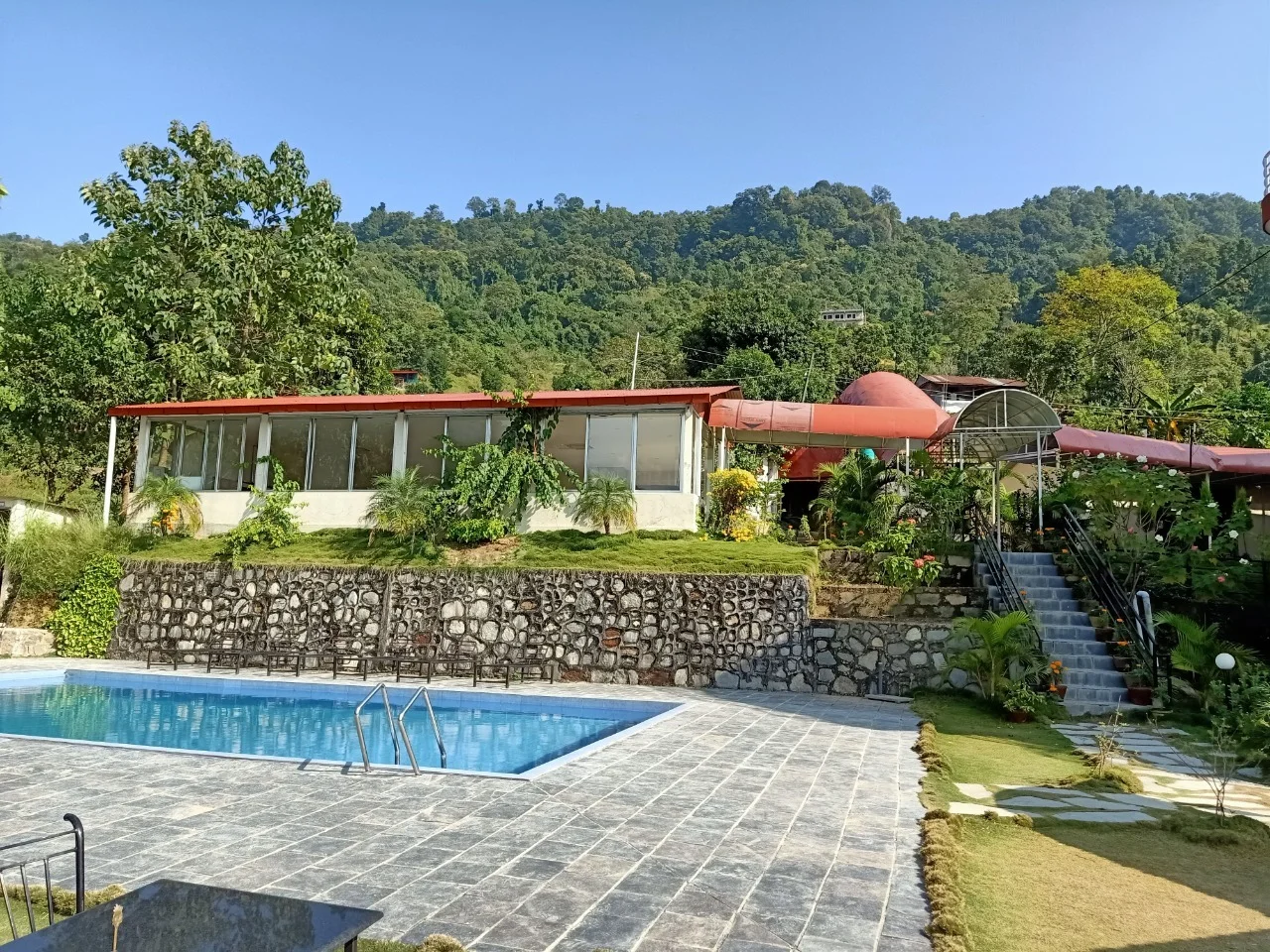
Training environment matters more than people expect. A calm, immersive setting, like Pokhara’s lakeside, Himalayan-facing campuses, genuinely supports the depth of focus a serious certification course requires.
What Happens After Certification?
Certification Is a Starting Point
A completed certification qualifies you to teach, but real teaching confidence and skill continue developing well beyond the course itself, through ongoing practice, mentorship, and real classroom experience.
Continuing Education Options
Many certified teachers pursue additional specialty certifications over time, building a more diverse and marketable skill set gradually, rather than trying to cover everything in a single initial course.
Registering With Yoga Alliance
Once certified through a Yoga Alliance-registered school, graduates can typically register directly with Yoga Alliance as a Registered Yoga Teacher, which supports international recognition and, in many cases, job opportunities.
Common Questions About Certification Courses in Nepal
“Do I need a 200-hour certification before pursuing a specialty course?”
In most cases, yes. Specialty certifications, like prenatal or meditation teaching, are generally built as additions to a foundational 200-hour credential, not standalone starting points.
“Can I complete multiple certification levels at the same school?”
Many schools, including Pokhara-based programs, offer pathways allowing students to return for advanced 300-hour training or specialty courses after completing their initial 200-hour certification, often with continuity in teaching style and community.
“Is a certification from Nepal viewed differently than one from India?”
No, provided both are properly Yoga Alliance-registered. International recognition depends on accreditation, not the specific country where the course was completed.
Frequently Asked Questions
Q: What is the most common yoga certification level?
A: The 200-hour Yoga Teacher Training is the most common and widely recognized entry-level certification, serving as the standard foundation for most teaching careers and further specialization.
Q: How long does it take to complete a 200-hour yoga certification in Nepal?
A: Residential 200-hour programs typically take 3 to 4 weeks to complete, while part-time or online formats can extend over several months, depending on the school’s schedule.
Q: What is the difference between a 200-hour and 500-hour certification?
A: A 200-hour certification is the foundational teaching credential, while a 500-hour credential is typically earned cumulatively by completing 200 hours plus an additional 300 hours of advanced training, often at a later stage in a teacher’s career.
Q: Are yoga certification courses in Nepal internationally recognized?
A: Yes, provided the school is registered with Yoga Alliance or an equivalent recognized accrediting body. Always verify a school’s accreditation status directly before enrolling.
Q: Can I get certified in a yoga specialty without a general 200-hour certification first?
A: Most specialty certifications, such as prenatal yoga or meditation teaching, require a foundational 200-hour certification first, since they’re designed to build on core teaching skills rather than replace them.
Q: Is Pokhara a good place to complete a yoga certification course?
A: Yes, Pokhara has become Nepal’s leading yoga training destination, offering Yoga Alliance-registered courses across multiple levels, alongside a quieter, Himalayan-facing setting well-suited to focused, immersive training.
Q: Can I complete a yoga certification course online from Nepal-based schools?
A: Some schools offer online or hybrid certification formats, particularly for theory-heavy content, though in-person training generally provides deeper hands-on skill development, especially for a first 200-hour certification.
A Note From Pokhara Yoga Academy
Choosing a certification course can feel overwhelming once you realize how many paths actually exist beyond the standard 200-hour option. Our honest advice is simple: start where you genuinely are, not where you think you should be. As a Yoga Alliance-registered school based in Pokhara, beneath the Himalayas, we’ve built pathways for students at every stage, from a first introduction to advanced, specialized teaching credentials, and we’d rather guide you toward the right starting point than the fastest one.
This article reflects general information about yoga certification courses available in Nepal. Specific curriculum details, pricing, and accreditation status vary by school, so always verify directly with any program you’re considering before enrolling.
Comments are closed