
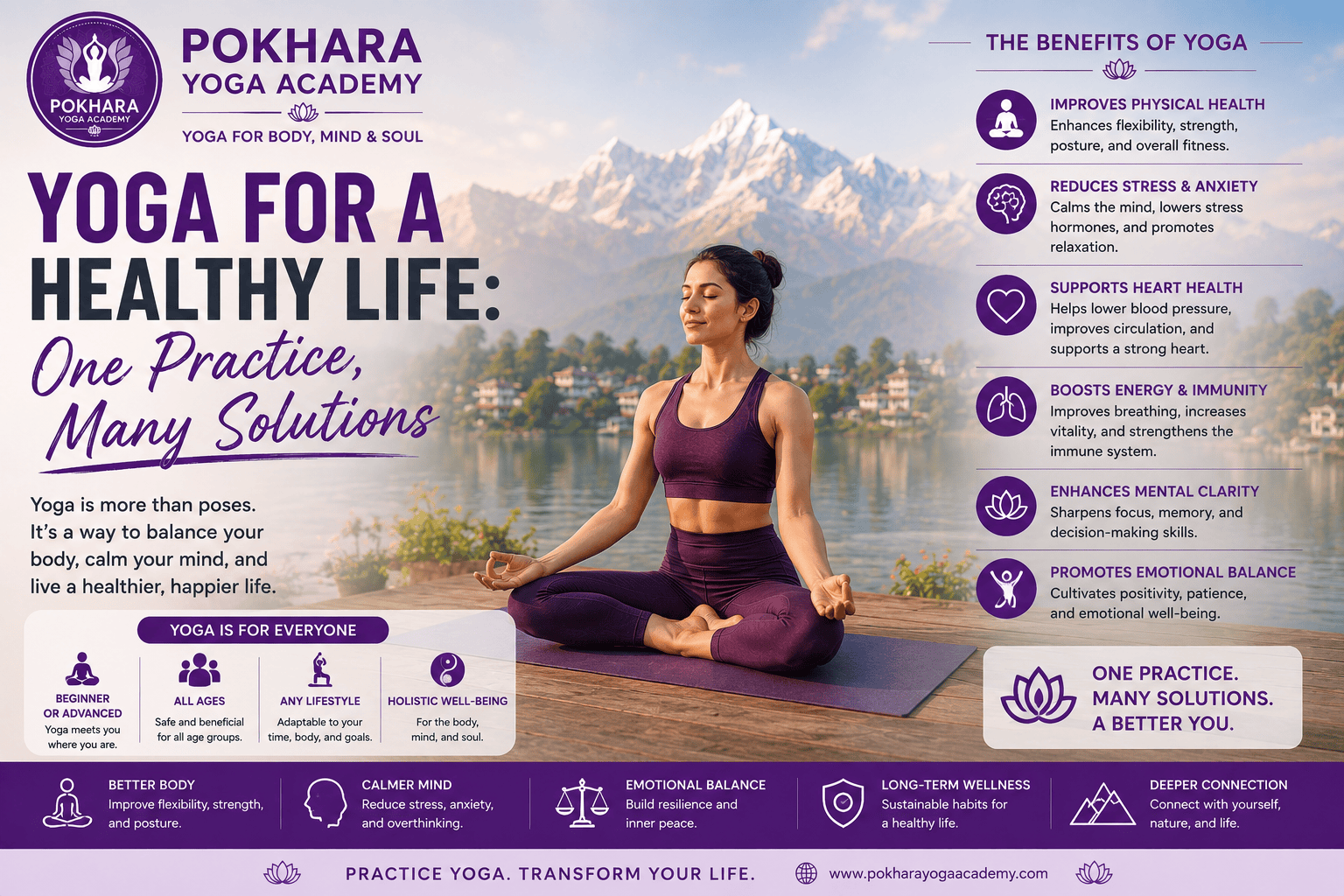
Yoga for a Healthy Life: How One Practice Supports So Many Parts of Wellbeing
It’s tempting to call yoga “one solution to all problems.” You’ll find that exact phrase, or something close to it, across countless yoga blogs and Instagram captions. It’s a compelling idea — and it’s also not quite true, at least not literally. Yoga will not resolve a genuine medical emergency, fix a broken relationship on its own, or replace professional treatment for a diagnosed condition.
What yoga does do — and this is the more interesting, more defensible claim — is address an unusually wide range of interconnected physical, mental, and emotional factors through a single, consistent practice. Few other activities work simultaneously on the cardiovascular system, the musculoskeletal system, the nervous system, and the mind’s relationship to stress. That breadth is genuinely rare, and it’s worth understanding honestly rather than through exaggerated marketing language. This article explores what yoga for a healthy life actually looks like in practice — its real, well-supported benefits, its honest limitations, and how to build a sustainable relationship with it.
Key Takeaways
- Yoga supports a genuinely wide range of health dimensions — physical fitness, stress regulation, sleep quality, and mental clarity — through the combined practice of movement, breath control, and mindfulness in a single session.
- Yoga is not a replacement for medical treatment, therapy, or professional care for diagnosed conditions; it functions best as a complementary practice alongside appropriate care, not instead of it.
- The health benefits of yoga are cumulative and depend on consistency — occasional practice offers real but limited benefit compared to a regular, sustained routine.
- Different components of yoga (asana, pranayama, meditation) contribute to different aspects of health, so understanding which element addresses which need helps practitioners build a more intentional practice.
- Starting a sustainable yoga practice matters more than starting an intense one — a realistic, maintainable routine consistently outperforms an ambitious routine that gets abandoned within weeks.
Why Yoga Addresses So Many Dimensions of Health at Once
The Combination That Makes Yoga Unusual
Most forms of exercise address one or two dimensions of health — cardiovascular training builds heart and lung capacity; strength training builds muscle; stretching improves flexibility. Yoga is unusual in combining physical movement, breath regulation, and focused attention within a single, integrated practice, which is precisely why its benefits extend across so many different systems simultaneously rather than being confined to fitness alone.
Three Interconnected Mechanisms
Physical Movement (Asana)
The physical postures build strength, flexibility, balance, and cardiovascular conditioning — benefits shared with many other forms of exercise, but delivered here alongside two additional layers most standalone workouts don’t include.
Breath Regulation (Pranayama)
Controlled breathing techniques directly influence the autonomic nervous system, shifting the body toward a parasympathetic (“rest and digest”) state. This is a mechanism largely absent from conventional exercise, and it’s a major reason yoga’s stress-reduction effects tend to be more pronounced and more immediately felt than exercise alone typically produces.
Focused Attention (Mindfulness)
The sustained, present-moment attention required throughout a yoga practice — tracking breath, noticing sensation, returning focus when the mind wanders — functions as a form of active mindfulness training, with effects on attention and emotional regulation that compound over consistent practice.
The Physical Health Case for Yoga
Cardiovascular and Metabolic Health
Regular yoga practice, particularly more dynamic styles like Vinyasa, provides meaningful cardiovascular conditioning, while even slower styles support healthier blood pressure and metabolic markers through consistent, moderate physical engagement combined with stress reduction.
Flexibility, Strength, and Joint Health
Yoga’s combination of active strength-building poses and range-of-motion work makes it one of the more balanced approaches to musculoskeletal health available — addressing both the strength and mobility sides of joint health simultaneously, rather than favoring one at the expense of the other.
Better Sleep Quality
The nervous-system-calming effects of pranayama and the physical tension release from asana practice are commonly associated with improved sleep onset and quality, particularly when practiced in the evening or as part of a consistent daily routine.
Why Sleep Matters More Than It’s Given Credit For
Sleep quality functions as a kind of health multiplier — poor sleep undermines nearly every other health goal, from stress resilience to metabolic function to mood stability. Yoga’s supportive effect on sleep is, for this reason, arguably one of its most underrated physical health benefits.
Pain Management and Physical Recovery
Certain styles of yoga — particularly alignment-focused approaches like Iyengar — are commonly used therapeutically to support recovery from injury and manage chronic pain conditions, through precise, supported postures that build strength and mobility without aggravating existing issues.
The Mental and Emotional Health Case for Yoga
Stress Reduction and Nervous System Regulation
This is, by a wide margin, the most consistently supported mental health benefit of yoga across both traditional understanding and modern wellness research: the combination of movement, breath control, and focused attention reliably shifts the body out of a chronic stress-response state, at least for the duration of practice, with cumulative benefits building over consistent repetition.
Emotional Regulation
Practitioners frequently report an improved capacity to notice and regulate emotional reactivity following consistent yoga practice — plausibly linked to the combination of nervous system regulation and the attention-training effects of sustained mindful movement.
Mental Clarity and Focus
The concentration required to coordinate breath and movement throughout a practice functions as a form of attention training, with many practitioners describing improved mental clarity and focus that persists well beyond the practice session itself.
An Important Honest Caveat
Yoga can meaningfully support mental and emotional wellbeing, but it is not a substitute for professional mental health treatment. For diagnosed conditions such as clinical depression, anxiety disorders, or other mental health conditions, yoga works best as a complementary practice alongside — not instead of — appropriate professional care.
Yoga as a Framework for Sustainable Daily Habits
Building Structure and Rhythm
Beyond its direct physical and mental effects, a consistent yoga practice often functions as an anchor point around which other healthy habits naturally form — a stable morning or evening routine that makes other positive choices (better sleep timing, mindful eating, reduced screen time) considerably easier to sustain.
Reduced Reliance on External Stimulants
As practitioners develop a more consistent internal sense of energy regulation through breath and movement, many report a gradually reduced reliance on caffeine, sugar, or other external stimulants to manage energy throughout the day — though this shift tends to happen gradually over months of consistent practice, not immediately.
A Practice That Adapts as Life Changes
Unlike many fitness routines that become impractical during injury, pregnancy, illness, or aging, yoga’s inherent adaptability — through modification, prop use, and style variation — allows it to remain a viable, health-supporting practice across nearly every life stage and physical circumstance.
What Yoga Cannot Do: An Honest Look at Its Limits
It Is Not a Substitute for Medical Treatment
Yoga can meaningfully support recovery and management of many conditions, but it does not replace diagnosis, medication, surgery, or other necessary medical interventions. Any significant health condition should be managed under appropriate medical guidance, with yoga incorporated as a complementary practice where suitable.
It Is Not a Quick Fix
The benefits described throughout this article are cumulative, built through consistent practice over weeks and months — not a single class or a single week of daily practice. Approaching yoga as an instant solution tends to lead to disappointment and early abandonment of an otherwise genuinely beneficial practice.
It Cannot Resolve External Life Circumstances
Yoga can meaningfully improve your relationship to stress, but it cannot resolve the external sources of that stress — a difficult job, a strained relationship, financial pressure — on its own. It’s best understood as a tool that improves your capacity to navigate difficult circumstances, not a mechanism that removes them.
Results Vary Between Individuals
Like any health practice, individual results vary based on consistency, starting health status, practice quality, and numerous other factors. Claims of universal, guaranteed outcomes should be treated skeptically, regardless of the source.
How to Build a Realistic, Sustainable Yoga Practice
Start With Frequency Over Intensity
A consistent 15–20 minute daily practice will generally outperform an ambitious 90-minute session attempted once a week and abandoned within a month. Building the habit matters more, initially, than building intensity.
Choose the Right Style for Your Actual Goals
- Seeking stress relief and mental clarity → Hatha or Yin Yoga, with an emphasis on pranayama and slower pacing
- Seeking cardiovascular fitness and strength → Vinyasa or Ashtanga Yoga
- Seeking precise alignment or injury recovery support → Iyengar Yoga
- Complete beginner, unsure where to start → a dedicated beginner-level Hatha class
Track Progress Beyond the Physical
Because many of yoga’s most valuable benefits are internal — sleep quality, stress resilience, mood stability — tracking progress through a simple journal (noting energy, mood, and sleep alongside physical practice) often reveals meaningful change well before it becomes visible in physical flexibility or strength.
Build In Accountability
Whether through a regular class schedule, a practice partner, or a structured program like a teacher training, external accountability structures significantly improve the odds of a yoga practice becoming a sustained, long-term habit rather than a short-lived initial enthusiasm.
When Yoga Becomes a Deeper Path: Considering Teacher Training
For some practitioners, the longer they practice, the more their curiosity deepens — not necessarily toward teaching others, but toward genuinely understanding why the practice works the way it does. A foundational Yoga Teacher Training program offers exactly this depth: detailed anatomy, breath science, philosophy, and sequencing logic that a weekly class schedule simply doesn’t have time to cover.
This path isn’t necessary for everyone, and a regular home or studio practice is entirely sufficient for most people seeking the health benefits described throughout this article. But for those whose curiosity has genuinely outgrown a standard class format, teacher training represents a natural, well-supported next step.
Frequently Asked Questions About Yoga for a Healthy Life
Can yoga really improve overall health, or is that an exaggeration?
Yoga genuinely supports multiple dimensions of health — physical fitness, stress regulation, sleep quality, and mental clarity — through its combination of movement, breath control, and mindfulness. However, framing it as a cure-all for every health problem is an exaggeration; it works best as a significant complementary practice, not a replacement for necessary medical or psychological care.
How often should I practice yoga to see real health benefits?
Most practitioners notice initial benefits like improved mood and reduced stress within 1–2 weeks of consistent practice, while more substantial physical and mental health changes typically develop over 4–8 weeks of regular practice, ideally 3–5 sessions per week.
Can yoga help with stress and anxiety?
Yoga’s combination of breath control and movement reliably supports nervous system regulation and stress reduction. For diagnosed anxiety disorders, yoga functions best as a complementary practice alongside professional treatment rather than as a standalone solution.
Is yoga enough exercise on its own, or do I need other workouts too?
More dynamic styles like Vinyasa or Ashtanga can provide substantial cardiovascular and strength benefits on their own, while gentler styles like Hatha or Yin may benefit from being combined with additional cardiovascular or strength-focused activity, depending on individual fitness goals.
What’s the best type of yoga for someone with no experience?
A beginner-level Hatha class is generally the most accessible starting point, offering slower pacing and detailed alignment instruction that builds a strong foundation before progressing to faster-paced or more specialized styles.
Does yoga help with sleep problems?
Yoga’s nervous-system-calming effects, particularly through pranayama and gentle evening practice, are commonly associated with improved sleep onset and quality. For chronic or severe sleep disorders, consulting a healthcare provider alongside incorporating yoga is recommended.
An Honest Conclusion: A Powerful Tool, Not a Magic Solution
Yoga deserves its reputation as an exceptionally comprehensive health practice — few other activities work simultaneously on physical fitness, stress regulation, and mental clarity through a single, sustainable routine. But the most trustworthy way to describe that power isn’t “one solution to all problems.” It’s something more honest and, frankly, more useful: a practice broad enough to meaningfully support nearly every dimension of a healthy life, when approached consistently and with realistic expectations.
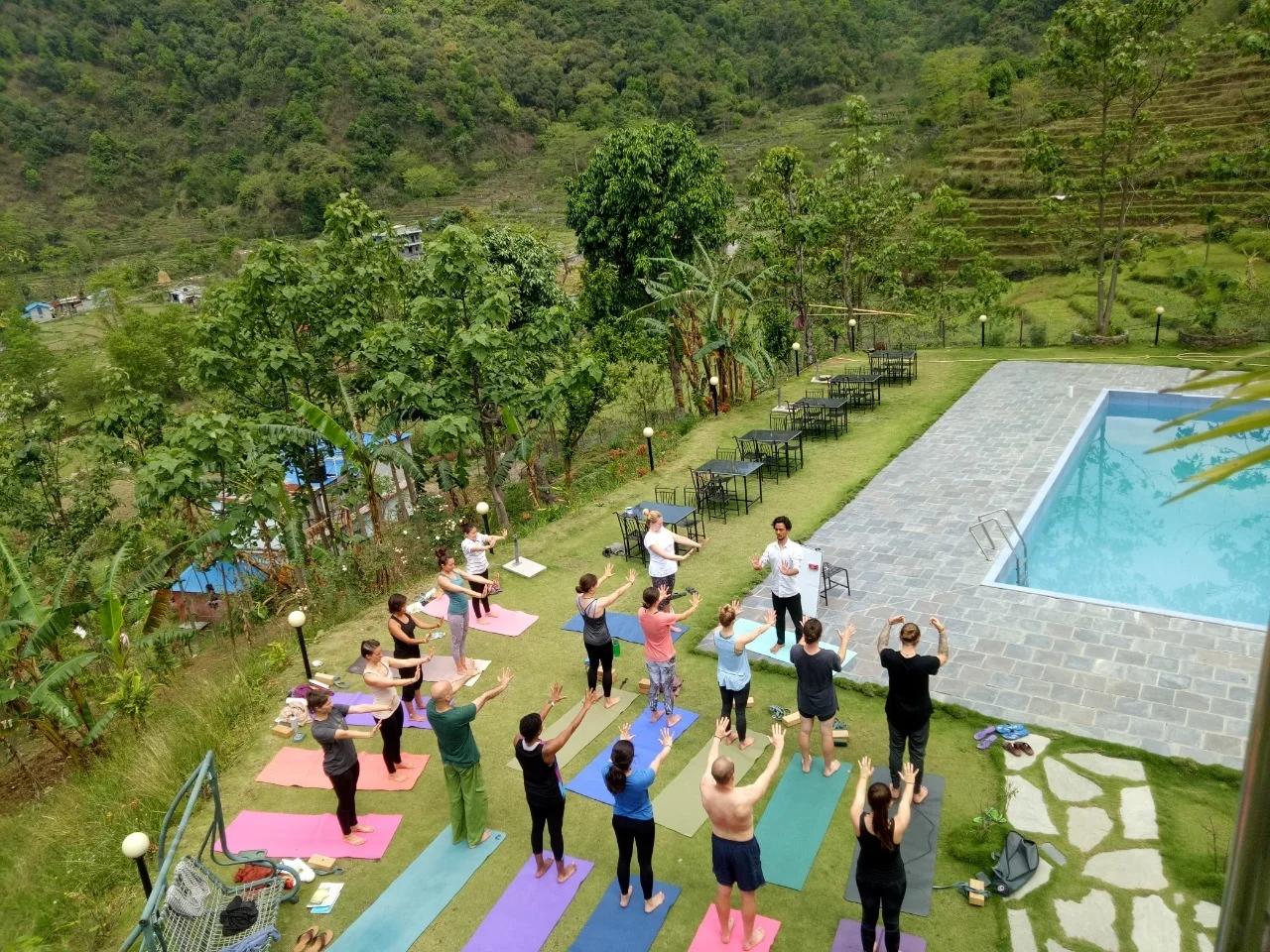
At Pokhara Yoga Academy, this is exactly the understanding we build into every level of our teaching — from beginner classes to full teacher training. Yoga won’t solve everything. But approached honestly and practiced consistently, it remains one of the most genuinely comprehensive tools available for building a healthier, more balanced life.






Comments are closed