
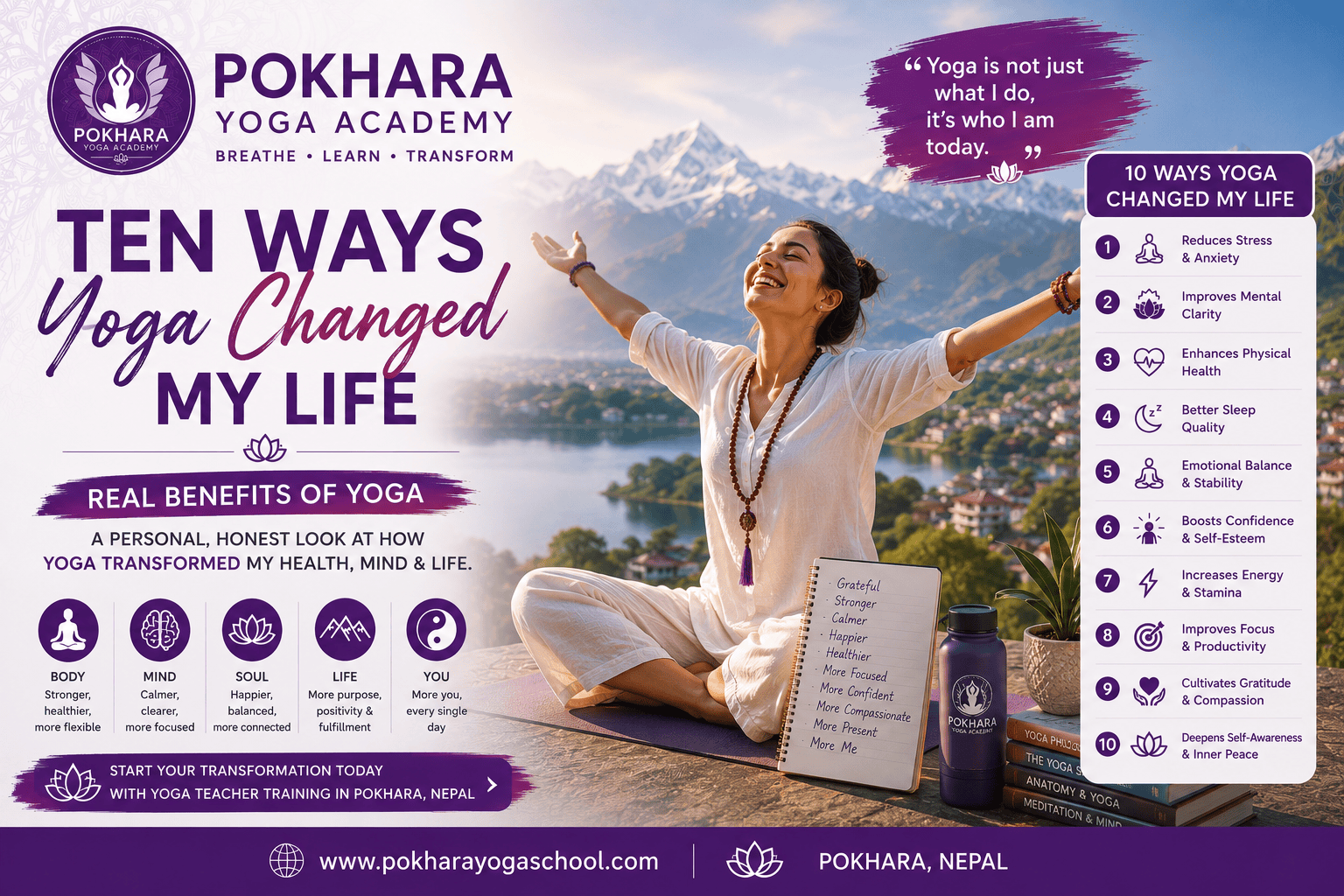
Ten Ways How Yoga Changed My Life
I didn’t come to yoga looking for transformation. I came to it exhausted, tight in the shoulders from years of desk work, and mildly skeptical that sitting on a mat breathing deeply could do much of anything besides stretch a few tendons. That skepticism didn’t survive the first year.
What follows isn’t a marketing pitch dressed up as a personal essay. It’s an honest account — from someone who now teaches at Pokhara Yoga Academy — of the specific, sometimes unglamorous ways a consistent yoga practice reshaped daily life, long before it became a profession. If you’re curious about the real benefits of yoga, not the airbrushed Instagram version, this is written for you.
Key Takeaways
- The benefits of yoga extend well beyond flexibility — they touch sleep quality, emotional regulation, focus, posture, and resilience during genuinely hard periods of life.
- Consistency matters more than intensity. Ten honest minutes most days outperformed occasional ninety-minute sessions squeezed in once a week.
- Breathwork (pranayama) was, unexpectedly, more life-changing than any physical pose.
- Yoga’s community and philosophical dimension often matter as much as the physical practice itself, particularly during difficult seasons of life.
- Real change came slowly and unevenly, not through a single breakthrough class or retreat.
- Anyone considering a deeper practice — including a yoga teacher training — should expect gradual, cumulative change rather than instant transformation.
Where This Started: A Body That Had Stopped Listening
Before yoga, my relationship with my own body was mostly adversarial. Years of long hours at a desk had left my hips tight, my lower back tender most mornings, and my breath shallow enough that I didn’t notice it until a teacher pointed it out in my very first class. I wasn’t unwell in any dramatic sense — just quietly, chronically disconnected from a body I lived in every day but rarely paid attention to.
A friend dragged me to a beginner’s Hatha class more out of persistence than persuasion. I went expecting a stretching session. I left with my first real inkling that something deeper was happening — not because of any single pose, but because of five minutes lying still in savasana at the end, breathing, doing absolutely nothing. That stillness felt almost foreign. It also felt, oddly, like relief.
That single class didn’t change my life. But it opened a door I kept walking back through, and over the following years, ten specific shifts emerged clearly enough that I can point to each one directly.
1. My Body Stopped Feeling Like an Obstacle
From Chronic Tightness to Genuine Mobility
The first and most obvious shift was physical. Months of consistent asana practice gradually loosened hips and hamstrings that had tightened over years of sitting. Lower back pain that I had quietly accepted as a permanent feature of adult life eased noticeably, not because any single pose “fixed” it, but because a stronger core and more mobile spine simply gave my back less work to do compensating.
Learning to Listen Before Something Hurt
More importantly, I learned to notice tension before it became pain. Yoga trains a kind of proprioceptive awareness — a felt sense of where your body is and what it’s holding — that most modern lifestyles actively work against. That awareness alone has prevented more minor injuries than any single stretch ever did.
2. My Breath Became a Tool, Not an Afterthought
Pranayama Was the Real Surprise
If you had asked me, before starting, which part of yoga would matter most, I would have guessed the poses. I was wrong. Pranayama — structured breathing practice — turned out to be the single most transferable skill I took away from the mat into daily life.
Using Breath to Interrupt Stress in Real Time
Learning techniques like slow diaphragmatic breathing and alternate nostril breathing (nadi shodhana) gave me an actual tool to use in stressful moments — a delayed flight, a tense conversation, a deadline crunch — rather than simply hoping the stress would pass on its own. This is one of the benefits of yoga that rarely makes it into promotional photos, because it’s invisible. It happens in a boardroom or a waiting room, not on a beach at sunrise.
3. Sleep Stopped Being a Nightly Negotiation
The Quiet Fix Nobody Warns You About
I didn’t start yoga to fix my sleep, but it was one of the earliest and most noticeable changes. A short wind-down sequence in the evening — gentle forward folds, a few restorative poses, a handful of slow breaths — became a reliable signal to my nervous system that the day was actually over.
Why This Works Physiologically
Slow, controlled breathing activates the parasympathetic nervous system, the body’s rest-and-digest state, which directly counters the sympathetic, fight-or-flight activation that keeps so many of us lying awake replaying the day. This isn’t mystical — it’s measurable physiology, and it’s one of the more evidence-backed benefits of yoga for anyone struggling with racing thoughts at bedtime.
4. Anxiety Stopped Running the Show
Naming the Difference Honestly
I want to be careful here, because yoga is not a replacement for professional mental health support, and I’m not a therapist or a doctor. But as a complement to a generally difficult period, a consistent practice gave me something concrete to do when anxious thoughts spiraled — a way to ground attention in breath and body rather than getting pulled entirely into the mental loop.
What Actually Helped
Slow pranayama, combined with the meditative focus that longer asana holds require, created small daily windows where my mind had somewhere else to go besides worry. Over time, those windows added up to a genuinely different baseline — calmer most days, more able to notice anxious thinking as it started rather than only after it had taken over.
5. My Posture Changed the Way People Treated Me
An Unexpected Social Effect
This one surprised me the most. As my posture improved — shoulders back, spine lengthened, chest open rather than collapsed forward from years of screen time — I noticed people responding to me slightly differently. More eye contact held. Slightly more deference in meetings. It sounds almost too simple to be real, but posture genuinely shapes how confident you appear before you’ve said a word.
The Internal Shift Behind the External One
More significant than how others responded was how I felt occupying that posture. Standing tall, shoulders open, changes something in your internal state, not just your appearance — a subtle but real boost in self-assurance that built over months of practice, not overnight.
6. I Learned to Sit With Discomfort Instead of Immediately Escaping It
Poses as Practice for Life
Holding a challenging pose — a deep hip opener, an extended plank, a long, still meditation seat — is, in miniature, practice for staying present with discomfort rather than immediately reaching for a distraction. That skill transferred directly into harder moments off the mat: difficult conversations, physical discomfort, emotional setbacks.
Why This Matters More Than Flexibility
Anyone can eventually deepen a stretch with consistent practice. The more valuable skill is what you learn about your own relationship with discomfort along the way — whether you tense against it, breathe through it, or panic and pull out. That self-knowledge is one of yoga’s quieter, more enduring benefits.
7. My Relationship With Food and Body Image Softened
Moving Toward Respect, Not Punishment
Before yoga, my relationship with exercise was largely about control and appearance. Over time, the practice shifted that orientation toward something closer to respect for what my body could actually do — hold a pose longer, breathe more fully, recover faster after a hard day.
A Note on Balance
I want to be honest that this shift took real time, and it wasn’t automatic. Yoga alone isn’t a cure for a difficult relationship with food or body image, and anyone struggling seriously in this area deserves proper professional support alongside any physical practice. What yoga offered me was a gentler frame for movement — one based on capability rather than punishment — which made a genuine difference over months of consistent practice.
8. Community Replaced Isolation
Finding People Who Also Show Up Early
Somewhere around the one-year mark, the people in my regular class stopped being strangers on adjacent mats and became something closer to a quiet, consistent community. There’s something genuinely bonding about showing up at 6 AM with the same group of people, week after week, sharing effort and stillness in equal measure.
Karma Yoga and Service
Later, during a teacher training, I encountered karma yoga — selfless service — as a formal practice for the first time, and it reframed community involvement as part of the discipline itself, not just a pleasant side effect. Helping set up a shala before sunrise, or supporting a fellow trainee through a difficult pose, became its own form of practice.
Practice as an Antidote to Modern Isolation
It’s worth naming something that rarely gets said directly: a lot of modern adult life is quietly isolating. Work happens through screens, friendships get scheduled weeks in advance, and entire days can pass with barely any unstructured, in-person connection. A regular class breaks that pattern simply by existing — a recurring, low-pressure reason to be in a room with the same people, breathing the same air, working toward the same small, shared effort. I didn’t expect that to matter as much as it did, but looking back, it may be one of the most underrated benefits of yoga for anyone whose social circle has quietly thinned out over the years.
9. Philosophy Gave the Physical Practice Meaning
Beyond Asana: The Yamas and Niyamas
For the first year or two, I practiced purely physically, with no real interest in yoga’s philosophical roots. That changed once I began studying the Yamas and Niyamas — yoga’s ethical foundations — which reframed the entire practice as a way of living, not just a physical routine confined to an hour on a mat.
Ahimsa as a Daily Practice, Not a Slogan
Ahimsa, non-violence, is often reduced to a poster on a studio wall, but taken seriously, it reshaped how I spoke to myself internally — noticing harsh self-criticism and choosing, deliberately, a gentler internal voice instead. That single shift alone has outlasted almost every physical gain from the practice.
10. It Gave Me the Confidence to Change My Life’s Direction
From Personal Practice to Teacher Training
The final, and largest, shift was the decision to pursue a yoga teacher training myself — not because I planned a career change from the outset, but because years of practice had built a depth of interest that a weekly class could no longer satisfy. Training deepened everything above: the philosophy, the breathwork, the physical understanding, and, unexpectedly, gave me the confidence to consider teaching as a genuine path.
Why This Step Isn’t for Everyone, and That’s Fine
Not everyone who practices yoga needs or wants to teach it, and that’s entirely fine — the benefits above stand on their own without ever setting foot in a teacher training. But for those who feel a similar pull toward depth, a structured, accredited program is where the philosophical and physical threads of practice actually come together into something teachable.
What I’d Tell the Version of Me Who Walked Into That First Class
If I could go back and say one thing to the version of myself lacing up for that first beginner’s Hatha class, it wouldn’t be about flexibility or poses at all. It would be simpler: stay long enough to feel the difference in your breath before you decide whether this is for you. Everything else on this list — the sleep, the calmer mind, the community, the eventual decision to train as a teacher — grew out of that one, unremarkable shift in how I was breathing. It didn’t look like much from the outside. It changed almost everything from the inside.
What the Research Says: A Brief, Honest Look
It’s worth noting that many of these personal experiences align with a growing body of research on yoga’s physiological and psychological effects. Studies have associated regular yoga practice with reduced cortisol levels, improved heart rate variability, and measurable reductions in self-reported stress and anxiety symptoms. None of this replaces medical or psychiatric care where it’s needed, but it does suggest that the changes described here aren’t purely anecdotal — they reflect patterns researchers have observed across many practitioners, not just one person’s story.
Who Might Benefit Most From Starting a Practice
- Desk-based professionals dealing with chronic tightness, poor posture, or shallow breathing patterns from long hours at a screen.
- Anyone navigating a high-stress period looking for a concrete, physical tool to manage anxiety alongside any professional support they’re already receiving.
- People struggling with sleep, particularly those whose racing thoughts make winding down at night difficult.
- Practitioners curious about philosophy, not just physical fitness, who want a practice that extends into how they think and live, not just how they move.
- Anyone considering a deeper commitment, such as a yoga teacher training, who wants to understand what that path might actually involve before enrolling.
Frequently Asked Questions About the Benefits of Yoga
Q: What are the main benefits of yoga?
A: The benefits of yoga span physical improvements like flexibility, posture, and reduced chronic tension, alongside mental and emotional benefits including better sleep, reduced anxiety, improved focus, and greater resilience during stressful periods. Many practitioners also report a deeper sense of community and purpose through consistent practice.
Q: How long does it take to feel the benefits of yoga?
A: Many practitioners notice initial improvements in sleep quality, stress levels, and physical tension within a few weeks of consistent practice, while deeper changes in posture, flexibility, and emotional regulation tend to build gradually over several months of regular sessions.
Q: Can yoga help with anxiety and stress?
A: Yoga’s breathing techniques and meditative focus can help activate the body’s parasympathetic nervous system, supporting relaxation and offering a concrete tool for managing stress in the moment. It works well as a complement to, not a replacement for, professional mental health support when anxiety is significant.
Q: Do I need to be flexible to start practicing yoga?
A: No. Flexibility is a result of consistent practice, not a prerequisite for starting it. Most beginner classes are designed specifically for practitioners with limited flexibility, and modifications exist for nearly every pose.
Q: How often should I practice yoga to see real benefits?
A: Consistency matters more than duration or intensity. Short, regular sessions — even ten to fifteen minutes most days — tend to produce more noticeable, lasting benefits than occasional longer sessions practiced inconsistently.
Q: Is yoga just exercise, or is there more to it?
A: While the physical postures (asana) are the most visible part of yoga, the tradition also includes breathwork (pranayama), meditation, and an ethical philosophical framework (the Yamas and Niyamas) that many practitioners find just as significant as the physical practice itself.
Q: Should I consider a yoga teacher training if I just want to deepen my personal practice?
A: Yes, many teacher trainings are attended by practitioners with no intention of teaching professionally, simply because the depth of study — philosophy, anatomy, and technique — offers a level of understanding that regular classes alone can’t provide.
Q: What type of yoga is best for beginners?
A: Hatha yoga is generally recommended for beginners due to its slower pace and focus on foundational alignment, though the ideal starting style depends on individual goals, whether that’s stress relief, physical conditioning, or a more meditative introduction to practice.
Final Thoughts: The Benefits of Yoga Are Cumulative, Not Instant
None of these ten shifts happened in a single class, a single retreat, or a single dramatic breakthrough. They accumulated slowly, unevenly, through years of showing up on the mat on both good days and genuinely difficult ones. If you’re considering starting, or deepening, your own practice, that’s probably the most honest thing I can tell you: expect gradual change, not a single transformative moment, and trust that the gradual version is the one that actually lasts.
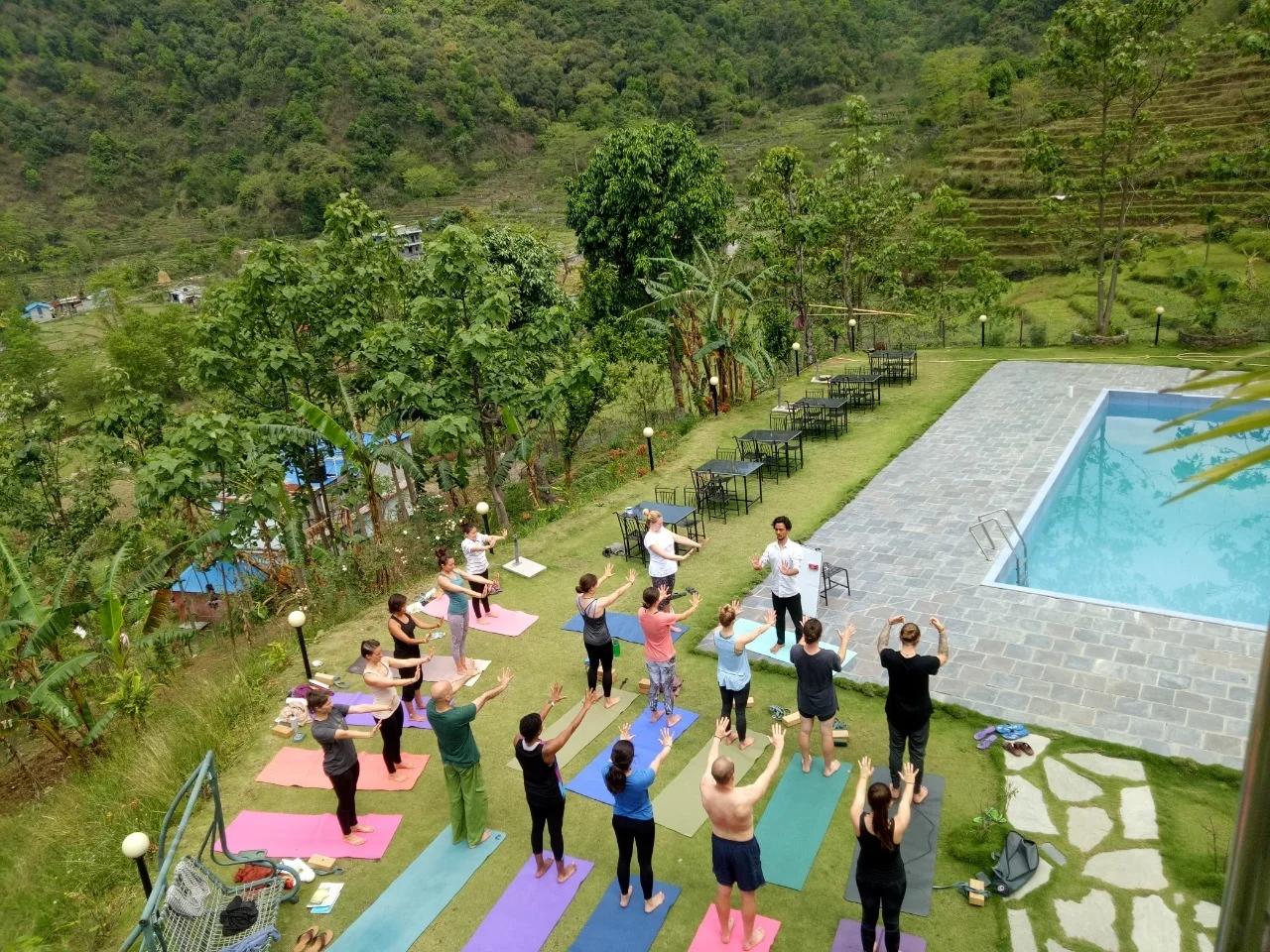
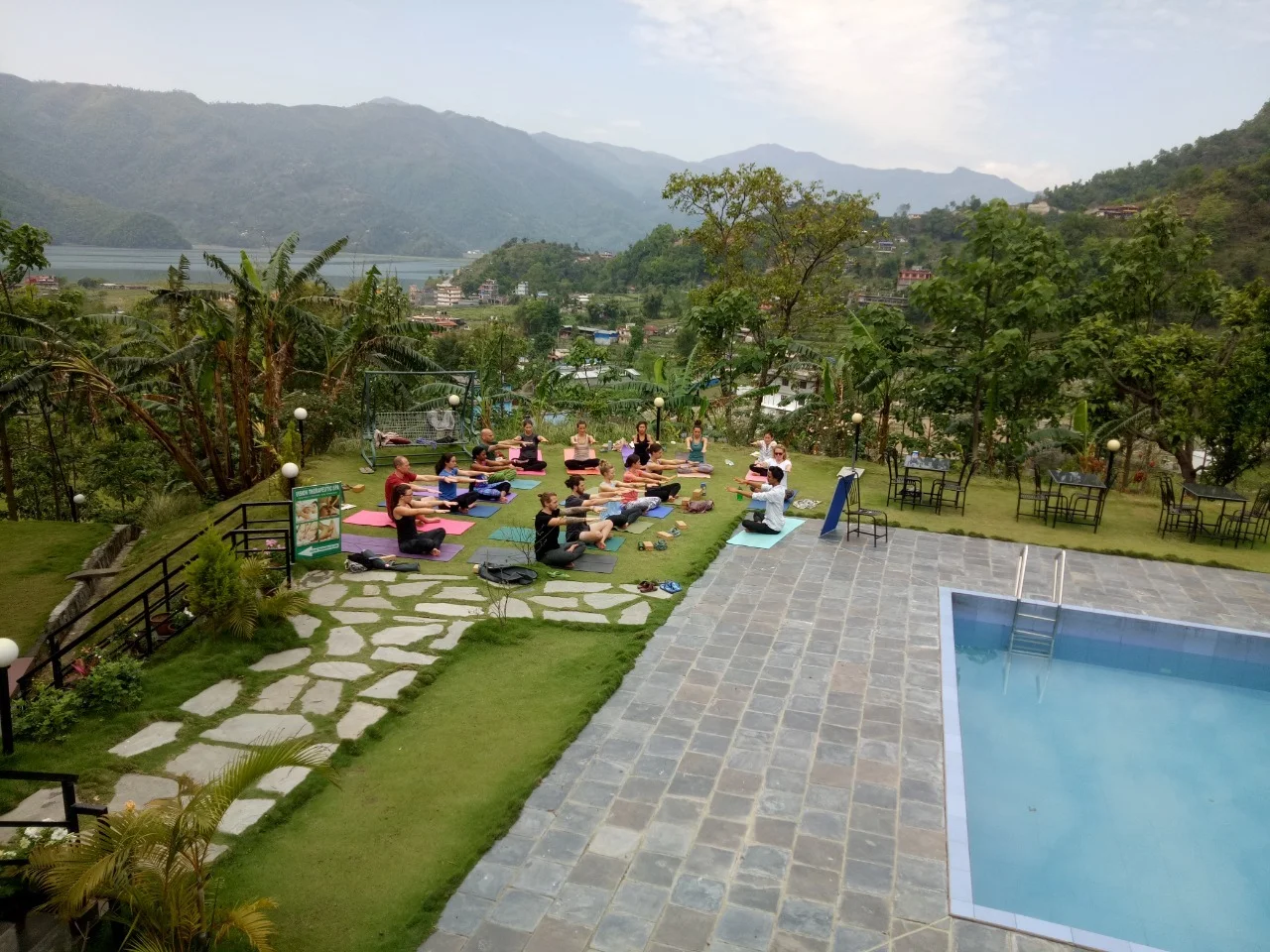
Pokhara Yoga Academy offers yoga classes, retreats, and accredited teacher training programs for practitioners at every stage — from a first beginner’s class to a full 200-hour certification — in the heart of the Himalayas.




Comments are closed