Hatha Yoga Teacher Training: The Complete Guide to Philosophy, Practice, and Certification
By the Faculty at Pokhara Yoga Academy
Ask ten people what “Hatha Yoga” means and you’ll likely get ten different answers — a gentle stretching class, a slow-paced beginner’s practice, or simply “not the fast kind.” In truth, Hatha Yoga is none of these things exclusively, and all of them partially. It is the foundational umbrella from which nearly every modern yoga style — Vinyasa, Ashtanga, Iyengar, Power Yoga — ultimately descends.
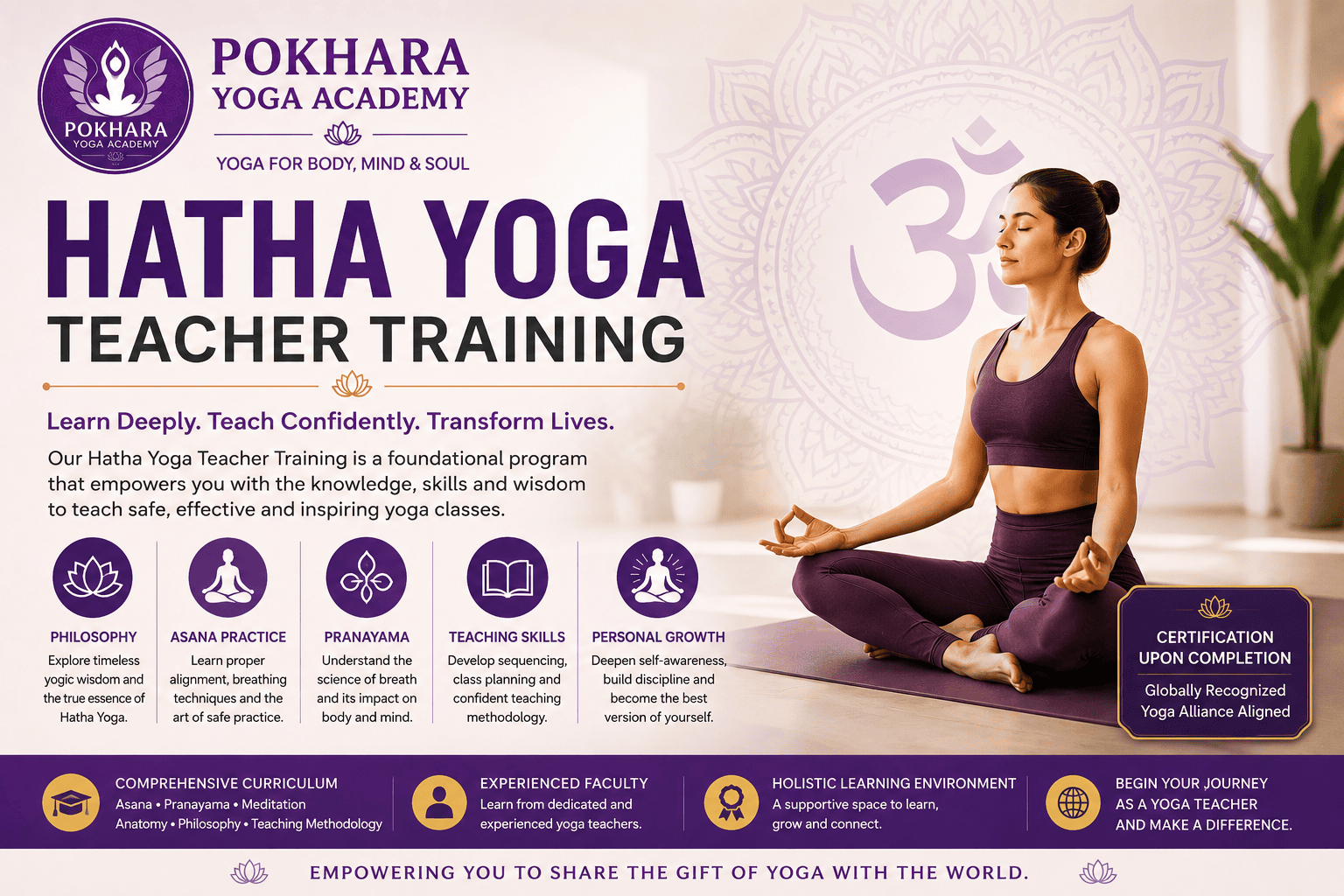
At Pokhara Yoga Academy, Hatha Yoga Teacher Training is where most of our students begin their teaching journey, because understanding Hatha deeply means understanding the roots of the entire practice. This guide walks through what Hatha Yoga actually is, what a comprehensive teacher training covers, and what to look for in a program that will prepare you to teach with real depth — not just memorized pose names.
Key Takeaways
- Hatha Yoga is a broad classical system encompassing physical postures (asana), breath control (pranayama), cleansing techniques (shatkarma), and meditation — it is the root tradition, not a “slow” style as commonly assumed.
- In contemporary studio language, “Hatha class” usually refers to a slower-paced session with longer pose holds — but classical Hatha Yoga, as taught in teacher training, is a far more comprehensive system.
- A comprehensive 200-hour Hatha Yoga Teacher Training covers asana alignment, pranayama, philosophy, anatomy, teaching methodology, and often introductory meditation and mantra study.
- Hatha Yoga Teacher Training is considered the strongest foundational certification for new teachers because its slower pace allows for precise alignment learning before layering on speed or flow-based sequencing.
- Choosing a Yoga Alliance-accredited, small-group program with experienced faculty matters significantly for both safety and long-term teaching credibility.
What Is Hatha Yoga? Clearing Up a Common Misconception
The Classical Definition
The word “Hatha” is often translated as a combination of ha (sun) and tha (moon), symbolizing the balancing of opposing energies within the body — a poetic description of yoga’s core aim: uniting effort and ease, activity and stillness, breath and body.
Classically, Hatha Yoga refers to the entire physical-energetic branch of yoga systematized in medieval texts such as the Hatha Yoga Pradipika, the Gheranda Samhita, and the Shiva Samhita. These texts describe a comprehensive system including:
- Asana (postures) — for physical steadiness and health
- Pranayama (breath control) — for regulating vital energy (prana)
- Shatkarma (cleansing techniques) — six purification practices for the body’s internal systems
- Mudra and Bandha (seals and locks) — subtle energetic techniques
- Meditation — the ultimate aim toward which the physical practices prepare the practitioner
The Modern Studio Definition
In most Western and international yoga studios today, “Hatha class” has come to mean something narrower: a slower-paced class with longer pose holds, less continuous flow, and a gentler overall intensity compared to Vinyasa or Ashtanga. This isn’t inaccurate exactly — it reflects one legitimate expression of Hatha practice — but it’s important for teacher trainees to understand that this is a simplified contemporary usage, not the full classical scope of the term.
Why This Distinction Matters for Teachers
A teacher who understands Hatha’s full classical context can offer students a far richer experience than one who only knows it as “the slow class.” Understanding shatkarma, mudra, and the energetic philosophy behind asana gives a teacher tools to explain why a posture is held a certain way — not just how.
The Foundations of Hatha Yoga Teacher Training
Core Curriculum Components
A comprehensive, Yoga Alliance-aligned Hatha Yoga Teacher Training program typically includes:
Curriculum Area | Typical Hours (200hr Program) |
|---|---|
Asana practice & alignment | 70–90 hours |
Teaching methodology & practicum | 30–40 hours |
Anatomy & physiology | 20–25 hours |
Yoga philosophy & history | 20–25 hours |
Pranayama & subtle body study | 15–20 hours |
Meditation & mantra | 10–15 hours |
Asana: Precision Over Speed
Because Hatha training emphasizes longer holds and slower transitions, students have significantly more time to study proper alignment in each posture — where the weight should distribute, how joints should track, and what modifications are needed for different body types. This makes Hatha training an excellent foundation even for those who eventually plan to teach faster-paced styles, since alignment principles learned slowly transfer directly into safer, more informed cueing at any speed.
Pranayama: The Second Limb in Focus
Hatha Yoga Teacher Training typically dedicates substantial time to pranayama practices such as Nadi Shodhana (alternate nostril breathing), Kapalabhati (skull-shining breath), Ujjayi (victorious breath), and Bhastrika (bellows breath) — each with specific physiological effects and traditional contraindications that a well-trained teacher must know before guiding students through them.
Shatkarma: The Overlooked Pillar
Many contemporary trainings underemphasize or skip shatkarma (cleansing techniques) entirely, yet a genuinely comprehensive Hatha program will at minimum introduce students to these traditional practices conceptually, even if not all are practiced hands-on during the training itself.
What a Typical Hatha Yoga Teacher Training Day Looks Like
- Morning meditation and pranayama (6:00–7:00 AM)
- Asana practice (7:00–9:00 AM) — slower-paced, alignment-focused
- Breakfast and rest
- Anatomy or philosophy lecture (mid-morning)
- Teaching methodology workshop (late morning)
- Lunch break
- Alignment and adjustment clinic (afternoon)
- Practicum teaching session (late afternoon)
- Evening satsang or self-study
This structure mirrors the traditional Hatha approach itself: breath and stillness first, vigorous activity second — the opposite order of many modern fitness-oriented classes.
Hatha Yoga vs. Other Styles: How to Choose Your Training
Hatha vs. Vinyasa Yoga Teacher Training
Vinyasa training emphasizes creative, breath-linked sequencing and continuous movement between postures. Hatha training emphasizes static alignment and longer holds. Many teachers pursue Hatha certification first, then add Vinyasa training later, since the alignment fundamentals learned in Hatha make flow sequencing safer and more intentional.
Hatha vs. Ashtanga Yoga Teacher Training
Ashtanga follows a fixed, vigorous sequence practiced at a consistent pace. Hatha allows more sequencing flexibility and a gentler overall intensity, making it more accessible to beginners, older students, or those recovering from injury.
Which Should You Choose First?
For most aspiring teachers — particularly those without an extensive personal practice background — Hatha Yoga Teacher Training is the recommended starting point precisely because of its methodical pace. It builds the anatomical and alignment literacy that makes every subsequent training (Vinyasa, Ashtanga, Yin, prenatal) easier to absorb and teach safely.
Who Should Consider Hatha Yoga Teacher Training?
Ideal Candidates
- Complete beginners seeking a strong foundational entry point into teaching
- Practitioners who prefer a methodical, alignment-focused learning style over a fast-paced physical challenge
- Teachers from other styles seeking to deepen their anatomical and philosophical understanding
- Those interested in eventually teaching therapeutic, restorative, or beginner-focused classes
A Note on Physical Accessibility
Because of its slower pace and adaptable sequencing, Hatha Yoga Teacher Training is often the most accessible training format for students with joint limitations, older practitioners, or those returning to yoga after a long break — though as with any physical training, existing injuries or conditions should be discussed with the school in advance.
What to Look for in a Hatha Yoga Teacher Training Program
1. Yoga Alliance Accreditation
A Registered Yoga School (RYS) credential ensures the curriculum meets internationally recognized hour and content standards, which matters both for your credibility and for future employability at studios requiring RYT certification.
2. Depth of Philosophy Instruction
Because Hatha is rooted in classical texts, a strong program should engage directly with source material — the Hatha Yoga Pradipika, Patanjali’s Yoga Sutras, and foundational concepts like the koshas (energetic sheaths) and chakras — rather than offering only a surface-level overview.
3. Experienced, Traditionally-Trained Faculty
Ask where your prospective teachers themselves trained and how long they’ve been teaching. Depth of personal practice and lineage matters enormously in how effectively philosophy and subtle-body concepts are communicated.
4. Small Class Sizes for Individual Alignment Feedback
Because so much of Hatha training’s value lies in precise alignment correction, a low student-to-teacher ratio directly affects how much individualized feedback each student receives.
5. Location and Immersive Environment
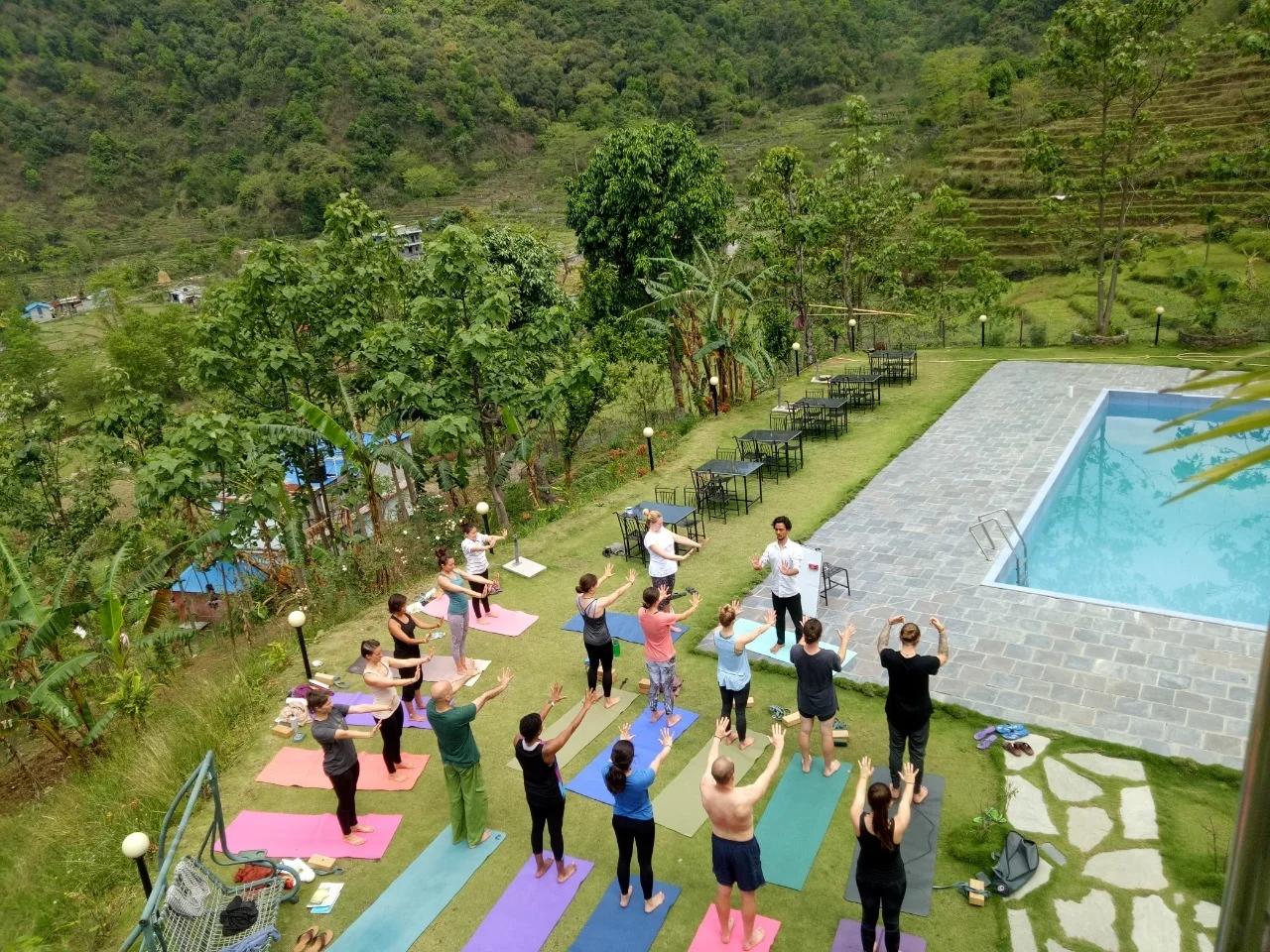
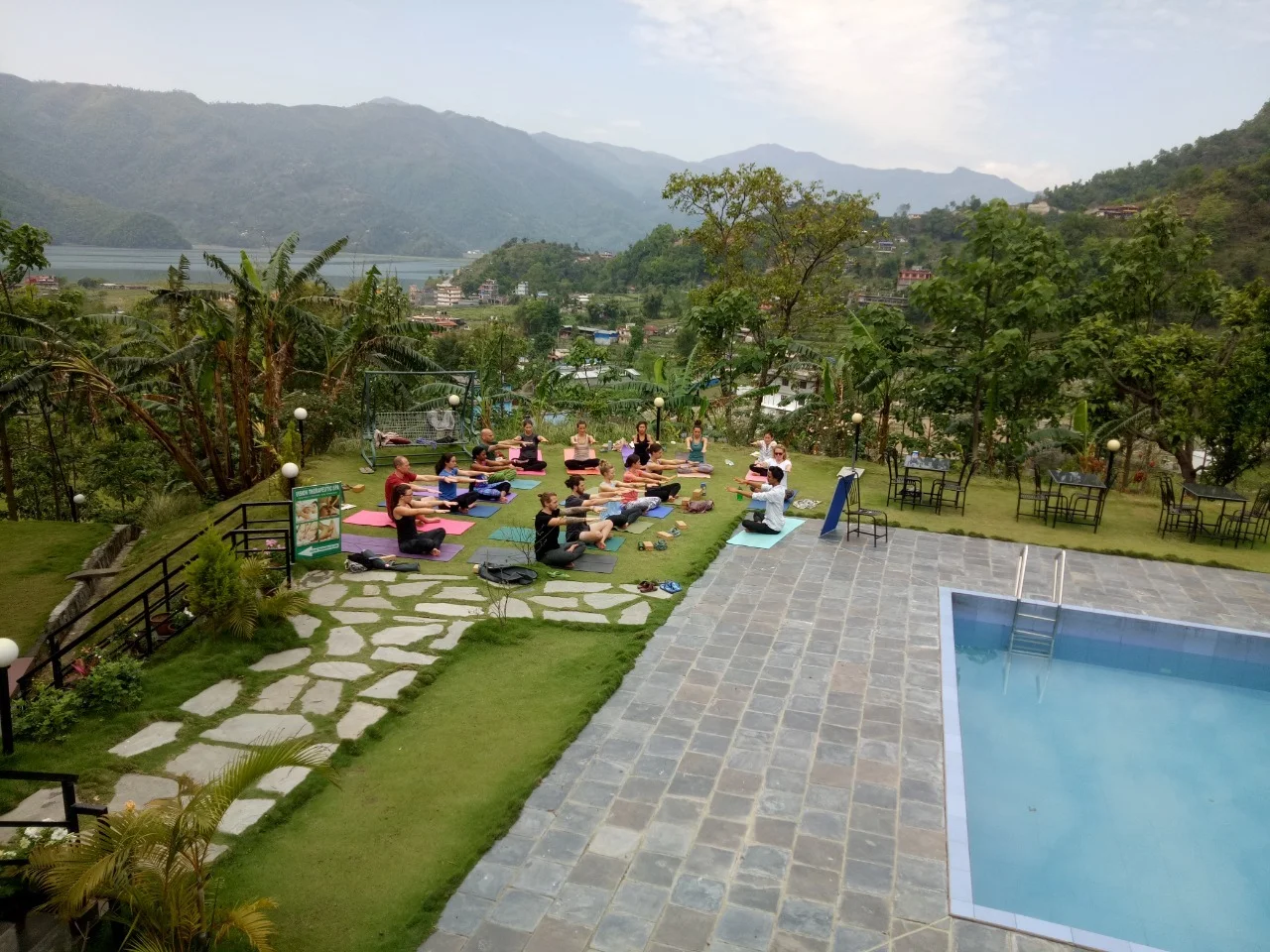
Training away from daily distractions, in a setting that supports the contemplative side of the practice, meaningfully deepens the experience. This is a significant reason locations like Pokhara and Rishikesh remain internationally sought-after for Hatha Yoga Teacher Training — the natural surroundings and cultural context reinforce the material being studied.
Career Paths After Hatha Yoga Teacher Training
Graduates typically pursue one or more of the following:
- Teaching foundational or beginner-level Hatha classes at studios and gyms
- Leading slower-paced, alignment-focused, or therapeutic yoga sessions
- Working with older adults, injury-recovery populations, or complete beginners
- Building a private teaching practice, where Hatha’s individualized alignment focus translates especially well to one-on-one work
- Continuing on to specialized trainings — Vinyasa, Ashtanga, Yin, prenatal, or meditation-focused certifications — using Hatha as their foundational base
Frequently Asked Questions About Hatha Yoga Teacher Training
1. What is the difference between Hatha Yoga and Vinyasa Yoga?
Hatha Yoga emphasizes slower-paced, longer-held postures with a strong focus on alignment, while Vinyasa Yoga links postures together in continuous, breath-synchronized flow. Many teachers train in Hatha first to build foundational alignment knowledge before moving into flow-based styles.
2. Is Hatha Yoga good for beginners?
Yes. Hatha Yoga’s slower pace and longer pose holds make it one of the most accessible styles for complete beginners, allowing time to learn proper alignment and breathing technique without the physical demands of faster-paced styles.
3. How long does Hatha Yoga Teacher Training take?
Most foundational Hatha Yoga Teacher Training programs run 200 hours, typically completed over 3–4 weeks of full-time, immersive study. Some schools also offer extended part-time or online formats spanning several months.
4. Do I need prior yoga experience before starting Hatha Yoga Teacher Training?
Most reputable programs recommend at least 6 months of personal practice beforehand, though Hatha Yoga Teacher Training is generally considered more accessible to newer practitioners than more physically demanding styles like Ashtanga.
5. What certification do I receive after completing Hatha Yoga Teacher Training?
Graduates of a Yoga Alliance-accredited 200-hour Hatha Yoga Teacher Training receive a certificate qualifying them to register as a RYT-200 (Registered Yoga Teacher), a credential recognized internationally by studios, gyms, and retreat centers.
6. Can Hatha Yoga Teacher Training help me teach other yoga styles later?
Yes. Because Hatha training builds strong foundational knowledge of alignment, anatomy, and breath, many teachers find it significantly easier to pursue specialized certifications afterward — Vinyasa, Ashtanga, Yin, or prenatal yoga — since the core teaching skills transfer directly.
Why Study Hatha Yoga Teacher Training at Pokhara Yoga Academy
Hatha Yoga rewards patience — both in the practicing and in the teaching of it. A rushed Hatha training produces teachers who know pose names but not the reasoning behind them; a thorough one produces teachers capable of adapting a single posture safely to a dozen different bodies in the same room.
Our Hatha Yoga Teacher Training combines classical textual study — drawing directly from the Hatha Yoga Pradipika and Patanjali’s Yoga Sutras — with methodical, alignment-focused asana instruction, taught by senior faculty in the quiet, mountain-framed setting of Pokhara. For students who want a genuinely comprehensive foundation before specializing further, this training is designed to be that starting point.




Comments are closed