Ashtanga Yoga Teacher Training: The Complete Guide to Philosophy, Practice, and Certification
By the Faculty at Pokhara Yoga Academy
Ashtanga Yoga is one of the most demanding, disciplined, and transformative styles in the modern yoga landscape — and one of the most misunderstood. To many, it’s simply “the fast, sweaty vinyasa style.” To serious practitioners, it’s a complete eight-limbed path that uses a fixed sequence of postures as a doorway into much deeper territory: breath control, concentration, and self-observation.
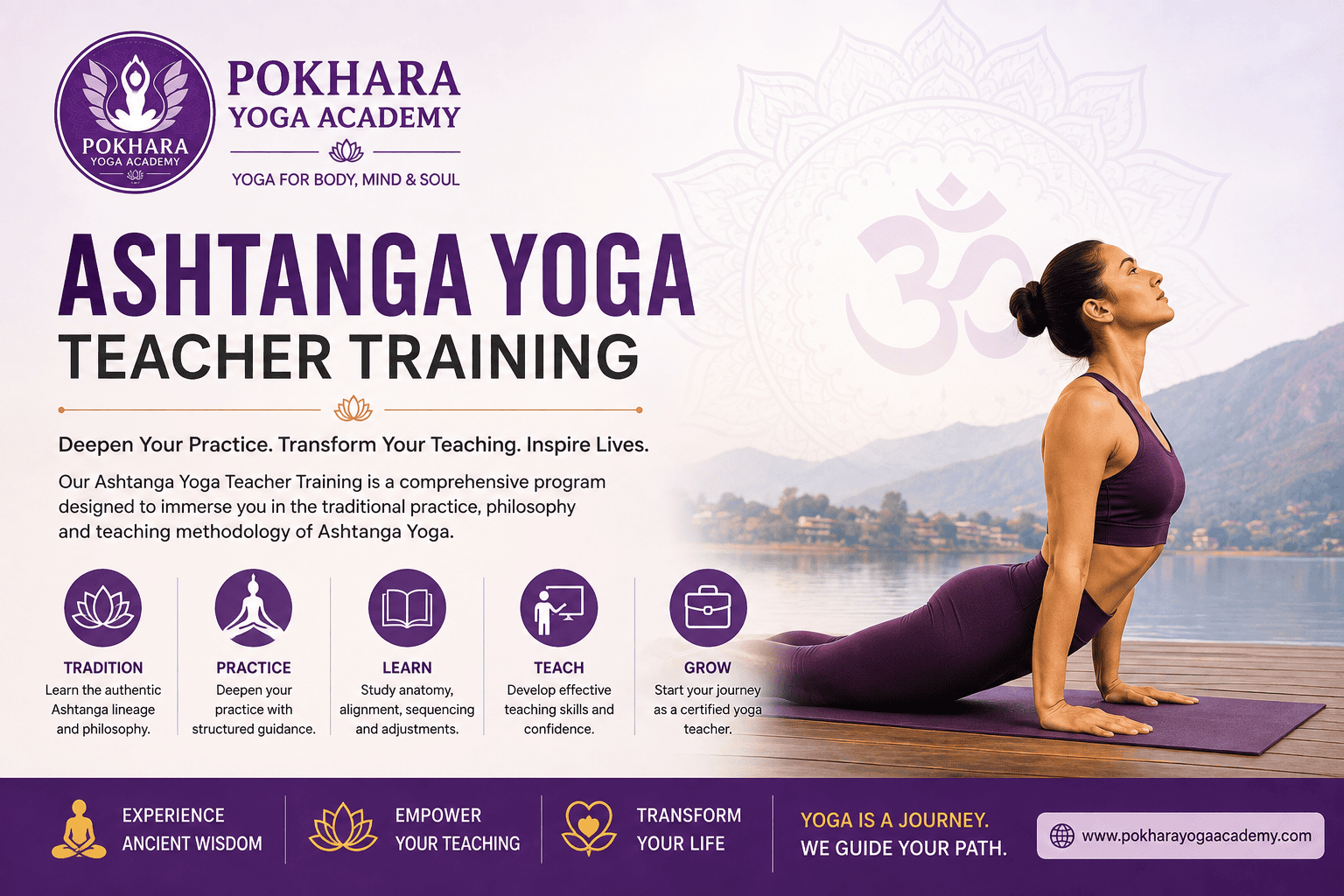
At Pokhara Yoga Academy, Ashtanga forms a core pillar of our teacher training curriculum, taught by senior Himalayan faculty trained directly in the Mysore lineage. This guide covers everything a prospective student or aspiring teacher needs to know before committing to Ashtanga Yoga Teacher Training (AYTT) — its philosophy, its syllabus, what a typical training day looks like, and how to choose a program that will actually prepare you to teach safely and authentically.
Key Takeaways
- Ashtanga Yoga is a structured system built on a fixed sequence of postures (the Primary Series, or Yoga Chikitsa) practiced in coordination with a specific breathing method called Ujjayi and a gaze technique called Drishti.
- Ashtanga Yoga Teacher Training typically runs 200 hours (foundational) to 500 hours (advanced), and is most authentically taught in the Mysore style — self-paced practice under a teacher’s individual guidance.
- The style traces back to Sri K. Pattabhi Jois, who developed it from the teachings of his guru, Sri T. Krishnamacharya, in Mysore, India, in the 20th century.
- A quality AYTT program covers not just the physical postures but anatomy, teaching methodology, the eight limbs (Ashtanga) of Patanjali’s Yoga Sutras, and safe adjustment techniques.
- Choosing a Yoga Alliance-accredited program matters for international recognition, insurance eligibility, and credibility when seeking teaching positions or building a private client base.
What Is Ashtanga Yoga? Understanding the Philosophy Behind the Practice
The word “Ashtanga” comes from the Sanskrit ashta (eight) and anga (limb), referring to the eight-limbed path outlined by the sage Patanjali in the Yoga Sutras roughly 2,000 years ago. These eight limbs are:
- Yama — ethical restraints (non-violence, truthfulness, non-stealing, moderation, non-attachment)
- Niyama — personal observances (cleanliness, contentment, discipline, self-study, surrender)
- Asana — physical postures
- Pranayama — breath control
- Pratyahara — withdrawal of the senses
- Dharana — concentration
- Dhyana — meditation
- Samadhi — union or enlightenment
Ashtanga Yoga as a Modern System
The physical practice most people know today as “Ashtanga Yoga” — a set sequence of postures linked by breath — was systematized in the 20th century by Sri K. Pattabhi Jois in Mysore, South India, based on teachings he received from his guru, Sri T. Krishnamacharya. This is technically called Ashtanga Vinyasa Yoga, and it represents just one limb (asana) fully expressed as a complete practice method, while still drawing its name and philosophical foundation from all eight limbs.
The Three Pillars of Practice
Ashtanga Vinyasa Yoga rests on three interlocking techniques practiced simultaneously:
- Vinyasa — a specific breath-synchronized movement linking every posture transition
- Ujjayi Pranayama — an audible, ocean-like breath that generates internal heat and maintains focus
- Bandhas — internal energetic locks (primarily Mula Bandha and Uddiyana Bandha) that stabilize the core and direct energy flow
Together, these three elements are what separate authentic Ashtanga practice from a generic “flow” class that simply borrows its postures.
The Six Series of Ashtanga Yoga
Ashtanga Yoga is organized into a progressive series system, each building on the physical and energetic foundation of the one before it.
Primary Series (Yoga Chikitsa)
Meaning “yoga therapy,” the Primary Series is designed to detoxify and align the body. It is the entry point for all Ashtanga students and the core focus of most 200-hour Ashtanga Yoga Teacher Trainings.
Intermediate Series (Nadi Shodhana)
Meaning “nerve cleansing,” this series works on purifying and opening the subtle energy channels (nadis) of the body through deeper backbends and hip openers. Students typically progress here only after demonstrating consistent, safe command of the Primary Series.
Advanced Series A–D (Sthira Bhaga)
Meaning “divine stability,” these four series are reserved for long-term, highly advanced practitioners and are rarely part of standard teacher training curricula.
Why Series Progression Matters for Teachers
Understanding this system matters even if you’ll mostly teach Primary Series-level classes — because student questions about “advancing” almost always come up, and a well-trained teacher needs to explain why progression is traditionally slow, supervised, and non-negotiable, rather than treating it as an arbitrary rule.
What Ashtanga Yoga Teacher Training Actually Covers
Core Curriculum Components
A comprehensive, Yoga Alliance-aligned Ashtanga Yoga Teacher Training program should include:
Curriculum Area | Typical Hours (200hr Program) |
|---|---|
Asana practice & technique | 80–100 hours |
Teaching methodology & practicum | 30–40 hours |
Anatomy & physiology | 20–25 hours |
Yoga philosophy & history | 20–25 hours |
Pranayama & subtle body study | 10–15 hours |
Adjustments & alignment | 10–15 hours |
Mysore-Style Practice: The Heart of Ashtanga Training
Unlike led vinyasa classes where an instructor calls out each posture, Mysore-style practice has each student move through the sequence at their own pace, from memory, while the teacher moves through the room offering individual adjustments, corrections, and — when appropriate — new postures to add to the student’s practice. This is considered the traditional and most effective way to both learn and eventually teach Ashtanga Yoga, because it trains a teacher’s eye for the subtle, individualized guidance that group-led classes simply cannot replicate.
Learning to Adjust Safely
Hands-on adjustment is a significant part of Ashtanga teacher training, and reputable programs dedicate substantial practicum time to it — including consent-based adjustment protocols, which have become an increasingly important standard across the global yoga teaching community in recent years.
Who Should Consider Ashtanga Yoga Teacher Training?
Ideal Candidates
- Practitioners with at least 6–12 months of consistent Ashtanga or vinyasa-style practice
- Yoga teachers from other lineages seeking to deepen their technical and philosophical foundation
- Students drawn to structure, discipline, and a lineage-based tradition rather than a freeform practice style
Who Might Consider a Different Path First
Complete beginners with no yoga background are often better served starting with a foundational Hatha or general 200-hour YTT before committing to Ashtanga’s demanding pace — though many schools, including ours, do accept dedicated beginners into Ashtanga-focused trainings with additional preparatory guidance.
A Note on Physical Readiness
Ashtanga is physically rigorous. Prospective students with existing injuries, chronic joint conditions, or limited mobility should discuss their history with the training school beforehand so the program can be adapted appropriately, rather than discovering mid-training that certain postures need to be avoided entirely.
What to Look for in an Ashtanga Yoga Teacher Training Program
1. Yoga Alliance Accreditation
A Registered Yoga School (RYS) credential through Yoga Alliance signals that the curriculum meets internationally recognized hour and content standards — important both for your own credibility and for future employability, including at studios that require RYT certification for hiring.
2. Lineage-Trained Faculty
Ask directly where your prospective teachers trained, and in what lineage. Authentic Mysore-style instruction is best taught by teachers who have themselves studied extensively under qualified Ashtanga teachers, ideally with direct or close lineage connections.
3. Small Class Sizes
Because Mysore-style teaching depends on individual attention, a program with a low student-to-teacher ratio will always produce more capable graduates than a large lecture-hall-style training.
4. Location and Learning Environment
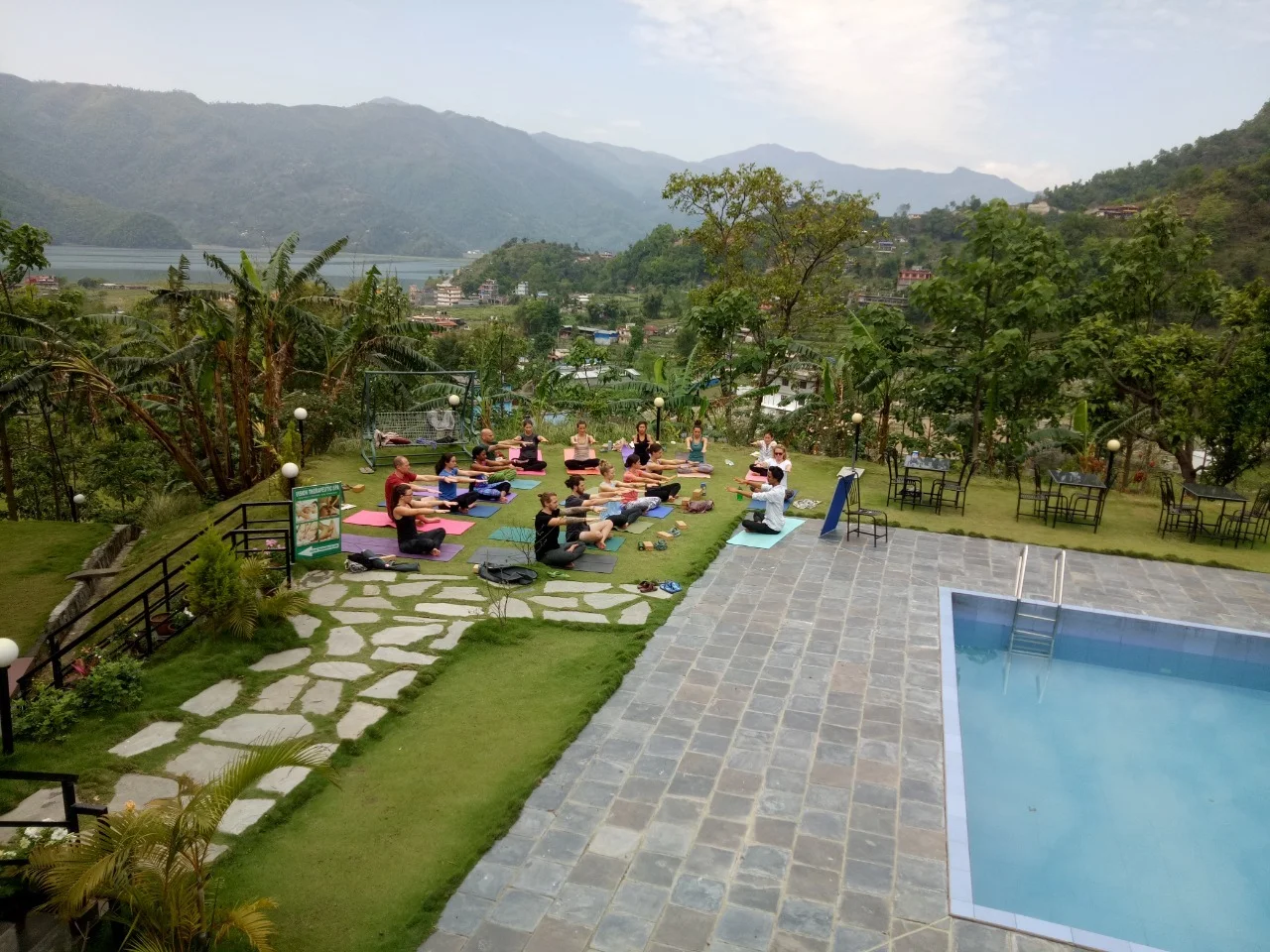
Training in a dedicated yoga destination — away from daily distractions — meaningfully deepens the immersive quality of the experience. This is one reason Rishikesh and Pokhara remain two of the most sought-after training locations globally: both offer a concentrated environment of practice, nature, and community that’s difficult to replicate elsewhere.
A Typical Day in Ashtanga Yoga Teacher Training
While every school structures its schedule slightly differently, a representative day might look like this:
- Early morning Mysore-style practice (5:30–8:00 AM) — self-paced asana practice with individual guidance
- Breakfast and rest
- Anatomy or philosophy lecture (mid-morning)
- Teaching methodology workshop (late morning)
- Lunch break
- Pranayama or meditation session (afternoon)
- Adjustment clinic or practicum teaching (late afternoon)
- Evening satsang, self-study, or free time
This rhythm — practice first, study second — reflects the traditional understanding that embodied experience must come before intellectual understanding in yoga education.
Career Paths After Ashtanga Yoga Teacher Training
Graduates of a well-structured AYTT program typically pursue one or more of the following:
- Teaching Mysore-style or led Ashtanga classes at studios
- Leading beginner-friendly vinyasa classes that draw on Ashtanga sequencing principles
- Offering private one-on-one instruction, which is particularly well-suited to the individualized nature of Ashtanga training
- Continuing on to Intermediate Series study and eventually pursuing Authorization or Certification through recognized Ashtanga lineage-holders
- Combining Ashtanga certification with complementary trainings (Yin, prenatal, meditation) to build a diversified teaching practice
Frequently Asked Questions About Ashtanga Yoga Teacher Training
1. What is the difference between Ashtanga Yoga and Vinyasa Yoga?
Ashtanga Yoga follows a fixed, unchanging sequence of postures practiced in the same order every time, typically in Mysore style. Vinyasa Yoga is more flexible and creative, with teachers designing varied sequences each class, though it borrows its breath-linked movement principle directly from Ashtanga.
2. How long does Ashtanga Yoga Teacher Training take?
Most foundational Ashtanga Yoga Teacher Training programs run 200 hours, typically completed over 3–4 weeks of immersive, full-time study. Advanced programs extending to 300 or 500 hours build on this foundation over additional weeks or modules.
3. Do I need prior Ashtanga experience before starting teacher training?
While not strictly required at every school, most reputable Ashtanga Yoga Teacher Training programs recommend at least 6–12 months of consistent practice beforehand, since the physical and breathing demands of the training are considerably higher than in general yoga styles.
4. Is Ashtanga Yoga Teacher Training physically difficult?
Yes. Ashtanga is one of the more physically demanding yoga styles due to its vigorous vinyasa transitions, sustained postures, and daily practice schedule. Programs should offer modifications for injuries or limited mobility, but students should expect genuine physical challenge throughout.
5. What certification do I receive after completing the training?
Graduates of a Yoga Alliance-accredited 200-hour Ashtanga Yoga Teacher Training receive a certificate that qualifies them to register as a RYT-200 (Registered Yoga Teacher) with Yoga Alliance, recognized internationally by studios, retreat centers, and gyms.
6. Can I teach Ashtanga Yoga after just a 200-hour training?
A 200-hour training qualifies you to teach foundational Ashtanga-inspired and Primary Series-level classes. Teaching authentic Mysore-style programs at a deeper level, or claiming formal “Ashtanga Authorization,” typically requires many additional years of study directly under senior lineage-holders.
Why Study Ashtanga Yoga Teacher Training at Pokhara Yoga Academy
Ashtanga is not a style that can be taught convincingly from a manual — it requires teachers who have lived inside the practice long enough to understand its subtleties: when to push a student deeper into a posture and when to hold back, how the breath changes as fatigue sets in, and how the eight limbs show up not just on the mat but in how a person carries themselves through daily life.
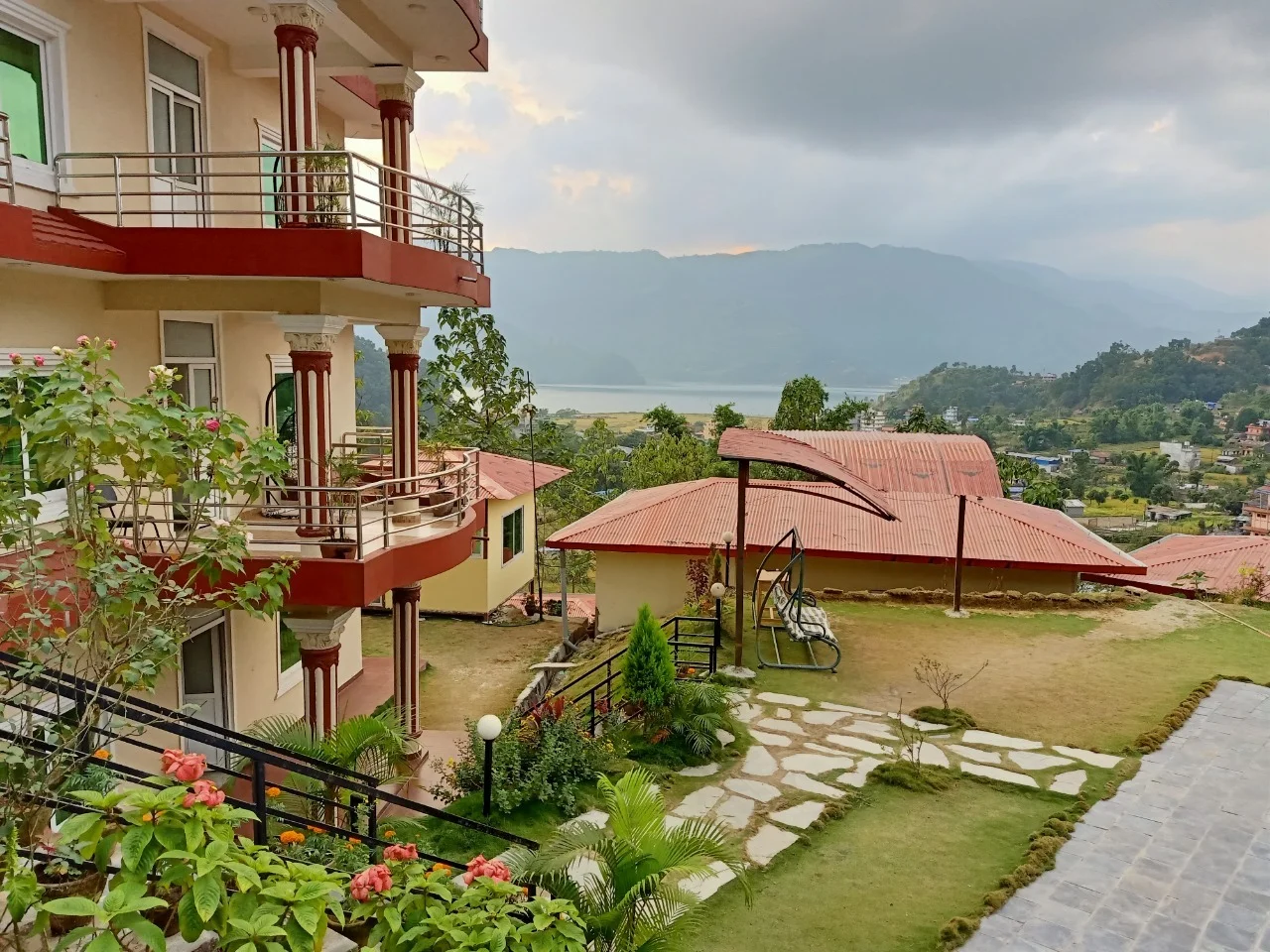
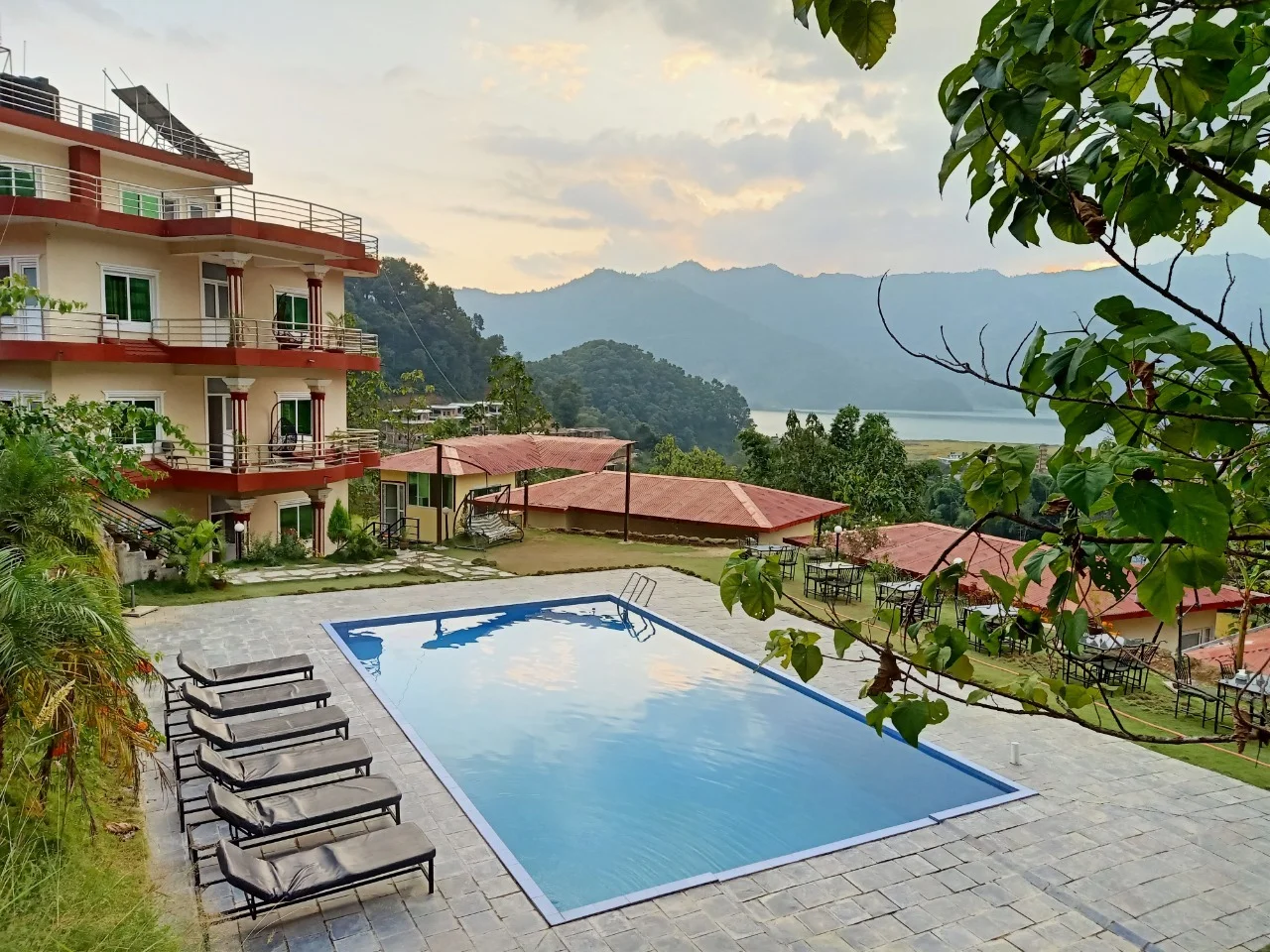
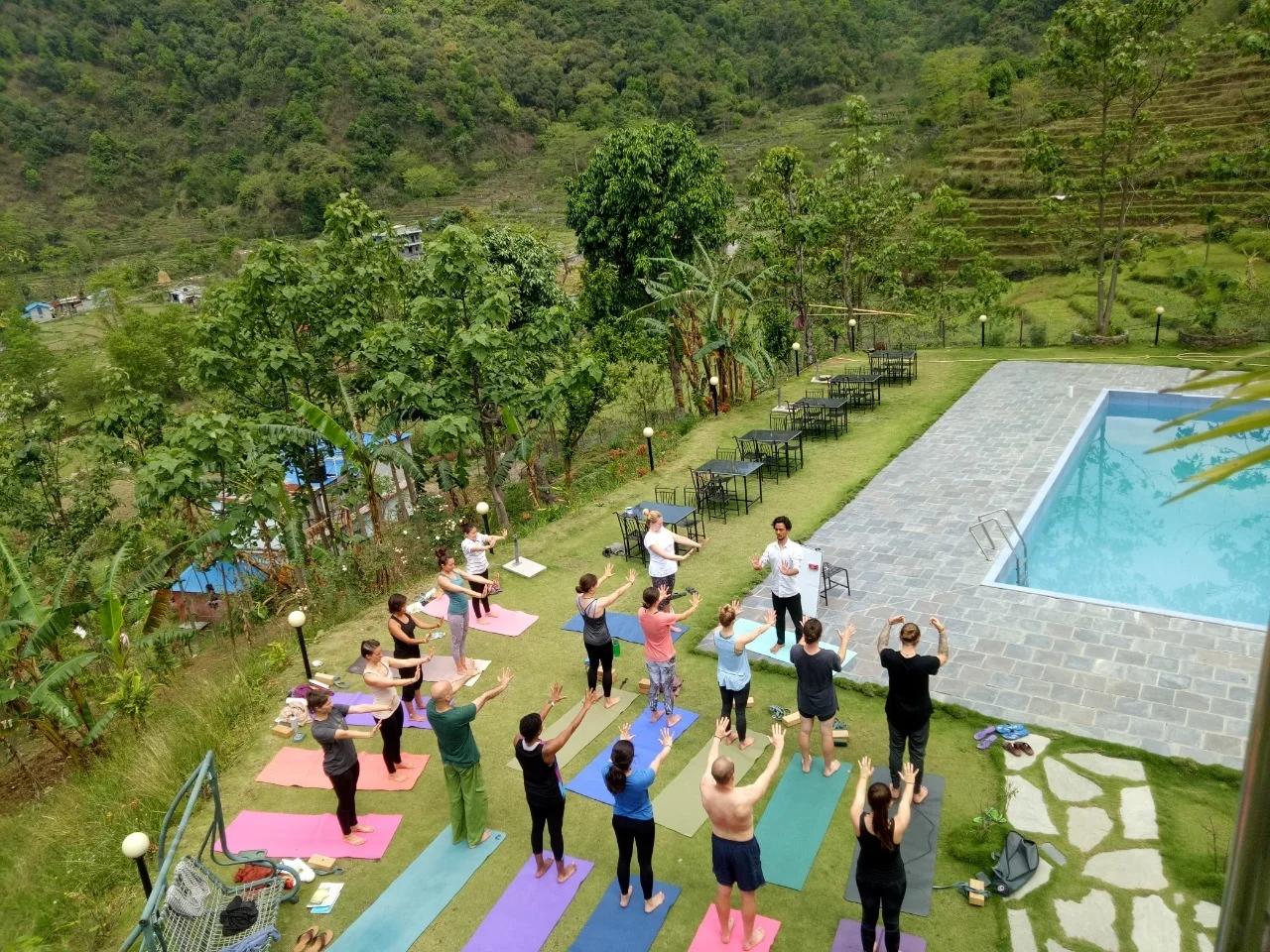
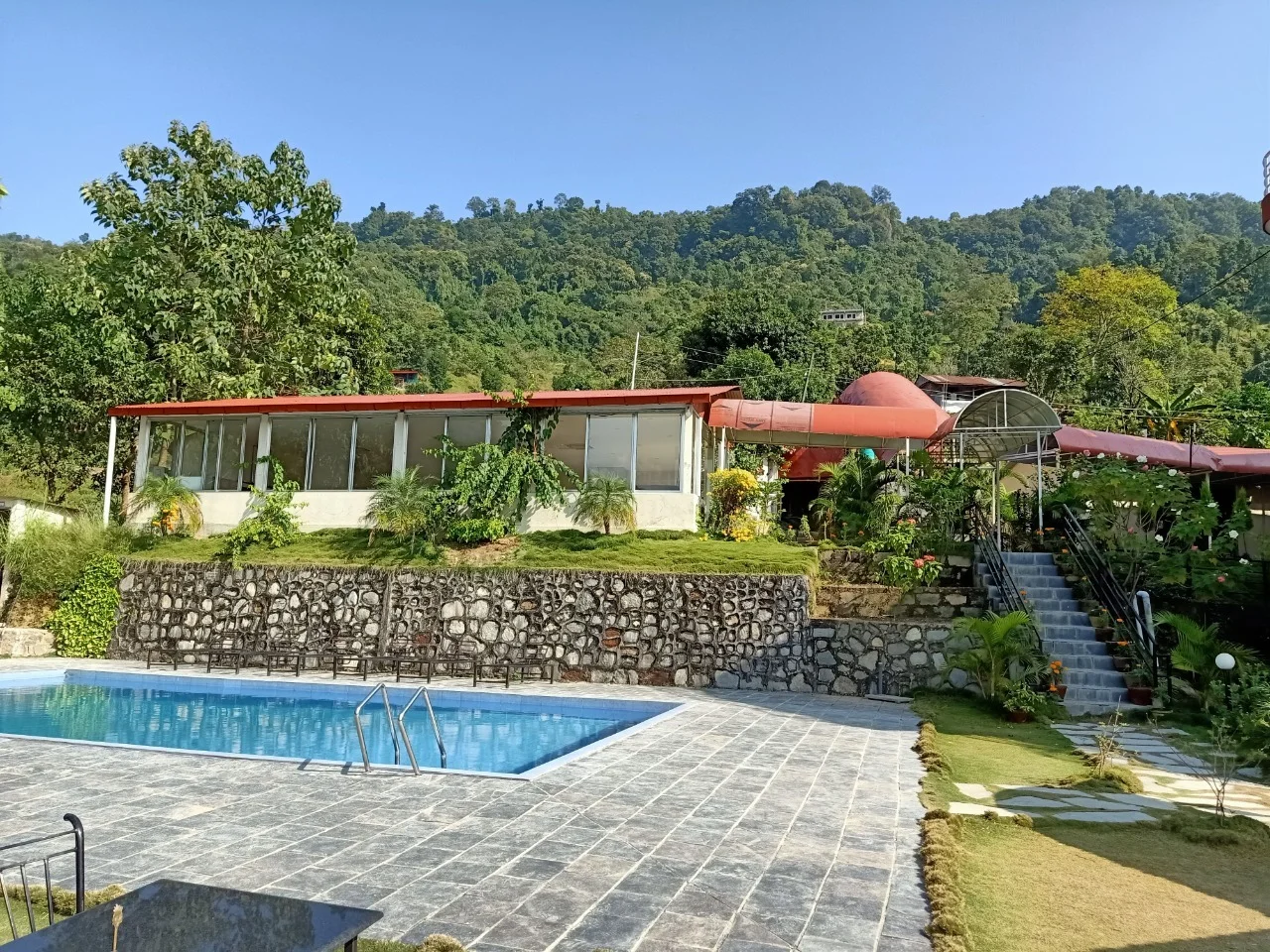
Our Ashtanga Yoga Teacher Training combines traditional Mysore-style instruction with a rigorous academic curriculum in anatomy, philosophy, and teaching methodology — taught by senior faculty in the quiet, mountain-framed setting of Pokhara. For students who want a training grounded in lineage and discipline rather than trend, this is where that journey begins.
Comments are closed