Here’s What You Need to Know About Iyengar Yoga Before Joining a Class
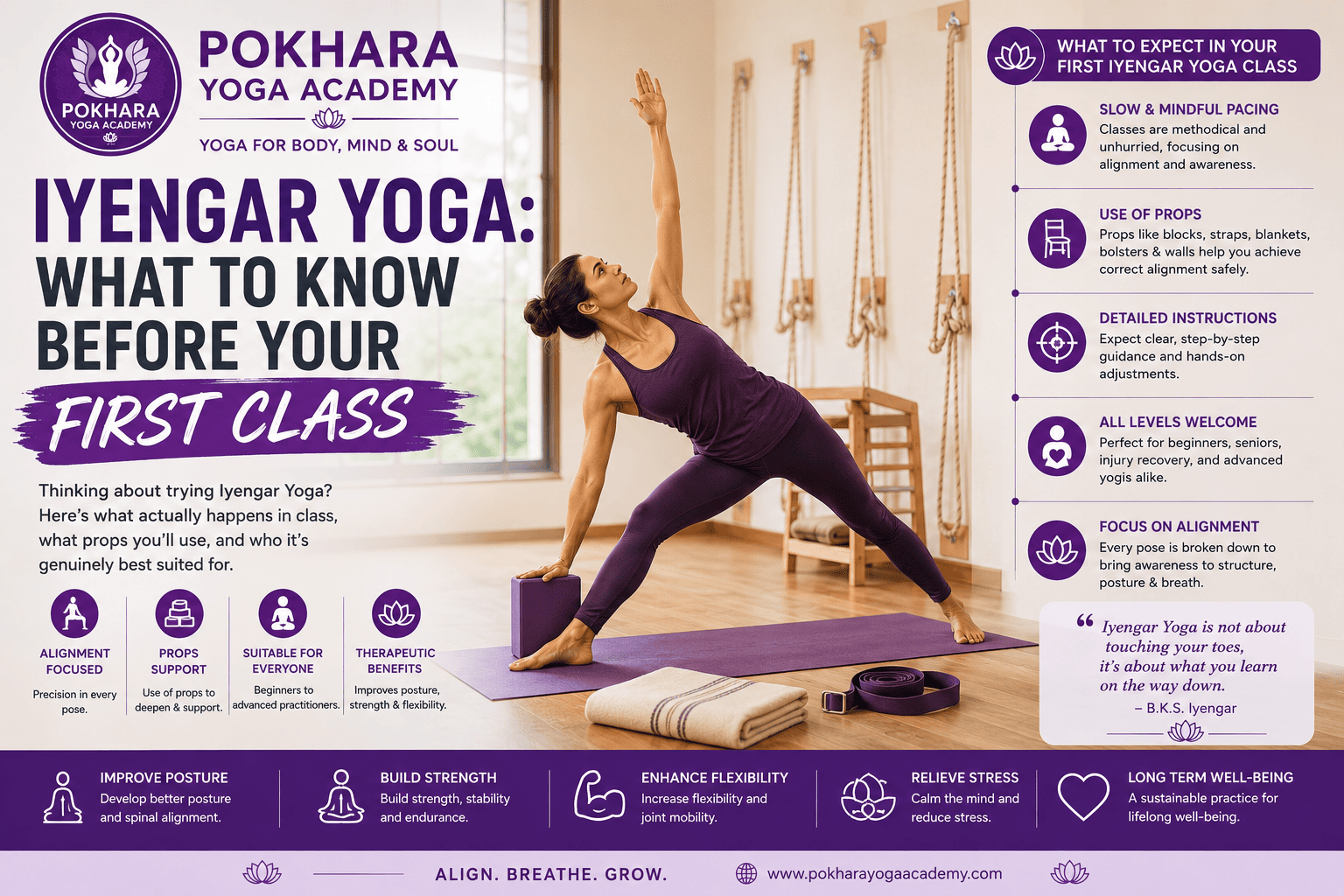
Walk into an Iyengar Yoga class expecting the same experience as a Vinyasa flow or a general Hatha session, and you’ll likely be caught off guard. Blocks, straps, bolsters, chairs, and even ropes mounted on the wall — Iyengar Yoga looks, at first glance, more like a physical therapy studio than a typical yoga room. That’s precisely the point, and understanding why changes how you should approach your first class.
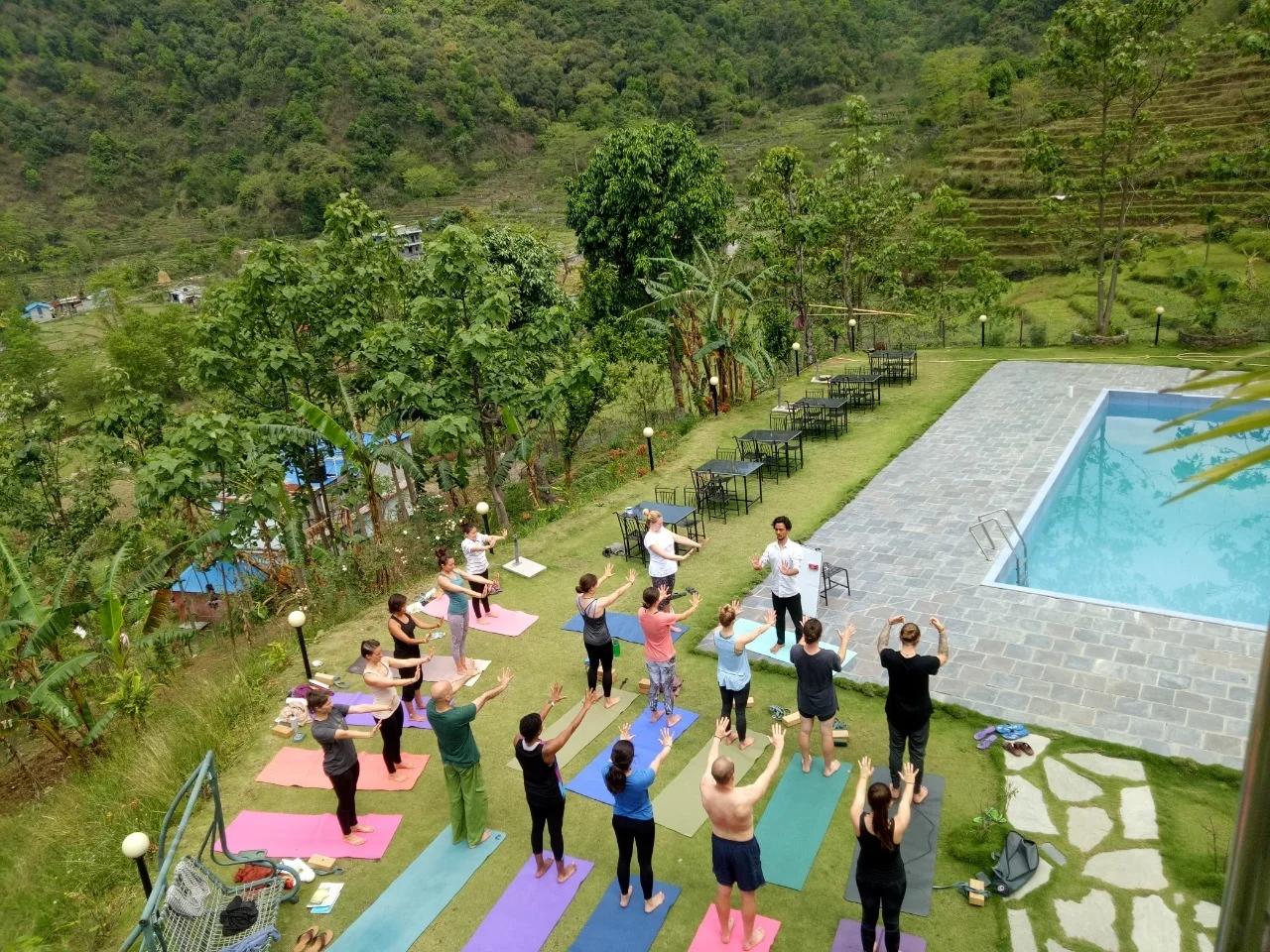
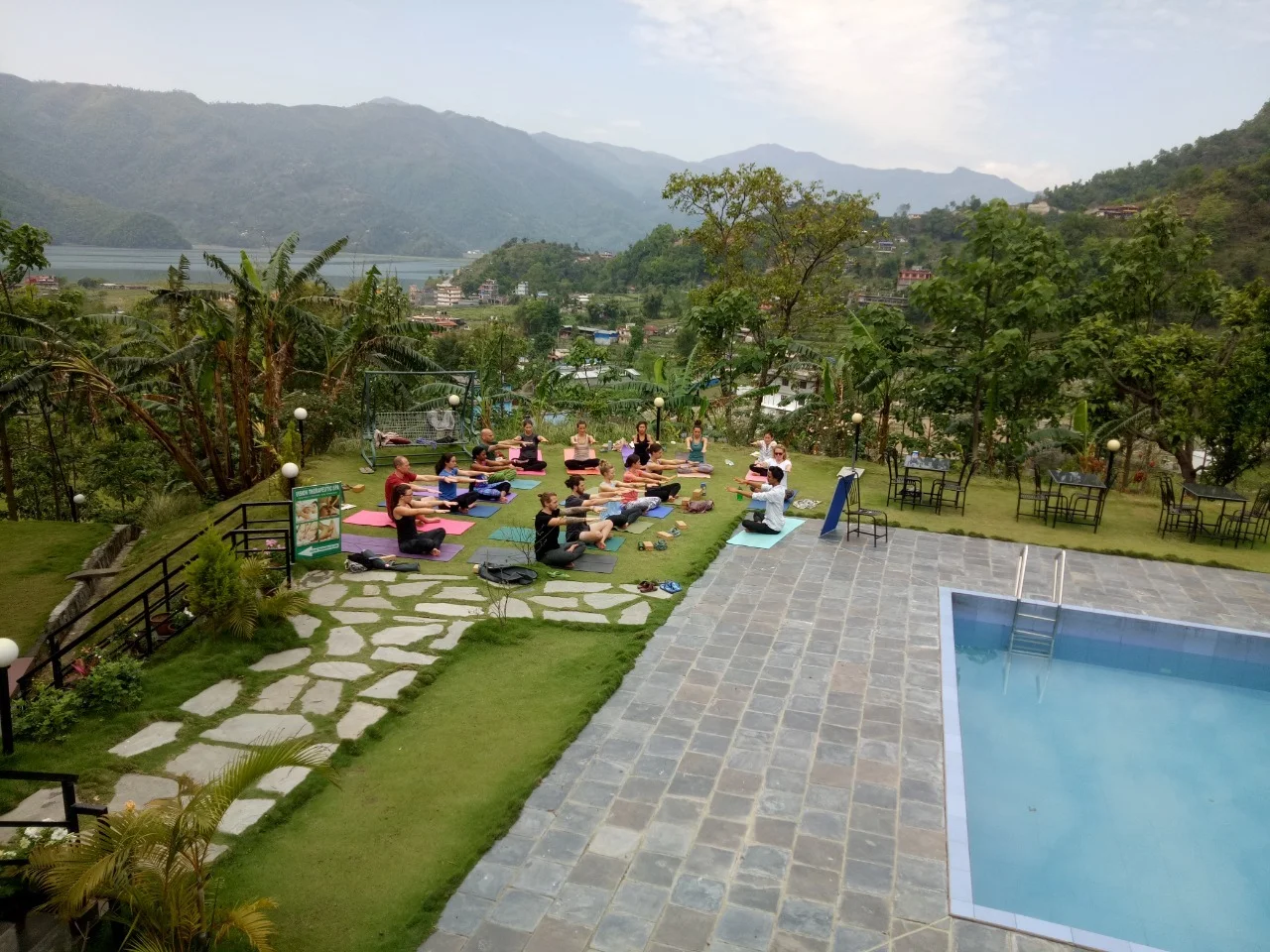
At Pokhara Yoga Academy, we teach Iyengar principles as part of our broader alignment-focused curriculum because it remains one of the most rigorously precise, therapeutically sound approaches within the modern yoga landscape. This guide covers exactly what Iyengar Yoga is, what actually happens in a class, who it’s genuinely well-suited for, and what to expect walking in for the first time — so you arrive prepared rather than confused by all the equipment.
Key Takeaways
- Iyengar Yoga is a precision-focused style developed by B.K.S. Iyengar that emphasizes exact anatomical alignment, extended pose holds, and extensive use of props (blocks, straps, bolsters, chairs) to make postures accessible and safe for every body type.
- Unlike flow-based styles, Iyengar classes typically hold poses for longer durations with detailed verbal instruction, making it especially well-suited to beginners, older adults, and those with injuries or chronic conditions.
- Props in Iyengar Yoga are not “beginner crutches” — they’re a core methodological tool used by practitioners at every level, including advanced teachers, to refine alignment and access deeper expressions of a pose safely.
- Iyengar teacher certification is notably rigorous, involving multiple assessed levels (Introductory through Senior), which generally produces highly skilled instructors with deep anatomical knowledge.
- Iyengar Yoga is an excellent entry point for complete beginners, injury recovery, or older practitioners, though its slower pace may not satisfy those specifically seeking a cardiovascular or fast-paced workout.
What Is Iyengar Yoga? The Story Behind the Method
Who Was B.K.S. Iyengar?
Bellur Krishnamachar Sundararaja Iyengar (1918–2014) was one of the most influential yoga teachers of the 20th century, credited with bringing yoga to global prominence throughout Europe and the West. A student of Sri T. Krishnamacharya — the same teacher whose lineage also produced Ashtanga’s founder, Pattabhi Jois — Iyengar developed his own distinct methodology emphasizing precise structural alignment, informed heavily by his personal experience overcoming childhood illness and physical frailty through dedicated practice.
The Core Philosophy: Precision Over Flow
Where styles like Vinyasa prioritize continuous movement and breath-linked transitions, Iyengar Yoga prioritizes structural precision — exactly where each part of the body should be positioned within a pose, and exactly why. This isn’t pedantry for its own sake; the underlying belief is that correct alignment is what makes a posture both safe and genuinely therapeutic, while incorrect alignment, however “flexible” it may look, can create long-term physical harm.
Why Props Are Central, Not Supplementary
B.K.S. Iyengar is widely credited with pioneering the systematic use of props in yoga practice — an innovation that was, at the time, genuinely unconventional. Blocks, straps, bolsters, blankets, and chairs allow a practitioner’s body to be correctly supported and aligned in a pose regardless of their current flexibility, strength, or physical limitations, rather than forcing the body to conform to a pose it isn’t yet ready for.
The Misconception Worth Correcting
Many newcomers assume props are a sign of insufficient skill, meant to be phased out as a practitioner advances. In genuine Iyengar practice, this isn’t accurate — senior Iyengar teachers use props extensively throughout their own advanced practice, specifically because props allow for even more precise and nuanced pose refinement than an unsupported version of the same posture would.
What Actually Happens in an Iyengar Yoga Class
Class Structure and Pacing
Iyengar classes typically move at a noticeably slower pace than Vinyasa or Ashtanga sessions, with far more time spent within each individual pose and significantly more verbal instruction from the teacher throughout.
- Centering and breath awareness (5–10 minutes)
- Standing poses (20–30 minutes) — foundational alignment work, often the class’s primary focus
- Seated poses and forward bends (15–20 minutes)
- Backbends or inversions (10–20 minutes, level-dependent)
- Restorative poses and Savasana (10–15 minutes)
The Role of Extended Pose Holds
Where a flow-based class might spend a few breaths in a given posture, Iyengar classes often hold poses for 30 seconds to several minutes, allowing time for detailed alignment correction and for the practitioner to genuinely feel the structural adjustments being described — a pace that makes subtle anatomical learning possible in a way faster-paced styles simply don’t accommodate.
Extensive Verbal Cueing
Iyengar teachers are known for highly detailed, anatomically specific verbal instruction — describing precisely where weight should shift, how a joint should track, or which muscle should engage — rather than relying primarily on visual demonstration. This makes the style particularly valuable for practitioners who learn best through detailed explanation rather than imitation.
The Props You’ll Encounter (and What They’re Actually For)
Yoga Blocks
Used to bring the floor “closer” in poses where a practitioner’s flexibility doesn’t yet allow a hand or hip to reach the ground safely, blocks allow correct alignment to be achieved without compromising form to force a deeper stretch than the body is ready for.
Yoga Straps
Straps extend a practitioner’s reach in poses requiring a grip beyond their current flexibility — commonly used in seated forward folds or bound poses — allowing the shoulders and spine to maintain correct positioning rather than rounding to compensate for limited reach.
Bolsters and Blankets
Primarily used in restorative and supported poses, bolsters and folded blankets provide cushioned structural support, allowing the body to fully release into a pose rather than actively working to hold a position — particularly valuable in longer-held restorative sequences.
Chairs
Iyengar Yoga’s use of ordinary chairs is one of its more distinctive features, offering support for backbends, inversions, and seated poses in a way that makes advanced-looking postures genuinely accessible to practitioners who couldn’t otherwise safely attempt them.
Wall Ropes (Yoga Kurunta)
Found in dedicated Iyengar studios, wall-mounted ropes support inversions and deep backbends with a level of structural safety that free-standing versions of the same poses can’t offer, particularly valuable for practitioners working with back conditions or building confidence in inversions gradually.
Who Iyengar Yoga Is Genuinely Best Suited For
Complete Beginners
Because of its slower pace, detailed instruction, and prop-supported accessibility, Iyengar Yoga is frequently recommended as one of the strongest entry points for complete beginners — arguably even more foundational than a general Hatha class, given the sheer depth of alignment instruction provided.
Injury Recovery and Chronic Conditions
Iyengar’s precision and prop-based support make it particularly well-suited to practitioners recovering from injury or managing chronic conditions, since poses can be modified with genuine structural integrity rather than a rough approximation of the “full” version.
Older Adults
The combination of accessible modifications, slower pacing, and reduced impact makes Iyengar Yoga one of the more age-inclusive styles available, without requiring older practitioners to attend a separate “senior-specific” class to receive appropriately paced instruction.
Detail-Oriented Learners
Practitioners who genuinely enjoy understanding the anatomical “why” behind a pose — rather than simply moving through a sequence — tend to find Iyengar’s depth of instruction particularly satisfying compared to faster-paced styles that don’t have time for this level of explanation.
Those Recovering From or Preventing Injury in Other Sports
Because of its precise, joint-conscious approach, Iyengar Yoga is commonly used by athletes in complementary cross-training contexts, addressing structural imbalances that faster-paced training modalities don’t typically correct.
Who Might Find Iyengar Yoga Less Satisfying
Those Seeking a Cardiovascular Workout
Because of its slower pace and extended holds, Iyengar Yoga does not provide the same cardiovascular conditioning as Vinyasa or Ashtanga. Practitioners specifically seeking an elevated-heart-rate workout will likely find Iyengar’s pacing unsatisfying for that particular goal, even though it offers substantial strength and flexibility benefits.
Those Who Prefer Continuous Flow Over Extended Holds
Practitioners who find their focus and enjoyment specifically in continuous, breath-linked movement may find Iyengar’s static, hold-focused structure feels comparatively repetitive or slow.
An Honest Litmus Test
If your primary goal walking into a yoga class is to move continuously and work up a sweat, Iyengar likely isn’t the right first choice — though it can make an excellent complementary practice alongside a more dynamic style for exactly the structural refinement that faster styles don’t have time to address.
Iyengar Yoga vs. Hatha Yoga: What’s the Real Difference?
Both styles share a slower pace and strong alignment focus, leading many to assume they’re essentially interchangeable — but there are meaningful distinctions.
Factor | Iyengar Yoga | General Hatha Yoga |
|---|---|---|
Prop usage | Extensive, systematic, core to method | Minimal to moderate, teacher-dependent |
Instructional depth | Highly detailed anatomical cueing | Varies significantly by teacher |
Pose hold duration | Often longer, more structured | Moderate, less standardized |
Teacher certification rigor | Multi-level, internationally standardized | Varies significantly by school |
Origin | Codified by B.K.S. Iyengar, 20th century | Broader classical umbrella tradition |
Put simply: Iyengar Yoga can be considered a highly systematized, prop-intensive branch within the broader Hatha tradition, distinguished by the rigor and standardization of both its teaching method and its teacher certification process.
Iyengar Yoga Teacher Certification: Why It’s Considered Especially Rigorous
Unlike many yoga certification pathways that can be completed in a single 200-hour intensive, authentic Iyengar teacher certification follows a distinctly more demanding, multi-year path involving assessed levels — typically beginning with Introductory level and progressing through Junior and Senior certifications, each requiring formal assessment by qualified Iyengar-certified evaluators.
What This Means for Students
Because of this rigor, practitioners can generally expect a high baseline of anatomical knowledge and teaching precision from any teacher carrying genuine Iyengar certification — a level of standardization that isn’t guaranteed across other yoga certification pathways with less formalized assessment structures.
What to Bring and Expect at Your First Iyengar Class
What to Wear
Comfortable, well-fitting clothing that allows a teacher to visually assess your alignment is particularly important in Iyengar classes, given how central detailed visual correction is to the teaching method. Avoid excessively baggy clothing that obscures joint positioning.
What to Bring
Most dedicated Iyengar studios provide the full range of props (blocks, straps, bolsters, chairs) as standard equipment — confirm this with the studio beforehand, though it’s rarely necessary to bring your own for a first class.
What to Communicate to Your Teacher Beforehand
Given Iyengar’s therapeutic orientation, it’s especially valuable to inform your teacher of any existing injuries, surgeries, or chronic conditions before class begins — Iyengar teachers are typically well-equipped to offer specific prop-based modifications once they know your situation.
What to Expect Physically
Expect noticeably less sweat and cardiovascular exertion than a Vinyasa class, alongside noticeably more muscular engagement from sustained holds and more mental engagement from following detailed instruction — a different kind of demanding, rather than a lesser one.
Frequently Asked Questions About Iyengar Yoga
1. Is Iyengar Yoga good for beginners?
Yes, Iyengar Yoga is frequently recommended as one of the strongest entry points for complete beginners, due to its slower pace, detailed alignment instruction, and extensive prop support that makes poses accessible regardless of current flexibility or strength.
2. What’s the difference between Iyengar Yoga and Hatha Yoga?
Iyengar Yoga can be considered a highly systematized branch within the broader Hatha tradition, distinguished by its extensive, methodical use of props and a significantly more standardized, rigorous teacher certification process compared to general Hatha training.
3. Why does Iyengar Yoga use so many props?
Props allow practitioners to achieve correct structural alignment in a pose regardless of their current flexibility or strength, rather than forcing the body into an unsupported position it isn’t ready for. Props are used by practitioners at every skill level, including advanced teachers, not just beginners.
4. Is Iyengar Yoga a good workout?
Iyengar Yoga builds significant strength and flexibility through sustained, precisely held poses, but it doesn’t offer the same cardiovascular conditioning as faster-paced styles like Vinyasa or Ashtanga, since poses are held rather than continuously flowed between.
5. Can Iyengar Yoga help with back pain or injury recovery?
Iyengar Yoga’s precision-focused, prop-supported approach is commonly used therapeutically for back pain and injury recovery, since poses can be modified with genuine structural support rather than a rough approximation of the unsupported version. Consulting a physician alongside a qualified teacher is recommended for significant conditions.
6. How long does it take to become a certified Iyengar Yoga teacher?
Authentic Iyengar certification follows a multi-year path through assessed levels — typically Introductory, Junior, and Senior — each requiring formal evaluation by certified assessors, making it a notably more rigorous and lengthy process than many standard 200-hour certification pathways.
Should You Try Iyengar Yoga? Here’s the Honest Answer
Iyengar Yoga isn’t the flashiest style, and it won’t leave you drenched in sweat the way a Vinyasa class might. What it offers instead is genuine structural understanding — the kind of precise, therapeutic alignment knowledge that makes every other style of yoga you eventually practice safer and more effective. For complete beginners, those recovering from injury, older practitioners, or anyone who simply wants to understand why a pose works the way it does, Iyengar Yoga offers a depth that few other styles match.
At Pokhara Yoga Academy, we integrate Iyengar-influenced alignment principles throughout our foundational teacher training curriculum specifically because this precision-first approach builds a stronger anatomical foundation for teaching any style well. Whether Iyengar becomes your primary practice or simply the lens through which you learn to see every other pose more clearly, understanding it is genuinely valuable groundwork for a lifelong yoga practice.



Comments are closed